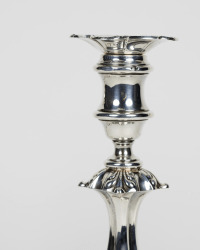
Kiddush cup - .875 (84 Zolotniki) silver


04
days
19
hours
26
minutes
21
seconds
Current bid
€ 75
Reserve price not met

Expert
Selected by Jeroen Zoetmulder
Has over 30 years of experience in archaeology and is an appraiser specialising in archaeological objects.
Estimate € 180 - € 200
 | €75 |
|---|
Catawiki Buyer Protection
Your payment’s safe with us until you receive your object.View details
Trustpilot 4.4 | 142317 reviews
Rated Excellent on Trustpilot.
Antique Russian silver Kiddush cup on a foot, made in Moscow during 1899–1908, in good used condition with patina, solid .875 silver (84 zolotnik), hand‑engraved with floral and geometric motifs, bearing Moscow assay marks and the assayer Lebedkin, with a Polish re‑mark (תו).
AI-assisted summary
Description from the seller
Antique Russian Silver Kiddush Cup – Moscow – Assayer Ivan Lebedkin (1899–1908) – With Polish Re-Assessment (תו)
Auction Description:
Beautiful and historically very interesting antique silver Kiddush cup on a stem, manufactured in Moscow, Imperial Russia at the beginning of the 20th century (dated 1899–1908).
The cup is adorned all around with attractive, authentic hand engraving featuring foliate and geometric motifs, characteristic of East European Judaica from this flourishing period.
This piece carries a fascinating historical story, clearly evidenced by the presence of multiple official marks on both the upper rim and the underside of the foot:
Russian Imperial Assay Mark: The well-known oval '84' zolotnik mark with the Kokoshnik head, indicating a legally used silver content of 87.5% pure silver (.875).
Master Mark of the Assayer: The clear stamp ИЛ (I.L.) in a rectangle with rounded corners. This is the official assay mark of Ivan Sergejevitsj Lebedkin, the chief assay master of the assay office in Moscow between 1899 and 1908.
Polish Re-Assessment / Tax Stamp: Among the Russian marks is the rare Polish re-certification stamp bearing the Hebrew letters תו (Taw-Waw). This proves that the cup was officially assayed and registered in Poland in the 1920s or 1930s (after Polish independence).
A beautifully documented and rare collectible for lovers of antique Russian silver and historical Judaica.
Specifications & Condition
Object: Kiddush cup / ritual wine goblet
Material: Solid silver (84 Zolotnik / .875)
Origin: Russia, Moscow (later migration/registration in Poland)
Period: 1899–1908
Assayer: Ivan Lebedkin (ИЛ)
Decoration: Hand-engraved with floral and geometric cartouches
Condition: In good, attractive antique condition with a natural, well-aged patina (oxidation). The engravings and specific marks are clearly readable and recognizable as shown in the detail photos. No major damage."}{
Antique Russian Silver Kiddush Cup – Moscow – Assayer Ivan Lebedkin (1899–1908) – With Polish Re-Assessment (תו)
Auction Description:
Beautiful and historically very interesting antique silver Kiddush cup on a stem, manufactured in Moscow, Imperial Russia at the beginning of the 20th century (dated 1899–1908).
The cup is adorned all around with attractive, authentic hand engraving featuring foliate and geometric motifs, characteristic of East European Judaica from this flourishing period.
This piece carries a fascinating historical story, clearly evidenced by the presence of multiple official marks on both the upper rim and the underside of the foot:
Russian Imperial Assay Mark: The well-known oval '84' zolotnik mark with the Kokoshnik head, indicating a legally used silver content of 87.5% pure silver (.875).
Master Mark of the Assayer: The clear stamp ИЛ (I.L.) in a rectangle with rounded corners. This is the official assay mark of Ivan Sergejevitsj Lebedkin, the chief assay master of the assay office in Moscow between 1899 and 1908.
Polish Re-Assessment / Tax Stamp: Among the Russian marks is the rare Polish re-certification stamp bearing the Hebrew letters תו (Taw-Waw). This proves that the cup was officially assayed and registered in Poland in the 1920s or 1930s (after Polish independence).
A beautifully documented and rare collectible for lovers of antique Russian silver and historical Judaica.
Specifications & Condition
Object: Kiddush cup / ritual wine goblet
Material: Solid silver (84 Zolotnik / .875)
Origin: Russia, Moscow (later migration/registration in Poland)
Period: 1899–1908
Assayer: Ivan Lebedkin (ИЛ)
Decoration: Hand-engraved with floral and geometric cartouches
Condition: In good, attractive antique condition with a natural, well-aged patina (oxidation). The engravings and specific marks are clearly readable and recognizable as shown in the detail photos. No major damage."}{
Details
Era
1400-1900
Gross weight
27 g
Silver type
.875 (84 Zolotniki) silver
Over 200 years old
No
Country of origin
Russia
Material
Silver
Condition
Good condition - used with small signs of ageing
Height
7.7 cm
Width
4.1 cm
Diameter
4.1 cm
Depth
4.1 cm
Estimated period
1899-1908
Sold by