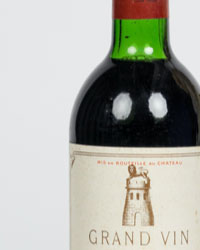
1993 Michel Chapoutier, Cuvée de l’Orée, Ermitage - Hermitage - 1 Bottle (0.75L)


03
days
00
hours
49
minutes
22
seconds
Current bid
€ 2
Reserve price not met

Expert
Selected by Claire Sorine
Experienced in Burgundy winemaking, with expertise in marketing and wine education.
Estimate € 220 - € 280
 | €2 | |
|---|---|---|
| €1 |
Catawiki Buyer Protection
Your payment’s safe with us until you receive your object.View details
Trustpilot 4.4 | 142120 reviews
Rated Excellent on Trustpilot.
Michel Chapoutier, Cuvée de l’Orée, Ermitage, 1993, bottle size 0.75 L, one bottle.
AI-assisted summary
Description from the seller
Hermitage Ermitage de l'Orée Chapoutier 1993
La Maison Chapoutier, sans conteste l'un des noms les plus connus de la vallée du Rhône, produit ses flacons les plus prestigieux sur l'appellation Hermitage. Le domaine s'étend sur près de 300 hectares de vignes converties en biodynamie. C'est à ce jour le plus grand vignoble de France à avoir adopté ce mode cultural, et ce depuis l'obtention de la certification en 1999. Chapoutier est souvent le dernier à vendanger ses vignes, afin d'obtenir une maturité optimale du raisin. Le savoir-faire Chapoutier s'est aussi étendu vers d'autres vignobles : Provence, Beaujolais, Roussillon, Champagne, Alsace, Portugal mais aussi le sud de l'Australie.
L'histoire familiale a débuté en 1808, mais c'est véritablement en 1879 que ses contours se sont dessinés, lorsque Polydor Chapoutier achète quelques hectares de vignes pour devenir éleveur de vins et négociant. Depuis, sept générations se sont succédées, jusqu'à Michel Chapoutier. Celui-ci passe désormais la main à ses enfants Mathilde (au commerce et à la communication) et Maxime (aux vignes et à la cave). Ensemble, ils perpétuent l’héritage familial avec l’envie de mettre en valeur les typicités des grands terroirs rhodaniens.
Lire l'article du Journal sur le domaine Chapoutier
A propos de la cuvée
C'est au XVIIIe siècle que le nom d'Ermitage apparut en souvenir d'un chevalier qui au retour des croisades (XIIIe siècle) et las de guerroyer, aurait vécu en ermite sur une colline donnée par Blanche de Castille, reine de France. Il y aurait implanté un vignoble. L'hermitage blanc de l'Orée est issu de vignes anciennes (80 ans de moyenne d'âge) à très faible rendement, assurant une production de qualité. L'élevage en fût dure un peu moins d'un an, sur lies avec des bâtonnages réguliers. Ce vin blanc d'exception développe des arômes complexes et subtils de coing, de noix, de miel, d'acacia avec une note de tilleul. Le gras de l'attaque laisse place à une finale fraîche, et à une finale impressionnante.
Maison Chapoutier, undoubtedly one of the best-known names in the Rhone Valley, produces its most prestigious bottles on the Hermitage appellation. The estate extends over nearly 300 hectares of vineyards converted into biodynamics. To date, it is the largest vineyard in France to have adopted this cultural mode since obtaining certification in 1999. Chapoutier is often the last to harvest his vines, in order to obtain an optimal maturity of the grapes. Chapoutier's know-how has also extended to other vineyards: Provence, Beaujolais, Roussillon, Champagne, Alsace, Portugal but also the south of Australia.
The family history began in 1808, but it was really in 1879 that its contours were outlined, when Polydor Chapoutier bought a few hectares of vineyards to become a wine breeder and merchant. Since then, seven generations have succeeded each other, up to Michel Chapoutier. He now passes the hand to his children Mathilde (in commerce and communication) and Maxime (in the vineyards and the cellar). Together, they perpetuate the family heritage with the desire to highlight the typicalities of the great Rhodan terroirs.
Read the article in the Journal on the Chapoutier estate
About the vintage
It was in the 18th century that the name of Hermitage appeared in memory of a knight who, on the return of the crusades (13th century) and tired of war, would have lived as a hermit on a hill given by Blanche de Castile, Queen of France. He would have planted a vineyard there. The white hermitage of the Orée comes from old vines (80 years of average age) with very low yield, ensuring quality production. The barrel aging lasts a little less than a year, on lees with regular batonages. This exceptional white wine develops complex and subtle aromas of quince, walnut, honey, acacia with a note of linden. The fullness at the attack gives way to a fresh finish, and an impressive finish.
Hermitage Ermitage de l'Orée Chapoutier 1993
La Maison Chapoutier, sans conteste l'un des noms les plus connus de la vallée du Rhône, produit ses flacons les plus prestigieux sur l'appellation Hermitage. Le domaine s'étend sur près de 300 hectares de vignes converties en biodynamie. C'est à ce jour le plus grand vignoble de France à avoir adopté ce mode cultural, et ce depuis l'obtention de la certification en 1999. Chapoutier est souvent le dernier à vendanger ses vignes, afin d'obtenir une maturité optimale du raisin. Le savoir-faire Chapoutier s'est aussi étendu vers d'autres vignobles : Provence, Beaujolais, Roussillon, Champagne, Alsace, Portugal mais aussi le sud de l'Australie.
L'histoire familiale a débuté en 1808, mais c'est véritablement en 1879 que ses contours se sont dessinés, lorsque Polydor Chapoutier achète quelques hectares de vignes pour devenir éleveur de vins et négociant. Depuis, sept générations se sont succédées, jusqu'à Michel Chapoutier. Celui-ci passe désormais la main à ses enfants Mathilde (au commerce et à la communication) et Maxime (aux vignes et à la cave). Ensemble, ils perpétuent l’héritage familial avec l’envie de mettre en valeur les typicités des grands terroirs rhodaniens.
Lire l'article du Journal sur le domaine Chapoutier
A propos de la cuvée
C'est au XVIIIe siècle que le nom d'Ermitage apparut en souvenir d'un chevalier qui au retour des croisades (XIIIe siècle) et las de guerroyer, aurait vécu en ermite sur une colline donnée par Blanche de Castille, reine de France. Il y aurait implanté un vignoble. L'hermitage blanc de l'Orée est issu de vignes anciennes (80 ans de moyenne d'âge) à très faible rendement, assurant une production de qualité. L'élevage en fût dure un peu moins d'un an, sur lies avec des bâtonnages réguliers. Ce vin blanc d'exception développe des arômes complexes et subtils de coing, de noix, de miel, d'acacia avec une note de tilleul. Le gras de l'attaque laisse place à une finale fraîche, et à une finale impressionnante.
Maison Chapoutier, undoubtedly one of the best-known names in the Rhone Valley, produces its most prestigious bottles on the Hermitage appellation. The estate extends over nearly 300 hectares of vineyards converted into biodynamics. To date, it is the largest vineyard in France to have adopted this cultural mode since obtaining certification in 1999. Chapoutier is often the last to harvest his vines, in order to obtain an optimal maturity of the grapes. Chapoutier's know-how has also extended to other vineyards: Provence, Beaujolais, Roussillon, Champagne, Alsace, Portugal but also the south of Australia.
The family history began in 1808, but it was really in 1879 that its contours were outlined, when Polydor Chapoutier bought a few hectares of vineyards to become a wine breeder and merchant. Since then, seven generations have succeeded each other, up to Michel Chapoutier. He now passes the hand to his children Mathilde (in commerce and communication) and Maxime (in the vineyards and the cellar). Together, they perpetuate the family heritage with the desire to highlight the typicalities of the great Rhodan terroirs.
Read the article in the Journal on the Chapoutier estate
About the vintage
It was in the 18th century that the name of Hermitage appeared in memory of a knight who, on the return of the crusades (13th century) and tired of war, would have lived as a hermit on a hill given by Blanche de Castile, Queen of France. He would have planted a vineyard there. The white hermitage of the Orée comes from old vines (80 years of average age) with very low yield, ensuring quality production. The barrel aging lasts a little less than a year, on lees with regular batonages. This exceptional white wine develops complex and subtle aromas of quince, walnut, honey, acacia with a note of linden. The fullness at the attack gives way to a fresh finish, and an impressive finish.
Details
Vintage
1993
Producer, Name of wine
Michel Chapoutier, Cuvée de l’Orée, Ermitage
Number of bottles
1
Bottle size
Bottle (0.75L)
Country
France
Region
Hermitage
Grape varieties
Marsanne
Fill level
Burgundy/Champagne/Flute bottle type, 2 cm fill level
Capsule/cork condition
Slightly worn capsule
Label condition
Fully intact, readable label