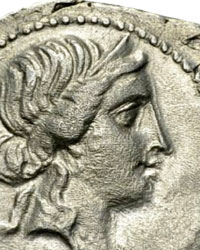
Byzantine Empire. Theophilos (AD 829-842). Semissis Syracuse


02
days
08
hours
59
minutes
47
seconds
Current bid
€ 444
Reserve price not met

Expert
Selected by Carmen Vera Gutiérrez
Experienced antique appraiser specialising in Spanish coins with deep knowledge of ancient currency.
Estimate € 1,300 - € 1,500
 | €444 | |
|---|---|---|
 | €140 | |
 | €130 | |
Catawiki Buyer Protection
Your payment’s safe with us until you receive your object.View details
Trustpilot 4.4 | 142038 reviews
Rated Excellent on Trustpilot.
Byzantine Empire Semissis (AV) from Syracuse, circa 829–830, weighing 1.87 g, obverse and reverse depict a facing bust of Theophilus with crown surmounted by a cross and holding a globus cruciger.
AI-assisted summary
Description from the seller
**Syracuse**, circa 829-830.
ΘЄOFILOS Facing bust of Theophilus, wearing crown surmounted by cross and chlamys, holding globus cruciger in his right hand. Rev. ΘЄOFILOS Facing bust of Theophilus, wearing crown surmounted by cross and loros, holding globus cruciger in his right hand.
DOC 26a. SB 1673.A beautiful,
sharply struck and very attractive piece. FDC
Rare
Pedigree Vinchon 1991.
Theophilus, the final and most extreme iconoclast ruler of the Byzantine Empire, is remembered for his strong opposition to religious imagery. He infamously forced his iconoclastic views upon monks, branding them with his poetry if they resisted his ban on icons in worship. However, his wife, Theodora, secretly supported the veneration of icons. For her own safety, she kept this hidden throughout their marriage, and even sent their children to stay with their iconophile grandmothers, where they were secretly taught to honor sacred images. Theophilus remained unaware of his wife's true beliefs. After his death, Theodora became regent for their young son, Michael III. In the following year, she convened a council that reversed the iconoclastic policies, restoring the veneration of icons throughout the empire. Iconoclasm would never again be officially supported, and it largely faded from Eastern Christianity. This restoration is commemorated on the first Sunday of Lent as the Feast of Orthodoxy. Theodora effectively governed for 14 years until Michael came of age, and many historians believe that her steady leadership helped turn the tide in the conflict with the Arabs in favor of Byzantium. The Orthodox Church later canonized her for her efforts to reinstate the veneration of icons. Theophilus' iconoclastic policies were deeply unpopular in the West, where the rejection of religious imagery had never been supported. As a result, he was disliked by the people in Byzantine territories in Italy, including Syracuse, where this coin was minted.
**Shipping only into EU**
**Syracuse**, circa 829-830.
ΘЄOFILOS Facing bust of Theophilus, wearing crown surmounted by cross and chlamys, holding globus cruciger in his right hand. Rev. ΘЄOFILOS Facing bust of Theophilus, wearing crown surmounted by cross and loros, holding globus cruciger in his right hand.
DOC 26a. SB 1673.A beautiful,
sharply struck and very attractive piece. FDC
Rare
Pedigree Vinchon 1991.
Theophilus, the final and most extreme iconoclast ruler of the Byzantine Empire, is remembered for his strong opposition to religious imagery. He infamously forced his iconoclastic views upon monks, branding them with his poetry if they resisted his ban on icons in worship. However, his wife, Theodora, secretly supported the veneration of icons. For her own safety, she kept this hidden throughout their marriage, and even sent their children to stay with their iconophile grandmothers, where they were secretly taught to honor sacred images. Theophilus remained unaware of his wife's true beliefs. After his death, Theodora became regent for their young son, Michael III. In the following year, she convened a council that reversed the iconoclastic policies, restoring the veneration of icons throughout the empire. Iconoclasm would never again be officially supported, and it largely faded from Eastern Christianity. This restoration is commemorated on the first Sunday of Lent as the Feast of Orthodoxy. Theodora effectively governed for 14 years until Michael came of age, and many historians believe that her steady leadership helped turn the tide in the conflict with the Arabs in favor of Byzantium. The Orthodox Church later canonized her for her efforts to reinstate the veneration of icons. Theophilus' iconoclastic policies were deeply unpopular in the West, where the rejection of religious imagery had never been supported. As a result, he was disliked by the people in Byzantine territories in Italy, including Syracuse, where this coin was minted.
**Shipping only into EU**
Details
Era
Before 1400
Culture/region
Byzantine Empire
Year/period and variation
Syracuse
Ruler
Theophilos (AD 829-842)
Denomination
Semissis
Metal
AV
Condition
Ungraded
Weight
1.87 g
Number of objects
1