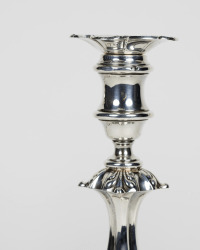
1861 Russian Silver from johann Myllys. - Assay master Eduard Brandenburg - Salt cellar - Russian Imperial Silver Salt Cellar. Johann Myllys. St Petersburg 1861. Tsar Alexander II - Imperial Silver .875 Russian 84-zolotnik silver standard - Russian Silver 1861


03
days
09
hours
38
minutes
14
seconds
Current bid
€ 80
Reserve price not met

Expert
Selected by Jeroen Zoetmulder
Has over 30 years of experience in archaeology and is an appraiser specialising in archaeological objects.
Estimate € 150 - € 200
 | €80 | |
|---|---|---|
| €70 | |
 | €1 |
Catawiki Buyer Protection
Your payment’s safe with us until you receive your object.View details
Trustpilot 4.4 | 143856 reviews
Rated Excellent on Trustpilot.
Antique Russian Imperial silver salt cellar from St. Petersburg, dated 1861, 84 zolotnik (875/1000) silver, weighing 71 g, with three feet and an engraved W.A. monogram, attributed to Johann Myllys and assayed by Eduard Brandenburg.
AI-assisted summary
Description from the seller
Russian Imperial Silver Salt Cellar. Tsar Alexander II (1855–1881). Johann Myllys (A) St Petersburg, 1861 – .875. 84 Silver – 70.2 g
Exceptional 19th-Century Russian Imperial Silver Salt Cellar – 1861
A charming and finely crafted Russian Imperial silver salt cellar, assayed in St Petersburg in 1861 under assay master Eduard Brandenburg. The piece bears the traditional Russian 84-zolotnik silver standard, equivalent to 875/1000 silver, and weighs a substantial 70.2 grams.
The maker’s mark, I.M., has been closely compared with documented examples on Russian silver attributed to the St Petersburg silversmith Johann Myllys (1814–1880). These include a silver tankard dated 1859 and a teapot dated 1860, both bearing the same maker’s punch.
The salt cellar is therefore attributed to Johann Myllys, a 19th-century silversmith working in St Petersburg. The exact correspondence of the maker’s mark, together with the confirmed 1861 date, makes this a particularly interesting example of Imperial Russian table silver.
Description
The salt cellar features an attractive rounded bowl with a beautifully detailed, decorative rim and three ornamental feet. Its elegant proportions and traditional form are characteristic of Russian silver tableware of the mid-19th century.
The exterior is further distinguished by an engraved, intertwined owner’s monogram, incorporating the initials W.A. and a central sceptre-like device. The identity of the original owner remains unknown, adding an intriguing historical element to the piece.
The combination of its 1861 assay date, 84-standard silver, distinctive maker’s punch and personalised engraving makes this an appealing addition to a collection of Russian Imperial silver or 19th-century European silver tableware.
Details
Object: Antique silver salt cellar / open salt
Origin: St Petersburg, Russian Empire
Date: 1861
Silversmith: Attributed to Johann Myllys (1814–1880)
Maker’s mark: I.M.
Assay master: Eduard Brandenburg
Silver standard: 84 zolotnik, equivalent to 875/1000
Weight: 70.2 grams
Decoration: Engraved owner’s monogram, W.A.
A genuine 19th-century Russian silver salt with an appealing combination of decorative craftsmanship, historical hallmarks and a known maker.
A fine opportunity for collectors of Imperial Russian silver, antique tableware and European silver hallmarks.
Details
Specific region of origin
St Petersburg
Style subtype
Victorian
Weight
71 g
Era
1400-1900
Title additional information
Russian Silver 1861
Number of objects
1
Country of origin
Russia
Manufacturer/brand
1861 Russian Silver from johann Myllys.
Designer/artist/maker
Assay master Eduard Brandenburg
Material
Imperial Silver .875 Russian 84-zolotnik silver standard
Model
Russian Imperial Silver Salt Cellar. Johann Myllys. St Petersburg 1861. Tsar Alexander II
Style
Antique
Condition
Good condition - used with small signs of ageing
Height
5 cm
Width
8 cm
Depth
8 cm
Estimated period
1850-1900
Sold by