Mantel clock with Westminster chime - Gustav BECKER - Wood, steel, brass, glass - 1910-1920 - Desk clock


03
days
18
hours
23
minutes
49
seconds
Current bid
€ 20
No reserve price

Expert
Selected by Paula Martin-Calero Toro
Holds a degree in art history; over six years cataloguing and appraising antiques.
Estimate € 130 - € 200
 | €20 | |
|---|---|---|
 | €13 | |
| €12 | |
Catawiki Buyer Protection
Your payment’s safe with us until you receive your object.View details
Trustpilot 4.4 | 142645 reviews
Rated Excellent on Trustpilot.
Gustav Becker mantel clock from Freiburg in Silesia (now Świebodzice, Poland), dating to 1910–1920, made of wood, steel, brass and glass, with a mechanical three‑train movement and an eight‑day power reserve, Westminster and hourly strike on four long and four short gongs, a curved wooden case weighing about 6 kg, supplied with winding key and pendulum, currently not working and in acceptable used condition.
AI-assisted summary
Description from the seller
Imposing desk clock made by Gustav Becker in Freiburg in Schlesien, then Germany and now Poland, one of the leading German clockmakers of the late 19th and early 20th centuries.
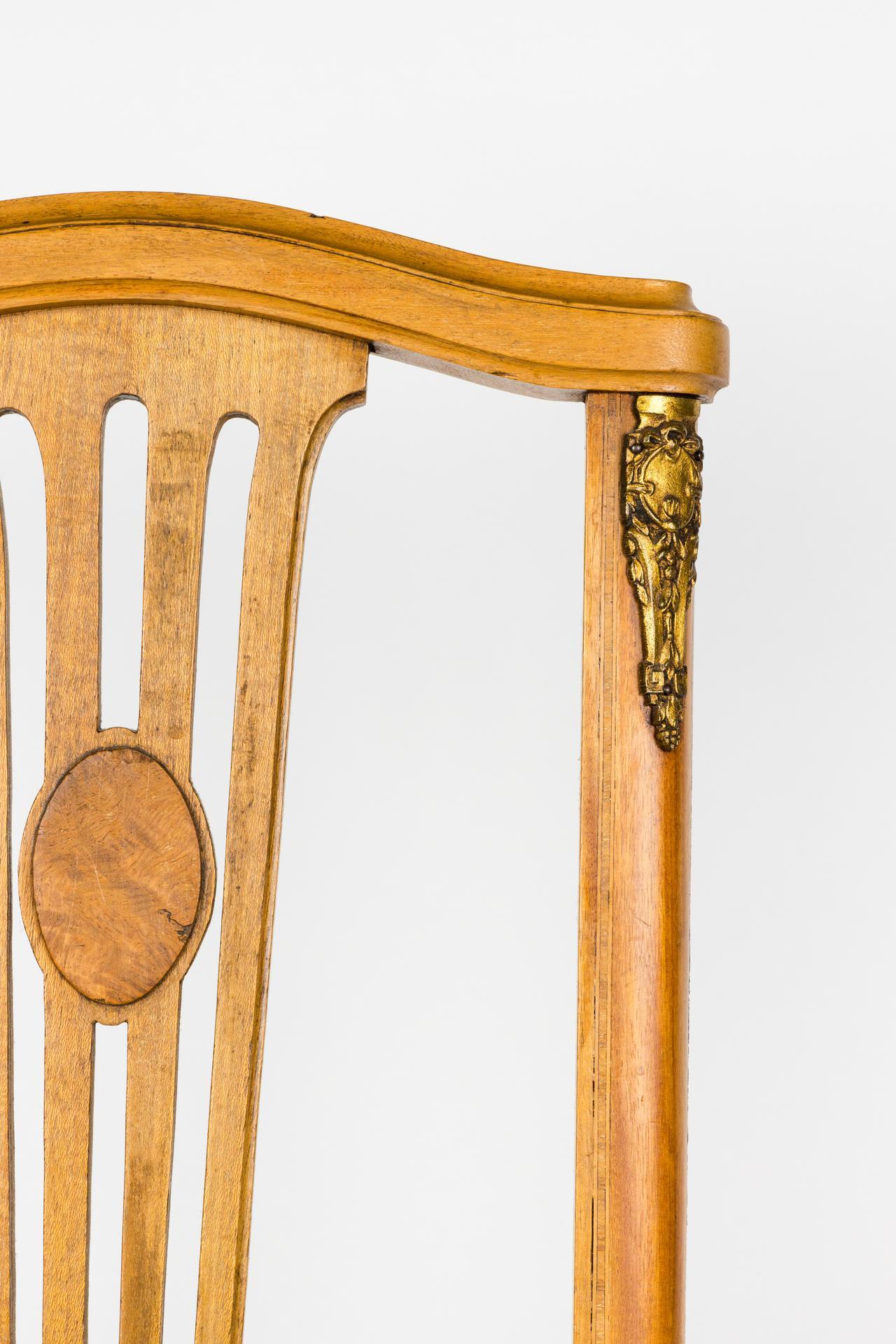
This clock stands out for its great build sturdiness, presence, and its substantial weight, approximately 6 kg, which naturally influences shipping costs. The wooden case is curved-topped and features elegant decorative inlays on the front of the base. Inside it houses a three-train mechanical movement with an approximate eight-day power reserve. The dial has three independent keyholes: winding, hourly strike, and Westminster chime.
The movement is marked: “Gustav Becker – Freiburg in Schl. Medal/Or – P18 – No. 2,337,494.” This number 2,337,494 corresponds to the movement numbering used by Gustav Becker in Freiburg production. Available documentation places Freiburg numbers around 1,945,399 in 1925 and 2,244,868 in 1926, before serial information becomes incomplete after the integration into the Junghans organization.
The Westminster strike mechanism consists of 8 rods, distributed in two groups of four. The melody is produced by 4 short rods, which create a brighter, clearer, more defined sound. The hour strike acts on 4 longer rods, generating a noticeably deeper, more resonant tone capable of filling the entire room. The combination of both registers provides a particularly rich and powerful sound, reinforced by the robustness of the case and the considerable weight of the assembly. At the top of the dial there is a “CHIME / SILENT” selector, allowing the strike to be activated or silenced.
The silvered metal dial features Roman numerals, ornamental hands, and an elegant floral engraving on the metal. The front door incorporates a thick bevelled glass and, with a key, allows direct access to the dial and to the strike chimes. The back features a separate door for movement access and a grille that aids sound propagation.
It is delivered with the pendulum, suspension rod, winding key, and case key, as shown in the photographs, which form part of the description. To reduce the risk of damage during transportation, these movable accessories will be sent dismantled and protected in a separate envelope inside the same package and alongside the clock.
Currently the clock does not work and is sold as such. At a glance, the movement appears complete and no visually serious defects are evident; it will probably require some TLC (“tender loving care”) and the skilled hand of a clockmaker. The date and time markings visible in the photographs reflect the clock’s state at the moment they were taken.
Shipping is carried out with all necessary packing precautions to avoid transport damage as much as possible. A tracking number is provided.
Imposing desk clock made by Gustav Becker in Freiburg in Schlesien, then Germany and now Poland, one of the leading German clockmakers of the late 19th and early 20th centuries.
This clock stands out for its great build sturdiness, presence, and its substantial weight, approximately 6 kg, which naturally influences shipping costs. The wooden case is curved-topped and features elegant decorative inlays on the front of the base. Inside it houses a three-train mechanical movement with an approximate eight-day power reserve. The dial has three independent keyholes: winding, hourly strike, and Westminster chime.
The movement is marked: “Gustav Becker – Freiburg in Schl. Medal/Or – P18 – No. 2,337,494.” This number 2,337,494 corresponds to the movement numbering used by Gustav Becker in Freiburg production. Available documentation places Freiburg numbers around 1,945,399 in 1925 and 2,244,868 in 1926, before serial information becomes incomplete after the integration into the Junghans organization.
The Westminster strike mechanism consists of 8 rods, distributed in two groups of four. The melody is produced by 4 short rods, which create a brighter, clearer, more defined sound. The hour strike acts on 4 longer rods, generating a noticeably deeper, more resonant tone capable of filling the entire room. The combination of both registers provides a particularly rich and powerful sound, reinforced by the robustness of the case and the considerable weight of the assembly. At the top of the dial there is a “CHIME / SILENT” selector, allowing the strike to be activated or silenced.
The silvered metal dial features Roman numerals, ornamental hands, and an elegant floral engraving on the metal. The front door incorporates a thick bevelled glass and, with a key, allows direct access to the dial and to the strike chimes. The back features a separate door for movement access and a grille that aids sound propagation.
It is delivered with the pendulum, suspension rod, winding key, and case key, as shown in the photographs, which form part of the description. To reduce the risk of damage during transportation, these movable accessories will be sent dismantled and protected in a separate envelope inside the same package and alongside the clock.
Currently the clock does not work and is sold as such. At a glance, the movement appears complete and no visually serious defects are evident; it will probably require some TLC (“tender loving care”) and the skilled hand of a clockmaker. The date and time markings visible in the photographs reflect the clock’s state at the moment they were taken.
Shipping is carried out with all necessary packing precautions to avoid transport damage as much as possible. A tracking number is provided.
Details
Specific region of origin
Friburgo en Silesia, hoy Świebodzice, en Polonia
Manufacturer/brand
Gustav BECKER
Era
1900-2000
Title additional information
Desk clock
Number of objects
1
Clock type
Mantel clock with Westminster chime
Material
Wood, steel, brass, glass
Clock mechanism
Mechanical
Power reserve
8 day movement
Striking
Hours on four long gongs; Westminster on four short gongs
Maker/designer
Gustav BECKER
Country of origin
Germany
Condition
Fair condition - heavily used & with possibly minor parts missing
In working order
No
Height
35 cm
Width
25 cm
Depth
17 cm
Estimated period
1910-1920
Weight
6 kg
Winding key
Yes
Sold by