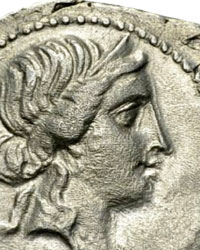
Roman Empire. Probus (AD 276-282). Antoninianus AD 276-282 - ROMAE AETER (No reserve price)


09
days
22
hours
44
minutes
05
seconds

 | €1 |
|---|
Catawiki Buyer Protection
Your payment’s safe with us until you receive your object.View details
Trustpilot 4.4 | 142857 reviews
Rated Excellent on Trustpilot.
Late 3rd‑century Antoninianus from Rome, struck under the reign of Probus (AD 276–282), bronze with a residual silver finish, obverse showing a radiate bust of IMP PROBVS AVG and reverse ROMAE AETERNAE with Roma seated in a six‑column temple holding Victory and a sceptre, mint mark R Δ indicating Rome mint.
AI-assisted summary
Description from the seller
Antoninianus bronze/mixed silver dating to the period of the Roman Empire, minted during the reign of Emperor Probus (276–282 AD).
Analysis of the two sides:
Obverse (Front)
Description: Radiate bust of the emperor facing left, richly armored (with consular shield/drapery and scepter).
Legend: It reads IMP PROBVS AVG (Imperator Probus Augustus).
Reverse
Description: Depicts the goddess Roma seated inside a six-column temple, with a Victory and a scepter in hand.
Legend: ROMAE AETERNAE ("To Eternal Rome").
Esergo (bottom): It reads the mint mark R Δ indicating minting at the Rome mint
RIC V 187
Considerations
Being a late 3rd-century Antoninianus (Crisis of the 3rd century), the coin has a composition predominantly bronze with a residual silver content (often originally whitened with a silver bath).
Antoninianus bronze/mixed silver dating to the period of the Roman Empire, minted during the reign of Emperor Probus (276–282 AD).
Analysis of the two sides:
Obverse (Front)
Description: Radiate bust of the emperor facing left, richly armored (with consular shield/drapery and scepter).
Legend: It reads IMP PROBVS AVG (Imperator Probus Augustus).
Reverse
Description: Depicts the goddess Roma seated inside a six-column temple, with a Victory and a scepter in hand.
Legend: ROMAE AETERNAE ("To Eternal Rome").
Esergo (bottom): It reads the mint mark R Δ indicating minting at the Rome mint
RIC V 187
Considerations
Being a late 3rd-century Antoninianus (Crisis of the 3rd century), the coin has a composition predominantly bronze with a residual silver content (often originally whitened with a silver bath).
Details
Era
Before 1400
Culture/region
Roman Empire
Year/period and variation
AD 276-282 - ROMAE AETER
Ruler
Probus (AD 276-282)
Denomination
Antoninianus
Metal
Silvered Æ
Condition
Ungraded