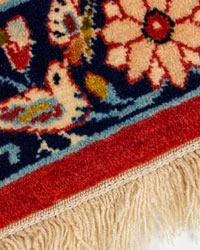
Merletto di Burano su tela 100% Bisso di Cotone Ricamato a mano grande misura - Bedspread - 245 cm - 275 cm


04
days
23
hours
10
minutes
02
seconds

No bids placed
Catawiki Buyer Protection
Your payment’s safe with us until you receive your object.View details
Trustpilot 4.4 | 143038 reviews
Rated Excellent on Trustpilot.
Description from the seller
Bedspread of exceptional workmanship, entirely handmade Burano lace, strictly handmade
normally to make a garment like this the embroiderer takes 5 years
measures 245 x 275
museum piece
Product deliveries are entrusted only to top couriers such as UPS, DHL and BRT, with guaranteed and insured delivery. The price lists are publicly online.
For the realization of a lace, more than five interventions had to be carried out, which were usually and still today carried out by different people. Each of the lacemakers was specialized, while being able to perform all the stitches
The History of Burano Lace
Martina Vidal Venezia has its headquarters in Burano, the island known worldwide for the extraordinary artisanal production of Venetian lace.
The work of Burano lace spread in the Republic of Venice in the 1500s. A strong push for its expansion was given by the dogaressa Morosina Morosini, who, falling in love with the art of needle-point lace typical of Venice, finally in the late 14th century set up a workshop, where 130 lacemakers found employment, and whose production served partly to increase the dogaressa’s personal dowry, partly to be sent as gifts on special occasions to the most prestigious courts in Europe. Over the years, Venetian lace became increasingly sought after throughout Europe. It is said that on the day of his coronation as King of France, Louis XIV wore an original and precious lace collar that stood out on his cloak, made by very skilled lacemakers from the island of Burano in two years of patient work.
In the 17th century, the century par excellence of lace found in men's, women’s, children's, and ecclesiastical attire, Venice specialized in the creation of incomparable and elegant needle-made items, without abandoning bobbin lacework. The Venetian art of lace was highly appreciated in France, so that under Catherine de' Medici and Minister Colbert, some lacemakers from Burano moved to the royal manufactories of Remis where they worked the “Punto in aria” (a typical Burano lace stitch) under the direction of Sister Maria Colbert, granddaughter of the minister. In 1665 the “Punto in aria” became “Point de France,” thus starting strong competition with Burano lace. Nevertheless, the Point of France never managed to equal the Venetian one.
In 1797, with the end of the Venetian Republic, the lace production also ended, becoming a solely family activity. The winter of 1872 was very cold and represented, for Burano’s economy based entirely on fishing, a real tragedy. It was then that, thanks to the involvement of Countess Andriana Marcello and Hon. Paolo Fambri, the art of needle lace was reborn with the main aim of alleviating, in some way, the sad economic conditions of the Burano population.
The memory of Burano lace’s golden period was kept in the mind of an old eighty-year-old woman, Vincenza Memo – aka Cencia Scarpariola, and it was she who revealed its secrets to a primary school teacher, Anna Bellorio d’Este, who in turn taught them to her daughters and to other girls.
The “Punto in Aria” and the “Punto rosa” returned to prominence and a school was established, so that needle lace became the island of Burano’s main resource. Thanks to the constant concern of Countess Andriana Marcello, many noble ladies of the time—including the Princess of Saxony-Weimar, the Duchess of Hamilton, Countess Bismarck, Princess Metternich, the Queen of Holland, and Queen Margherita—entrusted important commissions to the school: in 1875 there were more than one hundred lacemakers.
The school’s production continued to grow until 1915, the date when World War I began. During World War II and the following years the school alternated between prosperous and less prosperous periods, until it definitively closed in 1970.
BURANO LACE TODAY
The ladies who today know the art of needle lace are very few and prefer to work mainly in their own homes. At Atelier Martina Vidal you can admire how these expert lacemakers are still able to create lace using the same techniques employed by their ancestors in the 1600s.
The laces produced make our collection unique, consisting of tablecloths, runners, dining table centers, collars, sheets, handkerchiefs, fans, bridal veils. These same products in the past were used to adorn the most important European homes and to embellish ladies and gentlemen in their significant moments.
NOTE**
Items auctioned on Catawiki are subject to binding conditions for every bid. If a buyer does not pay within three days of the auction’s end (or immediately if using 'Buy It Now'), Catawiki may take action on their account. Specifically, it may suspend the ability to bid and purchase until payments due are settled. Additionally, non-payment may lead to the cancellation of the sale; in some cases, the buyer may still have to pay the Buyers Protection fee. Until the Buyer Account is suspended.
Please note that if a buyer wins multiple lots, they will be required to pay shipping for each lot separately to ensure the safety of the material shipped.
Seller's Story
Designers and textile-loving artisans present their creations: artworks, jewelry, furnishings, vintage clothing, experiments and other forms of textile expression. They also briefly share something about themselves and their work. A harmonious overview that brings color to a timeless moment.
Translated by Google TranslateBedspread of exceptional workmanship, entirely handmade Burano lace, strictly handmade
normally to make a garment like this the embroiderer takes 5 years
measures 245 x 275
museum piece
Product deliveries are entrusted only to top couriers such as UPS, DHL and BRT, with guaranteed and insured delivery. The price lists are publicly online.
For the realization of a lace, more than five interventions had to be carried out, which were usually and still today carried out by different people. Each of the lacemakers was specialized, while being able to perform all the stitches
The History of Burano Lace
Martina Vidal Venezia has its headquarters in Burano, the island known worldwide for the extraordinary artisanal production of Venetian lace.
The work of Burano lace spread in the Republic of Venice in the 1500s. A strong push for its expansion was given by the dogaressa Morosina Morosini, who, falling in love with the art of needle-point lace typical of Venice, finally in the late 14th century set up a workshop, where 130 lacemakers found employment, and whose production served partly to increase the dogaressa’s personal dowry, partly to be sent as gifts on special occasions to the most prestigious courts in Europe. Over the years, Venetian lace became increasingly sought after throughout Europe. It is said that on the day of his coronation as King of France, Louis XIV wore an original and precious lace collar that stood out on his cloak, made by very skilled lacemakers from the island of Burano in two years of patient work.
In the 17th century, the century par excellence of lace found in men's, women’s, children's, and ecclesiastical attire, Venice specialized in the creation of incomparable and elegant needle-made items, without abandoning bobbin lacework. The Venetian art of lace was highly appreciated in France, so that under Catherine de' Medici and Minister Colbert, some lacemakers from Burano moved to the royal manufactories of Remis where they worked the “Punto in aria” (a typical Burano lace stitch) under the direction of Sister Maria Colbert, granddaughter of the minister. In 1665 the “Punto in aria” became “Point de France,” thus starting strong competition with Burano lace. Nevertheless, the Point of France never managed to equal the Venetian one.
In 1797, with the end of the Venetian Republic, the lace production also ended, becoming a solely family activity. The winter of 1872 was very cold and represented, for Burano’s economy based entirely on fishing, a real tragedy. It was then that, thanks to the involvement of Countess Andriana Marcello and Hon. Paolo Fambri, the art of needle lace was reborn with the main aim of alleviating, in some way, the sad economic conditions of the Burano population.
The memory of Burano lace’s golden period was kept in the mind of an old eighty-year-old woman, Vincenza Memo – aka Cencia Scarpariola, and it was she who revealed its secrets to a primary school teacher, Anna Bellorio d’Este, who in turn taught them to her daughters and to other girls.
The “Punto in Aria” and the “Punto rosa” returned to prominence and a school was established, so that needle lace became the island of Burano’s main resource. Thanks to the constant concern of Countess Andriana Marcello, many noble ladies of the time—including the Princess of Saxony-Weimar, the Duchess of Hamilton, Countess Bismarck, Princess Metternich, the Queen of Holland, and Queen Margherita—entrusted important commissions to the school: in 1875 there were more than one hundred lacemakers.
The school’s production continued to grow until 1915, the date when World War I began. During World War II and the following years the school alternated between prosperous and less prosperous periods, until it definitively closed in 1970.
BURANO LACE TODAY
The ladies who today know the art of needle lace are very few and prefer to work mainly in their own homes. At Atelier Martina Vidal you can admire how these expert lacemakers are still able to create lace using the same techniques employed by their ancestors in the 1600s.
The laces produced make our collection unique, consisting of tablecloths, runners, dining table centers, collars, sheets, handkerchiefs, fans, bridal veils. These same products in the past were used to adorn the most important European homes and to embellish ladies and gentlemen in their significant moments.
NOTE**
Items auctioned on Catawiki are subject to binding conditions for every bid. If a buyer does not pay within three days of the auction’s end (or immediately if using 'Buy It Now'), Catawiki may take action on their account. Specifically, it may suspend the ability to bid and purchase until payments due are settled. Additionally, non-payment may lead to the cancellation of the sale; in some cases, the buyer may still have to pay the Buyers Protection fee. Until the Buyer Account is suspended.
Please note that if a buyer wins multiple lots, they will be required to pay shipping for each lot separately to ensure the safety of the material shipped.
Seller's Story
Designers and textile-loving artisans present their creations: artworks, jewelry, furnishings, vintage clothing, experiments and other forms of textile expression. They also briefly share something about themselves and their work. A harmonious overview that brings color to a timeless moment.
Translated by Google TranslateDetails
Era
1900-2000
Material
Cotton
Manufacturer/brand
Merletto di Burano su tela 100% Bisso di Cotone Ricamato a mano grande misura
Country of origin
Italy
Length
245 cm
Width
275 cm
Condition
As new - unused
Estimated period
1950-1960
Sold by