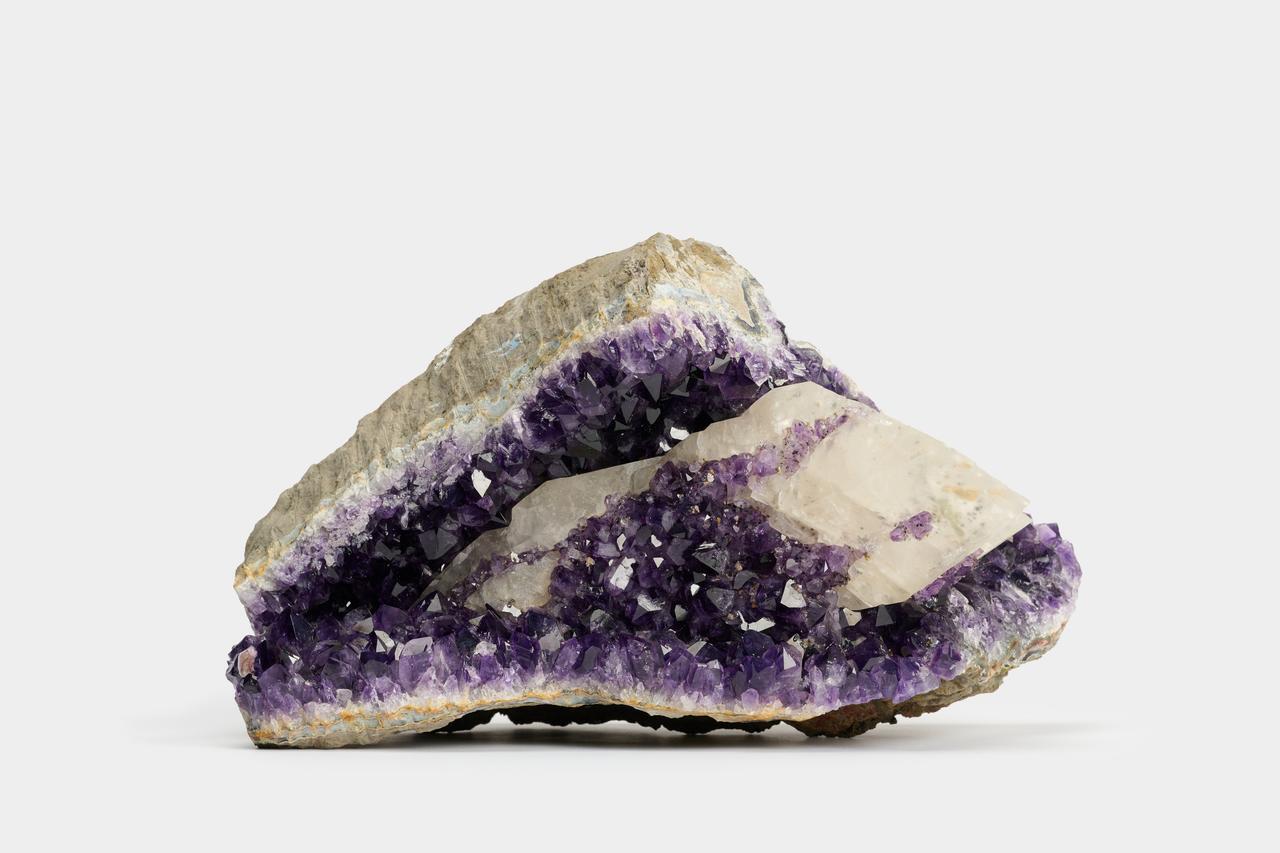
Intricately Patterned Septarian Nodule - Deep Calcite and Druzy Carved Septarian Geode Egg - Height: 170 mm - Width: 135 mm- 3171 g - (1)


00
days
16
hours
30
minutes
01
second
Current bid
€ 50
Reserve price not met

Expert
Selected by Georgia Foteinou
Holds BSc in geology and post-graduate qualifications in geochemistry.
Estimate € 380 - € 430
 | €50 | |
|---|---|---|
 | €45 | |
 | €40 | |
Catawiki Buyer Protection
Your payment’s safe with us until you receive your object.View details
Trustpilot 4.4 | 142645 reviews
Rated Excellent on Trustpilot.
Carved Septarian Geode Egg from Madagascar, featuring an Intricately Patterned Septarian Nodule with deep calcite and drusy, weighing 3171 g and measuring 170 × 135 × 135 mm.
AI-assisted summary
Description from the seller
Spectacular Septarian geode polished into an egg shape, with a sparkling cavity. — This refined specimen represents an exceptional Septarian, a composite mineral also known as the "Dragon Stone," coming from Madagascar. Septarian forms inside marine clay concretions or mudstone, where contractions during diagenesis create internal fissures that are subsequently filled by secondary minerals, typically calcite, aragonite, and sometimes quartz or dolomite. The external structure of this ovoid geode shows the characteristic polygonal, branching veining, derived from the precipitation of dark minerals (often bituminous clays or black chalcedony) that fill the original cracks, contrasting with the beige and gray tones of the host sediment matrix. The exterior of this specimen has been skillfully polished and carved into an egg shape, enhancing the fractal patterns and the surface shine. This workmanship not only gives the piece an aesthetically pleasing and symbolic form but also allows full appreciation of the internal geological architecture of Septarian. The transition from the opaque areas of the matrix to the darker, more translucent veins creates an intriguing natural “puzzle,” making each specimen unique and unrepeatable. The most fascinating feature of this lot is the internal cavity, which has been strategically opened and polished to reveal a sparkling druse. This druse is predominantly composed of microcrystals of calcite and probably dolomite, coating the cavity walls and reflecting light with a diffuse radiance. Distinct crystalline aggregates of different generations can be discerned, with some larger, more distinct crystals emerging from the microcrystalline base, adding depth and visual interest inside the geode. Geologically, Septarian nodules form in shallow marine environments, where anaerobic bacterial activity decomposes organic matter, leading to the precipitation of carbonates. The internal fissures, or “septaria,” develop due to dehydration and shrinkage of the sediment, subsequently filled with mineralized solutions. This complex genesis gives Septarian a rich geological history and varied mineral composition, making it an object of study and admiration. The considerable size and aesthetic quality of this carved geode make it a standout collectible piece. The combination of the fractal-patterned matrix, the ovoid carving, and the internal crystalline cavity offers a visually striking contrast and a testament to geological forces. Its condition is impeccable, with no signs of damage or restoration, presenting itself as a natural specimen enhanced by professional polishing that accentuates its intrinsic beauty. This specimen is particularly interesting to collectors who appreciate the fusion of natural geology and lapidary artistry. Its ability to capture and reflect light from the internal druse, combined with the intricate external motifs, makes it a focal point in any mineral collection or fine decorative piece. The originality of the pattern and the quality of the internal crystallization distinguish it as a museum-worthy piece.
Seller's Story
The Mineral Art Gallery offers minerals, fossils, shells and natural elements.
Born in Italy in 2017, today she collaborates with international galleries and collectors, she is a direct importer of large minerals and naturalistic collectible elements; deals with the processing to insert them inside the living space. A section of the gallery was dedicated to the Wunderkammer, "chamber of wonders or cabinet of curiosities" in which Mirabilia elements are presented: naturalia and italiania, a union between "the present is the past".
All lots are shipped via DHL Express and Fercam couriers, with insured parcel and tracking.
Translated by Google TranslateSpectacular Septarian geode polished into an egg shape, with a sparkling cavity. — This refined specimen represents an exceptional Septarian, a composite mineral also known as the "Dragon Stone," coming from Madagascar. Septarian forms inside marine clay concretions or mudstone, where contractions during diagenesis create internal fissures that are subsequently filled by secondary minerals, typically calcite, aragonite, and sometimes quartz or dolomite. The external structure of this ovoid geode shows the characteristic polygonal, branching veining, derived from the precipitation of dark minerals (often bituminous clays or black chalcedony) that fill the original cracks, contrasting with the beige and gray tones of the host sediment matrix. The exterior of this specimen has been skillfully polished and carved into an egg shape, enhancing the fractal patterns and the surface shine. This workmanship not only gives the piece an aesthetically pleasing and symbolic form but also allows full appreciation of the internal geological architecture of Septarian. The transition from the opaque areas of the matrix to the darker, more translucent veins creates an intriguing natural “puzzle,” making each specimen unique and unrepeatable. The most fascinating feature of this lot is the internal cavity, which has been strategically opened and polished to reveal a sparkling druse. This druse is predominantly composed of microcrystals of calcite and probably dolomite, coating the cavity walls and reflecting light with a diffuse radiance. Distinct crystalline aggregates of different generations can be discerned, with some larger, more distinct crystals emerging from the microcrystalline base, adding depth and visual interest inside the geode. Geologically, Septarian nodules form in shallow marine environments, where anaerobic bacterial activity decomposes organic matter, leading to the precipitation of carbonates. The internal fissures, or “septaria,” develop due to dehydration and shrinkage of the sediment, subsequently filled with mineralized solutions. This complex genesis gives Septarian a rich geological history and varied mineral composition, making it an object of study and admiration. The considerable size and aesthetic quality of this carved geode make it a standout collectible piece. The combination of the fractal-patterned matrix, the ovoid carving, and the internal crystalline cavity offers a visually striking contrast and a testament to geological forces. Its condition is impeccable, with no signs of damage or restoration, presenting itself as a natural specimen enhanced by professional polishing that accentuates its intrinsic beauty. This specimen is particularly interesting to collectors who appreciate the fusion of natural geology and lapidary artistry. Its ability to capture and reflect light from the internal druse, combined with the intricate external motifs, makes it a focal point in any mineral collection or fine decorative piece. The originality of the pattern and the quality of the internal crystallization distinguish it as a museum-worthy piece.
Seller's Story
The Mineral Art Gallery offers minerals, fossils, shells and natural elements.
Born in Italy in 2017, today she collaborates with international galleries and collectors, she is a direct importer of large minerals and naturalistic collectible elements; deals with the processing to insert them inside the living space. A section of the gallery was dedicated to the Wunderkammer, "chamber of wonders or cabinet of curiosities" in which Mirabilia elements are presented: naturalia and italiania, a union between "the present is the past".
All lots are shipped via DHL Express and Fercam couriers, with insured parcel and tracking.
Translated by Google TranslateDetails
Number of objects
1
Main mineral
Intricately Patterned Septarian Nodule - Deep Calcite and Druzy
Mineral form
Carved Septarian Geode Egg
Supplement
Septarian Geode Egg
Weight
3171 g
Country of origin
Madagascar
Height
170 mm
Width
135 mm
Depth
135 mm
Sold by