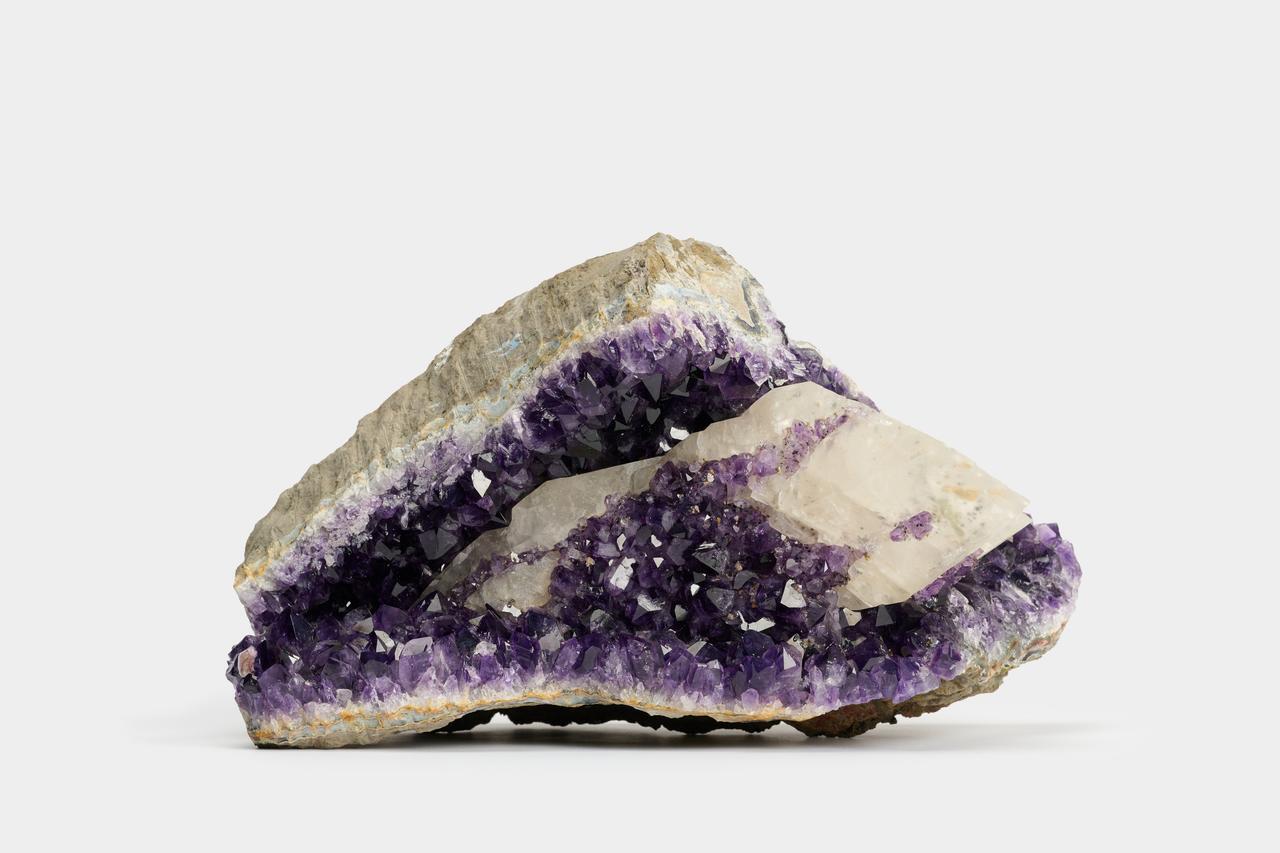
Natural Rare Pyrite Formation Pirite Sun - Pyrite Dollar Pirite Sun - Height: 160 mm - Width: 60 mm- 212 g - (1)


00
days
14
hours
24
minutes
12
seconds
Current bid
€ 10
Reserve price not met

Expert
Selected by Antonio Rapisarda
Holds a master’s in chemistry with 25 years’ experience in minerals consulting.
Estimate € 430 - € 480
 | €10 | |
|---|---|---|
| €4 | |
| €3 | |
Catawiki Buyer Protection
Your payment’s safe with us until you receive your object.View details
Trustpilot 4.4 | 142734 reviews
Rated Excellent on Trustpilot.
Natural rare Pyrite formation named Pirite Sun, a disk-shaped radiating crystal from coal mines in Illinois, USA, mounted on a black wood base with brass support.
AI-assisted summary
Description from the seller
This splendid specimen represents one of the most fascinating and rare forms in which pyrite can crystallize: the so-called "Pyrite Sun" or "Pyrite Dollar." Hailing from the famous coal mines of Illinois, United States, this formation takes its name from its unmistakable disc-like and radial shape, reminiscent of a stylized sun or an ancient ceremonial coin. Pyrite Sun crystals form at low temperatures within carbonaceous shales, under very specific geochemical conditions. Unlike classic cubic pyrites, this variety exhibits flat, thin crystallizations in which pyrite lamellae grow laterally along the bedding planes of the host rock. The result is an extremely bright surface, with golden metallic reflections and a natural design that resembles rays radiating from the center toward the edges. Technical characteristics: Mineral: Pyrite (FeS₂ – iron disulfide) Origin: Coal mines, Illinois, USA Form: Radial discoid crystallization (Pyrite Sun) Color: Metallic gold with a sparkling lamellar texture Support: Mounted on a black wooden base with an brass support, ideal to enhance the piece on display. Pyrite Sun is highly valued in the collecting world for its rarity and for its almost perfect geometry, which makes it resemble a natural work of art. Each specimen is unique, with slight irregularities in the edge or in the arrangement of the rays, features that add individuality to the piece. This pyrite is perfect as a decorative element for sophisticated interiors or as a display object in geology, mineralogy, or natural curiosities collections. The wooden base and the elegant brass support emphasize the mineral’s sculptural aspect, making it suitable also for modern or study environments. Curiosity: Despite its “golden” appearance, pyrite contains no gold, but it was often mistaken for it in ancient times, hence the nickname “fool’s gold.” The discoid crystallization is unique to Illinois and is not easily found in other regions of the world, making these specimens highly sought after.
Seller's Story
The Mineral Art Gallery offers minerals, fossils, shells and natural elements.
Born in Italy in 2017, today she collaborates with international galleries and collectors, she is a direct importer of large minerals and naturalistic collectible elements; deals with the processing to insert them inside the living space. A section of the gallery was dedicated to the Wunderkammer, "chamber of wonders or cabinet of curiosities" in which Mirabilia elements are presented: naturalia and italiania, a union between "the present is the past".
All lots are shipped via DHL Express and Fercam couriers, with insured parcel and tracking.
Translated by Google TranslateThis splendid specimen represents one of the most fascinating and rare forms in which pyrite can crystallize: the so-called "Pyrite Sun" or "Pyrite Dollar." Hailing from the famous coal mines of Illinois, United States, this formation takes its name from its unmistakable disc-like and radial shape, reminiscent of a stylized sun or an ancient ceremonial coin. Pyrite Sun crystals form at low temperatures within carbonaceous shales, under very specific geochemical conditions. Unlike classic cubic pyrites, this variety exhibits flat, thin crystallizations in which pyrite lamellae grow laterally along the bedding planes of the host rock. The result is an extremely bright surface, with golden metallic reflections and a natural design that resembles rays radiating from the center toward the edges. Technical characteristics: Mineral: Pyrite (FeS₂ – iron disulfide) Origin: Coal mines, Illinois, USA Form: Radial discoid crystallization (Pyrite Sun) Color: Metallic gold with a sparkling lamellar texture Support: Mounted on a black wooden base with an brass support, ideal to enhance the piece on display. Pyrite Sun is highly valued in the collecting world for its rarity and for its almost perfect geometry, which makes it resemble a natural work of art. Each specimen is unique, with slight irregularities in the edge or in the arrangement of the rays, features that add individuality to the piece. This pyrite is perfect as a decorative element for sophisticated interiors or as a display object in geology, mineralogy, or natural curiosities collections. The wooden base and the elegant brass support emphasize the mineral’s sculptural aspect, making it suitable also for modern or study environments. Curiosity: Despite its “golden” appearance, pyrite contains no gold, but it was often mistaken for it in ancient times, hence the nickname “fool’s gold.” The discoid crystallization is unique to Illinois and is not easily found in other regions of the world, making these specimens highly sought after.
Seller's Story
The Mineral Art Gallery offers minerals, fossils, shells and natural elements.
Born in Italy in 2017, today she collaborates with international galleries and collectors, she is a direct importer of large minerals and naturalistic collectible elements; deals with the processing to insert them inside the living space. A section of the gallery was dedicated to the Wunderkammer, "chamber of wonders or cabinet of curiosities" in which Mirabilia elements are presented: naturalia and italiania, a union between "the present is the past".
All lots are shipped via DHL Express and Fercam couriers, with insured parcel and tracking.
Translated by Google TranslateDetails
Number of objects
1
Main mineral
Natural Rare Pyrite Formation Pirite Sun - Pyrite Dollar
Mineral form
Pirite Sun
Supplement
Exclusive Wood and Brass Artistic
Weight
212 g
Country of origin
Illinois
Height
160 mm
Width
60 mm
Depth
60 mm
Sold by
Disclaimer
It is believed that certain gemstones and minerals have beneficial health and spiritual properties. However, using or wearing gemstones or minerals does not mean that you can treat, cure or prevent any disease. Please consult your health care professional for information on health care issues and do not stop any medications or courses of treatment, without first consulting your health care professional. The use of gemstones or minerals as a wellness therapy is one of personal choice. While stones or crystals have been used historically to relieve or prevent symptoms, the objects sold on our website offer no guarantee of results. Therefore, Catawiki cannot guarantee or be held liable for the effectiveness of these objects sold herein.
It is believed that certain gemstones and minerals have beneficial health and spiritual properties. However, using or wearing gemstones or minerals does not mean that you can treat, cure or prevent any disease. Please consult your health care professional for information on health care issues and do not stop any medications or courses of treatment, without first consulting your health care professional. The use of gemstones or minerals as a wellness therapy is one of personal choice. While stones or crystals have been used historically to relieve or prevent symptoms, the objects sold on our website offer no guarantee of results. Therefore, Catawiki cannot guarantee or be held liable for the effectiveness of these objects sold herein.