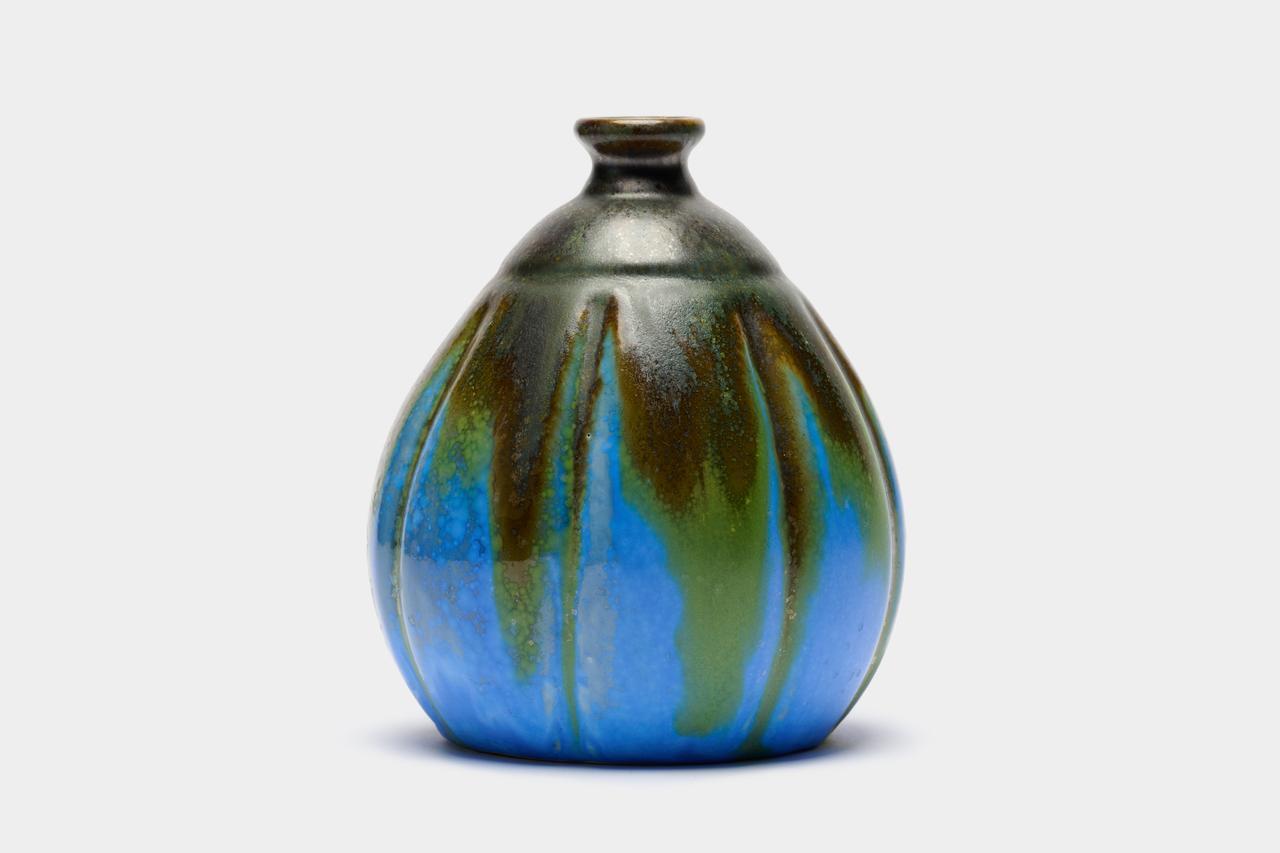
Verreries Schneider - Baluster vase - Glass - Trumpet vase


06
days
23
hours
07
minutes
05
seconds

No bids placed
Catawiki Buyer Protection
Your payment’s safe with us until you receive your object.View details
Trustpilot 4.4 | 142824 reviews
Rated Excellent on Trustpilot.
A hand-blown amber and green glass trumpet vase dating to circa 1930–1940, of Belgian origin, measuring 20 cm high and 10 cm in diameter, in good used condition with small signs of aging and spotting.
AI-assisted summary
Description from the seller
This is a mouth-blown vintage trumpet vase or goblet vase made of amber-colored and green glass.
Features of the vase:
Shape: A tall trumpet- or goblet-shaped top with a broad, flaring rim.
Color: A warm amber or honey-toned goblet paired with a striking dark green ring/knob on the foot and an amber-colored footplate.
Style: Comparable to mid-century or art-deco-inspired vintage styles (such as Italian or Scandinavian art glass),
This type of two-tone glass trumpet vase dates from the 1930s to the 1950s (the Art Deco to early mid-century period).
Such mouth-blown glassware with a contrasting colored knob on the stem was widely produced in that period by well-known glass factories in Central and Western Europe, including glassworks in Bohemia (Czech Republic), Belgium (such as Verreries Doyen), Germany and also in the Netherlands (such as certain experimental series or export models).
This is a mouth-blown vintage trumpet vase or goblet vase made of amber-colored and green glass.
Features of the vase:
Shape: A tall trumpet- or goblet-shaped top with a broad, flaring rim.
Color: A warm amber or honey-toned goblet paired with a striking dark green ring/knob on the foot and an amber-colored footplate.
Style: Comparable to mid-century or art-deco-inspired vintage styles (such as Italian or Scandinavian art glass),
This type of two-tone glass trumpet vase dates from the 1930s to the 1950s (the Art Deco to early mid-century period).
Such mouth-blown glassware with a contrasting colored knob on the stem was widely produced in that period by well-known glass factories in Central and Western Europe, including glassworks in Bohemia (Czech Republic), Belgium (such as Verreries Doyen), Germany and also in the Netherlands (such as certain experimental series or export models).
Details
Era
1900-2000
Title additional information
Trumpet vase
Number of objects
1
Country of origin
Belgium
Material
Glass
Style
Art Deco
Manufacturer/brand
Verreries Schneider
Colour
Multicolour
Condition
Good condition - used with small signs of aging & blemishes
Height
20 cm
Width
10 cm
Depth
10 cm
Diameter
10 cm
Estimated period
1930-1940