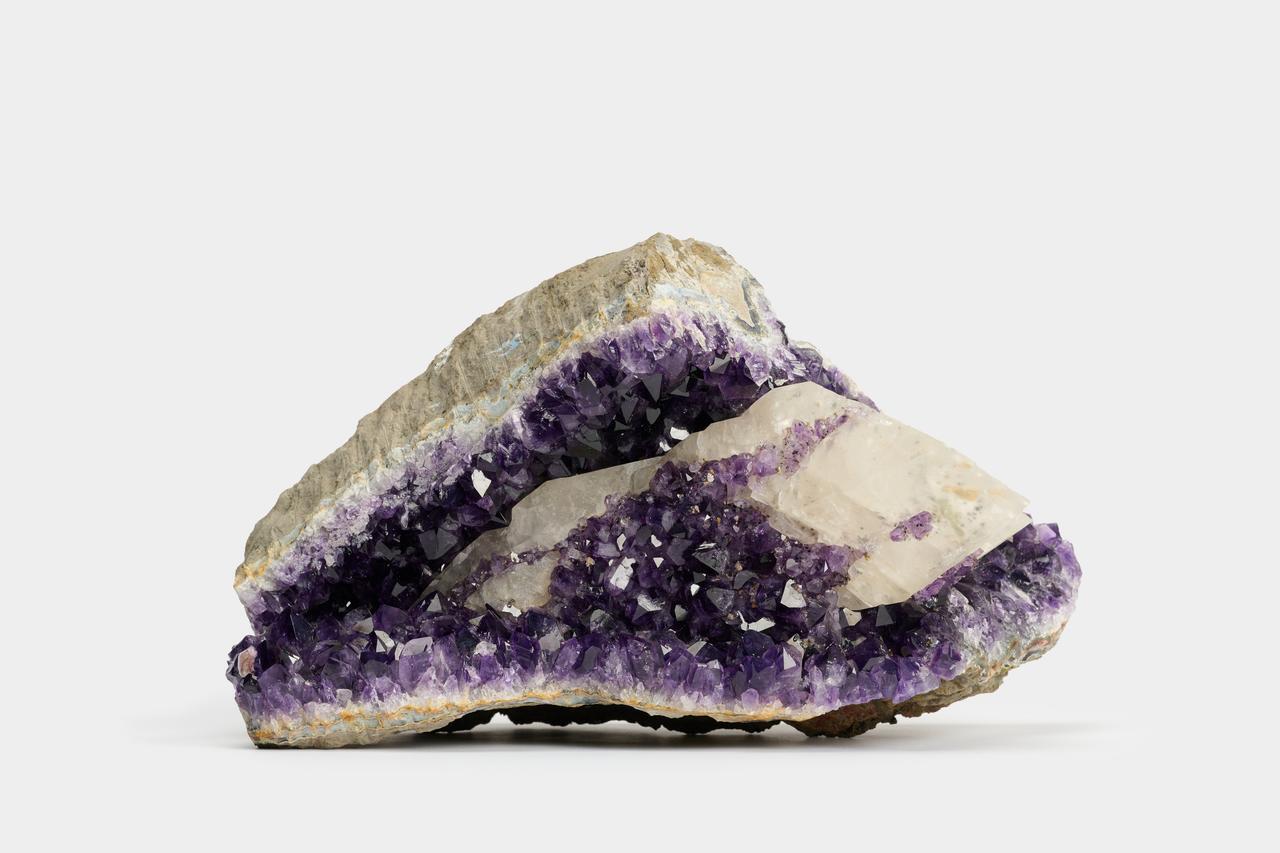
Extra Quality Afghan Lapislazzuli Slice - Natural Royal Blu Deep Color - Polished Freeform Specimen - Height: 155 mm - Width: 140 mm- 1070 g - (1)


03
days
00
hours
08
minutes
36
seconds
Starting bid
€ 1
Reserve price not met

Expert
Selected by Georgia Foteinou
Holds BSc in geology and post-graduate qualifications in geochemistry.
Estimate € 500 - € 550
No bids placed
Catawiki Buyer Protection
Your payment’s safe with us until you receive your object.View details
Trustpilot 4.4 | 142645 reviews
Rated Excellent on Trustpilot.
Extra Quality Afghan lapis lazuli slice, a polished freeform specimen from Afghanistan, weighing 1070 g with a deep royal blue colour.
AI-assisted summary
Description from the seller
Polished free-form lapis lazuli, richly speckled with golden inclusions — A magnificent specimen of free-form, polished lapis lazuli presents itself, coming from the historic mines of Afghanistan. This piece, of notable size and weighing over a kilogram, immediately captures attention with its intense, deep blue color, evocative of the most precious pigments in art history. The surface, expertly worked, offers a sculptural and modern aesthetic, making it a highly impactful visual object. Observing the specimen in detail, one appreciates the superb polish that enhances every color gradation and creates a surface that is almost glassy, smooth to the touch. The dominant color is a royal, deep, saturated blue, the quintessence of high-quality lapis lazuli. On this cobalt blue backdrop unfolds a fine, sparkling dispersion of pyrite. These golden specks and aggregates, like stardust, create the iconic effect of a “starry night sky.” The mineralogical field is completed by white and grayish Calcite veining and patches that traverse the surface like bright brushstrokes, adding dynamism and bearing witness to the rock’s authenticity and complex genesis. Lapis lazuli is not a single mineral but a metamorphic rock composed of several minerals. Its unmistakable color is mainly due to the presence of lazurite, a complex silicate. Its formation occurs through contact metamorphism, typically in crystalline limestones following a magmatic intrusion. The Badakhshan province mines in Afghanistan, active for over 6,000 years, are the world’s oldest and most famous source for this material, and specimens from this region are regarded as the benchmark for quality. This piece embodies the typical characteristics of such prestigious provenance. Few stones boast such a rich and fascinating history. Since antiquity, lapis lazuli has been regarded as a gem of great value, a symbol of royalty, wisdom, and power. The ancient Egyptians used it extensively for jewelry, amulets, and ceremonial objects, as evidenced by Tutankhamun’s famous funerary mask. During the Renaissance, lapis lazuli powder was ground to produce the ultramarine pigment, the most expensive and sought after by the great masters of painting. Possessing a specimen like this means safeguarding a fragment of geological and human history. With its organic form and flawless finish, this lapis lazuli qualifies as both a fine mineralogical collectible and a sophisticated design piece. It is an ideal object to enrich a contemporary Wunderkammer, a library, or a study, where its sculptural presence and vibrant color can be admired. Its generous size and timeless aesthetics make it a focal point in any setting, capable of conversing with both classic and modern furnishings.
Seller's Story
The Mineral Art Gallery offers minerals, fossils, shells and natural elements.
Born in Italy in 2017, today she collaborates with international galleries and collectors, she is a direct importer of large minerals and naturalistic collectible elements; deals with the processing to insert them inside the living space. A section of the gallery was dedicated to the Wunderkammer, "chamber of wonders or cabinet of curiosities" in which Mirabilia elements are presented: naturalia and italiania, a union between "the present is the past".
All lots are shipped via DHL Express and Fercam couriers, with insured parcel and tracking.
Translated by Google TranslatePolished free-form lapis lazuli, richly speckled with golden inclusions — A magnificent specimen of free-form, polished lapis lazuli presents itself, coming from the historic mines of Afghanistan. This piece, of notable size and weighing over a kilogram, immediately captures attention with its intense, deep blue color, evocative of the most precious pigments in art history. The surface, expertly worked, offers a sculptural and modern aesthetic, making it a highly impactful visual object. Observing the specimen in detail, one appreciates the superb polish that enhances every color gradation and creates a surface that is almost glassy, smooth to the touch. The dominant color is a royal, deep, saturated blue, the quintessence of high-quality lapis lazuli. On this cobalt blue backdrop unfolds a fine, sparkling dispersion of pyrite. These golden specks and aggregates, like stardust, create the iconic effect of a “starry night sky.” The mineralogical field is completed by white and grayish Calcite veining and patches that traverse the surface like bright brushstrokes, adding dynamism and bearing witness to the rock’s authenticity and complex genesis. Lapis lazuli is not a single mineral but a metamorphic rock composed of several minerals. Its unmistakable color is mainly due to the presence of lazurite, a complex silicate. Its formation occurs through contact metamorphism, typically in crystalline limestones following a magmatic intrusion. The Badakhshan province mines in Afghanistan, active for over 6,000 years, are the world’s oldest and most famous source for this material, and specimens from this region are regarded as the benchmark for quality. This piece embodies the typical characteristics of such prestigious provenance. Few stones boast such a rich and fascinating history. Since antiquity, lapis lazuli has been regarded as a gem of great value, a symbol of royalty, wisdom, and power. The ancient Egyptians used it extensively for jewelry, amulets, and ceremonial objects, as evidenced by Tutankhamun’s famous funerary mask. During the Renaissance, lapis lazuli powder was ground to produce the ultramarine pigment, the most expensive and sought after by the great masters of painting. Possessing a specimen like this means safeguarding a fragment of geological and human history. With its organic form and flawless finish, this lapis lazuli qualifies as both a fine mineralogical collectible and a sophisticated design piece. It is an ideal object to enrich a contemporary Wunderkammer, a library, or a study, where its sculptural presence and vibrant color can be admired. Its generous size and timeless aesthetics make it a focal point in any setting, capable of conversing with both classic and modern furnishings.
Seller's Story
The Mineral Art Gallery offers minerals, fossils, shells and natural elements.
Born in Italy in 2017, today she collaborates with international galleries and collectors, she is a direct importer of large minerals and naturalistic collectible elements; deals with the processing to insert them inside the living space. A section of the gallery was dedicated to the Wunderkammer, "chamber of wonders or cabinet of curiosities" in which Mirabilia elements are presented: naturalia and italiania, a union between "the present is the past".
All lots are shipped via DHL Express and Fercam couriers, with insured parcel and tracking.
Translated by Google TranslateDetails
Number of objects
1
Main mineral
Extra Quality Afghan Lapislazzuli Slice - Natural Royal Blu Deep Color -
Mineral form
Polished Freeform Specimen
Supplement
High-Grade Afghan Lapis Lazuli
Weight
1070 g
Country of origin
Afghanistan
Height
155 mm
Width
140 mm
Depth
30 mm
Sold by