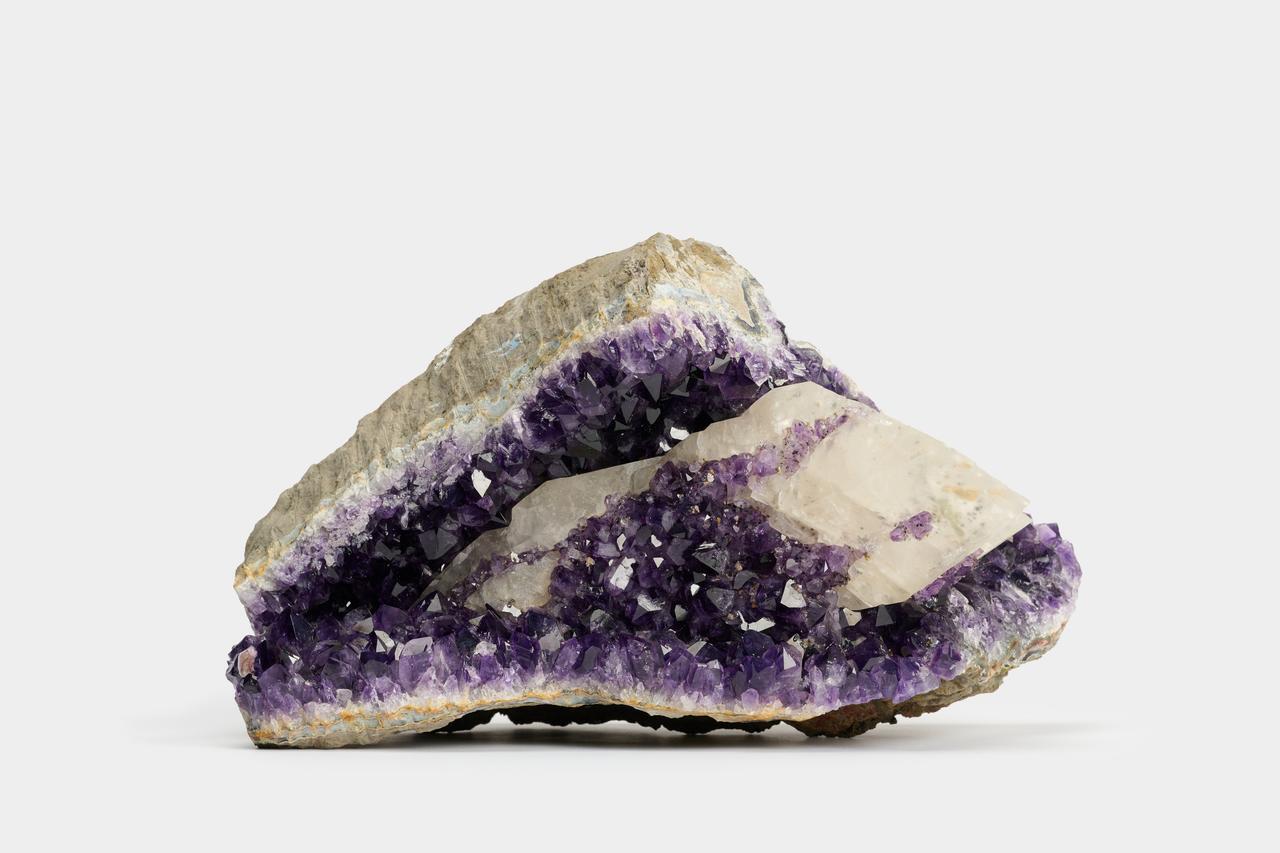
Green Apophyllite Crystals with Glassy Sheen and Tabular Shapes Peach Stilbite and Well-Formed Apophyllite - Height: 190 mm - Width: 120 mm- 975 g - (1)


06
days
23
hours
59
minutes
24
seconds

No bids placed
Catawiki Buyer Protection
Your payment’s safe with us until you receive your object.View details
Trustpilot 4.4 | 142734 reviews
Rated Excellent on Trustpilot.
Description from the seller
Green Apophyllite on Stilbite — This exceptional mineral specimen presents itself as a large sculptural cluster coming from the famous Deccan basalt formations in India. The piece shows a superb association between green apophyllite crystals and stilbite aggregates, creating a item with great visual impact and notable interest for collectors. The substantial dimensions and the aesthetic balance between the two minerals make it a classic representative of Indian mineralogy. The protagonists of the specimen are the large apophyllite crystals, which emerge with well-defined, pseudo-cubic and tabular forms. Their luster is predominantly vitreous, almost pearly on the cleavage surfaces, and it captures light, revealing a remarkable transparency. Inside the crystals, delicate “phantom” inclusions of pale mint green can be observed, a distinctive feature for samples from this provenance. The crystal faces, some finely striated, reflect light in a sparkling play that highlights their nearly architectural geometry. Serving as a base and contrast to the apophyllite is a lush carpet of stilbite. This mineral, belonging to the zeolite group, develops in aggregates of “coin” and fan shapes, typical of its structure. The color ranges from a delicate peach-pink to cream and ivory tones, giving the entire matrix a soft and almost organic appearance. The pearly gloss of stilbite creates a magnificent chromatic and structural dialogue with the vitreous transparency of the apophyllite, generating a natural balance of shapes and textures. The specimen possesses notable three-dimensionality, offering fascinating perspectives from every angle. The arrangement of the crystals creates a rich mineral landscape of nooks and overlaps. One side of the specimen reveals a portion of the underlying basaltic host rock, dark gray in color and porous in texture, with small reddish inclusions, probably hematite, testifying to the original geological environment in which these minerals formed. The genesis of this association is linked to the volcanic processes that gave rise to the Deccan Traps, one of the largest igneous provinces in the world. Inside the cavities (vesicles) left by gas in the cooling basalt, hydrothermal solutions rich in silicates slowly deposited these wonderful crystals over millions of years. Apophyllite and stilbite are among the most representative and sought-after minerals of these formations. For its size, the quality of the crystals, and the classic association, this specimen is a museum-worthy piece of great value—a cabinet specimen that should not be missing in a collection dedicated to zeolites or Indian mineralogy. Beyond its scientific value, it represents an extraordinary element of natural design, capable of enriching a library, a study, or a contemporary setting with the timeless elegance of a sculpture created by the Earth."
Seller's Story
The Mineral Art Gallery offers minerals, fossils, shells and natural elements.
Born in Italy in 2017, today she collaborates with international galleries and collectors, she is a direct importer of large minerals and naturalistic collectible elements; deals with the processing to insert them inside the living space. A section of the gallery was dedicated to the Wunderkammer, "chamber of wonders or cabinet of curiosities" in which Mirabilia elements are presented: naturalia and italiania, a union between "the present is the past".
All lots are shipped via DHL Express and Fercam couriers, with insured parcel and tracking.
Translated by Google TranslateGreen Apophyllite on Stilbite — This exceptional mineral specimen presents itself as a large sculptural cluster coming from the famous Deccan basalt formations in India. The piece shows a superb association between green apophyllite crystals and stilbite aggregates, creating a item with great visual impact and notable interest for collectors. The substantial dimensions and the aesthetic balance between the two minerals make it a classic representative of Indian mineralogy. The protagonists of the specimen are the large apophyllite crystals, which emerge with well-defined, pseudo-cubic and tabular forms. Their luster is predominantly vitreous, almost pearly on the cleavage surfaces, and it captures light, revealing a remarkable transparency. Inside the crystals, delicate “phantom” inclusions of pale mint green can be observed, a distinctive feature for samples from this provenance. The crystal faces, some finely striated, reflect light in a sparkling play that highlights their nearly architectural geometry. Serving as a base and contrast to the apophyllite is a lush carpet of stilbite. This mineral, belonging to the zeolite group, develops in aggregates of “coin” and fan shapes, typical of its structure. The color ranges from a delicate peach-pink to cream and ivory tones, giving the entire matrix a soft and almost organic appearance. The pearly gloss of stilbite creates a magnificent chromatic and structural dialogue with the vitreous transparency of the apophyllite, generating a natural balance of shapes and textures. The specimen possesses notable three-dimensionality, offering fascinating perspectives from every angle. The arrangement of the crystals creates a rich mineral landscape of nooks and overlaps. One side of the specimen reveals a portion of the underlying basaltic host rock, dark gray in color and porous in texture, with small reddish inclusions, probably hematite, testifying to the original geological environment in which these minerals formed. The genesis of this association is linked to the volcanic processes that gave rise to the Deccan Traps, one of the largest igneous provinces in the world. Inside the cavities (vesicles) left by gas in the cooling basalt, hydrothermal solutions rich in silicates slowly deposited these wonderful crystals over millions of years. Apophyllite and stilbite are among the most representative and sought-after minerals of these formations. For its size, the quality of the crystals, and the classic association, this specimen is a museum-worthy piece of great value—a cabinet specimen that should not be missing in a collection dedicated to zeolites or Indian mineralogy. Beyond its scientific value, it represents an extraordinary element of natural design, capable of enriching a library, a study, or a contemporary setting with the timeless elegance of a sculpture created by the Earth."
Seller's Story
The Mineral Art Gallery offers minerals, fossils, shells and natural elements.
Born in Italy in 2017, today she collaborates with international galleries and collectors, she is a direct importer of large minerals and naturalistic collectible elements; deals with the processing to insert them inside the living space. A section of the gallery was dedicated to the Wunderkammer, "chamber of wonders or cabinet of curiosities" in which Mirabilia elements are presented: naturalia and italiania, a union between "the present is the past".
All lots are shipped via DHL Express and Fercam couriers, with insured parcel and tracking.
Translated by Google TranslateDetails
Number of objects
1
Main mineral
Green Apophyllite Crystals with Glassy Sheen and Tabular Shapes
Mineral form
Peach Stilbite and Well-Formed Apophyllite
Supplement
Cabinet
Weight
975 g
Country of origin
India
Height
190 mm
Width
120 mm
Depth
90 mm
Sold by