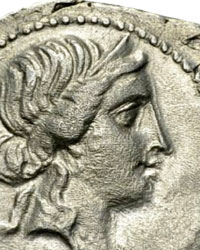
Thrace, Byzantion Trihemiobol 340-320 BC (No reserve price)


04
days
15
hours
17
minutes
49
seconds

 | €10 | |
|---|---|---|
 | €9 | |
| €8 | |
Catawiki Buyer Protection
Your payment’s safe with us until you receive your object.View details
Trustpilot 4.4 | 143038 reviews
Rated Excellent on Trustpilot.
Thrace, Byzantion, silver Trihemiobol (340–320 BC), 1.05 g, 13 mm; obverse features a bull walking left atop a dolphin with ΠΥ above, reverse shows a quadripartite incuse square in the form of a stippled mill sail device.
AI-assisted summary
Description from the seller
Thrace, Byzantion.
340-320 BC.
Trihemiobol (Silver, 13 mm, 1.05 g).
Obv: Bull walking to left atop dolphin; ΠΥ above.
Rev: Quadripartite incuse square in the form of stippled 'mill sail' device.
Reference: SNG BM Black Sea 46-8; HGC 3.2, 1391.
Byzantion was a Megarian colony founded around 657 BC on the European shore of the Bosporus, where it controlled passage between the Aegean and Black Sea. In 340-339 BC, its resistance to Philip II of Macedon, aided by an Athenian fleet under Chares, preserved the city’s independence. Constantine I refounded Byzantion as Constantinople in 330 AD, making it the capital of the Roman Empire.
DISCOVER OUR CURRENT SELECTION
Visit and follow our seller profile to explore all items offered by Logos Numismatics & Antiquities across current auctions and stay informed of new listings.
IMPORTANT INFORMATION
I. All items are authentic and lawfully acquired through established European auction houses; provenance is documented in our records.
II. Every order includes one consolidated, signed certificate of authenticity and lawful provenance, recording each item's full attribution.
III. Combined shipping is available only for items won in the same auction and settled as one Catawiki order.
IV. For shipments outside the European Union, import licences, taxes, and related fees are the buyer’s responsibility. Customs delays are beyond our control.
Seller's Story
Drawing on more than 15 years of collecting experience, we offer ancient and medieval coins and artefacts that tell the stories of the lands and peoples of the eastern Mediterranean and the Near East.
Thrace, Byzantion.
340-320 BC.
Trihemiobol (Silver, 13 mm, 1.05 g).
Obv: Bull walking to left atop dolphin; ΠΥ above.
Rev: Quadripartite incuse square in the form of stippled 'mill sail' device.
Reference: SNG BM Black Sea 46-8; HGC 3.2, 1391.
Byzantion was a Megarian colony founded around 657 BC on the European shore of the Bosporus, where it controlled passage between the Aegean and Black Sea. In 340-339 BC, its resistance to Philip II of Macedon, aided by an Athenian fleet under Chares, preserved the city’s independence. Constantine I refounded Byzantion as Constantinople in 330 AD, making it the capital of the Roman Empire.
DISCOVER OUR CURRENT SELECTION
Visit and follow our seller profile to explore all items offered by Logos Numismatics & Antiquities across current auctions and stay informed of new listings.
IMPORTANT INFORMATION
I. All items are authentic and lawfully acquired through established European auction houses; provenance is documented in our records.
II. Every order includes one consolidated, signed certificate of authenticity and lawful provenance, recording each item's full attribution.
III. Combined shipping is available only for items won in the same auction and settled as one Catawiki order.
IV. For shipments outside the European Union, import licences, taxes, and related fees are the buyer’s responsibility. Customs delays are beyond our control.
Seller's Story
Drawing on more than 15 years of collecting experience, we offer ancient and medieval coins and artefacts that tell the stories of the lands and peoples of the eastern Mediterranean and the Near East.
Details
Era
Before 1400
Culture/region
Thrace, Byzantion
Year/period and variation
340-320 BC
Denomination
Trihemiobol
Metal
AR
Condition
Ungraded
Weight
1.05 g