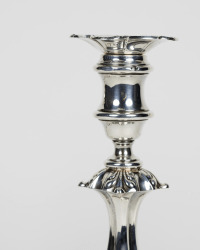
Erfgenamen I.E. Zakhoder, Berdichev, 1907 - Kiddush cup - Silver


04
days
16
hours
18
minutes
57
seconds
Current bid
€ 225
Reserve price met

Expert
Selected by Jeroen Zoetmulder
Has over 30 years of experience in archaeology and is an appraiser specialising in archaeological objects.
Estimate € 250 - € 280
 | €225 | |
|---|---|---|
| €175 |
Catawiki Buyer Protection
Your payment’s safe with us until you receive your object.View details
Trustpilot 4.4 | 142947 reviews
Rated Excellent on Trustpilot.
Kiddush cup in silver with gold gilt, dating to 1907 and marked by the Heirs of I. E. Zakhoder, Berdichev, weighing 40 g and measuring 6.7 cm high by 5 cm in diameter, in good condition with minor signs of age, originating from Ukraine and authenticated by the Kiev Assay Office.
AI-assisted summary
Description from the seller
This remarkable Kiddush cup is a historic and collectible object from 1907, certified in Berdichev by the Kiev Assay Office. The cup bears an exceptional and well-documented combination of marks that was used exclusively in that year.
The master mark Н over ИЕЗ stands for Наследники И.Е. Заходера (Heirs of I.E. Zakhoder). Israel Yeselevich Zakhoder owned a silverware factory and was a renowned producer of Judaica. After his death in 1907, the workshop was continued by his heirs, which is expressed in the addition of the letter “Н” (Nasledniki / Heirs) to the original ИЕЗ mark. This makes this Kiddush cup directly datable and particularly rare.
In addition to the master mark, the medals of a exhibition winner are depicted under the Н-ИЕЗ mark, a reference to the workshop’s recognition and quality. To the right of the stamped head are the initials ЛО, belonging to Lev Oleks, manager of the Kiev Assay Office. This specific combination of hallmarks was used only in 1907, the year of Zakhoder’s death.
The history behind this piece is unusually rich. The Israel Yeselevich Zakhoder Silver Workshop (ИЕЗ) was forced to leave Moscow in the early 1890s due to strict measures against Jews and settled in Berdichev. Also the silver workshop of Girsh Ravkin (ГР), Zakhoder’s son-in-law, moved to this city. After the death of Israel Yeselevich, both workshops were merged under Ravkin’s leadership.
This Kiddush cup is not only a functional ritual object but also a tangible piece of Jewish history, craftsmanship, and resilience. An exceptional addition for collectors of Judaica, Russian silver, and museum pieces.
The Kiddush cup is gold-plated.
Height: 6.7 cm. Diameter: 5 cm.
Weight: 40 grams.
Provenance: From the collection of Devotionalia.
What is Kiddush?
Kiddush ("sanctification") is a short ceremony during which, in the evening at the beginning of the Sabbath and on certain holidays, a blessing is recited over a cup of wine. The blessing is recited by the head of the household in the presence of the entire family, immediately after returning from the synagogue, before the evening meal, and is repeated the next morning. The blessing consists of two blessings: one over the wine and one over the Sabbath or another holiday. The father uses the Kiddush cup with the appropriate content, and all family members have their own smaller Kiddush cups. This is considered healthier than drinking directly from the same large, shared Kiddush cup.
The Aish Rabbi answers: The reason for sharing the wine (or grape juice) is that the Wise Ones recommend partaking in a "cup of blessing" (kos shel bracha) – that is, a cup that has been used for a mitzvah (a commandment). Thus the "blessing" is shared with the other present. Therefore, after reciting Kiddush, someone typically pours a little wine from his own cup, which is then poured into smaller cups for those present.
It is important to share the wine correctly. The host should pour some wine from his own cup before he starts drinking. Not only is drinking from someone else’s cup considered distasteful by many, but only pure wine may be shared. Once someone has partaken, the wine is considered pagum (literally: "defective") and is no longer valid for Kiddush — and only valid wine confers a blessing when shared. Alternatively, the person reciting Kiddush may pass his own cup after drinking. Although wine may have already been drunk from it, since it remains in the original cup it is not pagum and may be shared.
If the host pours wine from his own cup before he begins to drink, he should ensure he pours only a little – so that he will still have the full required amount of revi’it in his cup after pouring. (See this earlier answer regarding the required amount of wine.) If his cup is small and there are many guests, a common solution is to pre-pour some wine from the bottle into a separate cup and then pour a little Kiddush wine into that cup before sharing it with others.
Finally, those present should wait to drink the wine they have received until the host himself begins to drink. In fact, after the host has poured some wine from his cup into a second cup, he should drink it immediately before sharing the poured wine with others.
This remarkable Kiddush cup is a historic and collectible object from 1907, certified in Berdichev by the Kiev Assay Office. The cup bears an exceptional and well-documented combination of marks that was used exclusively in that year.
The master mark Н over ИЕЗ stands for Наследники И.Е. Заходера (Heirs of I.E. Zakhoder). Israel Yeselevich Zakhoder owned a silverware factory and was a renowned producer of Judaica. After his death in 1907, the workshop was continued by his heirs, which is expressed in the addition of the letter “Н” (Nasledniki / Heirs) to the original ИЕЗ mark. This makes this Kiddush cup directly datable and particularly rare.
In addition to the master mark, the medals of a exhibition winner are depicted under the Н-ИЕЗ mark, a reference to the workshop’s recognition and quality. To the right of the stamped head are the initials ЛО, belonging to Lev Oleks, manager of the Kiev Assay Office. This specific combination of hallmarks was used only in 1907, the year of Zakhoder’s death.
The history behind this piece is unusually rich. The Israel Yeselevich Zakhoder Silver Workshop (ИЕЗ) was forced to leave Moscow in the early 1890s due to strict measures against Jews and settled in Berdichev. Also the silver workshop of Girsh Ravkin (ГР), Zakhoder’s son-in-law, moved to this city. After the death of Israel Yeselevich, both workshops were merged under Ravkin’s leadership.
This Kiddush cup is not only a functional ritual object but also a tangible piece of Jewish history, craftsmanship, and resilience. An exceptional addition for collectors of Judaica, Russian silver, and museum pieces.
The Kiddush cup is gold-plated.
Height: 6.7 cm. Diameter: 5 cm.
Weight: 40 grams.
Provenance: From the collection of Devotionalia.
What is Kiddush?
Kiddush ("sanctification") is a short ceremony during which, in the evening at the beginning of the Sabbath and on certain holidays, a blessing is recited over a cup of wine. The blessing is recited by the head of the household in the presence of the entire family, immediately after returning from the synagogue, before the evening meal, and is repeated the next morning. The blessing consists of two blessings: one over the wine and one over the Sabbath or another holiday. The father uses the Kiddush cup with the appropriate content, and all family members have their own smaller Kiddush cups. This is considered healthier than drinking directly from the same large, shared Kiddush cup.
The Aish Rabbi answers: The reason for sharing the wine (or grape juice) is that the Wise Ones recommend partaking in a "cup of blessing" (kos shel bracha) – that is, a cup that has been used for a mitzvah (a commandment). Thus the "blessing" is shared with the other present. Therefore, after reciting Kiddush, someone typically pours a little wine from his own cup, which is then poured into smaller cups for those present.
It is important to share the wine correctly. The host should pour some wine from his own cup before he starts drinking. Not only is drinking from someone else’s cup considered distasteful by many, but only pure wine may be shared. Once someone has partaken, the wine is considered pagum (literally: "defective") and is no longer valid for Kiddush — and only valid wine confers a blessing when shared. Alternatively, the person reciting Kiddush may pass his own cup after drinking. Although wine may have already been drunk from it, since it remains in the original cup it is not pagum and may be shared.
If the host pours wine from his own cup before he begins to drink, he should ensure he pours only a little – so that he will still have the full required amount of revi’it in his cup after pouring. (See this earlier answer regarding the required amount of wine.) If his cup is small and there are many guests, a common solution is to pre-pour some wine from the bottle into a separate cup and then pour a little Kiddush wine into that cup before sharing it with others.
Finally, those present should wait to drink the wine they have received until the host himself begins to drink. In fact, after the host has poured some wine from his cup into a second cup, he should drink it immediately before sharing the poured wine with others.
Details
Era
1900-2000
Gross weight
40 g
Country of origin
Ukraine
Designer/artist/maker
Erfgenamen I.E. Zakhoder, Berdichev, 1907
Material
Silver
Condition
Good condition - used with small signs of ageing
Height
6.7 cm
Width
5 cm
Depth
0 cm
Estimated period
1900-1910
Sold by