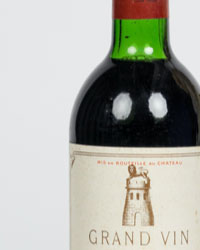
2022 Bartolo Mascarello - Barolo DOCG - 1 Bottle (0.75L)


09
days
02
hours
39
minutes
23
seconds
Starting bid
€ 1
Reserve price not met

Expert
Selected by Andrea Curatolo
Highly experienced sommelier with 15 years’ expertise in Michelin-star restaurant wine tasting.
Estimate € 200 - € 250
No bids placed
Catawiki Buyer Protection
Your payment’s safe with us until you receive your object.View details
Trustpilot 4.4 | 142857 reviews
Rated Excellent on Trustpilot.
Bartolo Mascarello Barolo DOCG 2022, a 0.75 L bottle from Italy's Barolo region, one bottle, fill level at 3 cm with a fully intact metal capsule and a completely intact, legible label.
AI-assisted summary
Description from the seller
Barolo DOCG 2022 by Bartolo Mascarello, one of the most legendary and iconic producers in Piedmontese and Italian winemaking.
Tasting Notes
Appearance: Bright, translucent ruby red with the classic garnet hues characteristic of pure Nebbiolo.
Nose: Complex, elegant, and austere aromatic profile. Notes of cherry and crisp red fruits emerge, alongside dried violet, potpourri, mineral nuances, tar, liquorice, eucalyptus, bark, and fine spices.
Palate: On the palate, it exhibits impressive structure paired with great lightness and balance. The tannic structure is dense, chewy, and well-polished, supported by vibrant and energetic acidity. The finish is extremely long, savory, and lingering with mineral and balsamic returns.
Critical Scores (2022 Vintage)
Robert Parker (The Wine Advocate): 95/100
Kerin O'Keefe: 95/100
James Suckling: 94/100
Vinous (Antonio Galloni): 94/100
DoctorWine (Essential Guide 2027): 96/100 (DoctorWine Face Award)
Winery History & Winemaking Philosophy
Origins: Founded in 1918 in Barolo by Giulio Mascarello. Leadership later passed to his son Bartolo Mascarello, an iconic figure who became a living symbol of pure traditionalism. Today, the winery is run with the same passion and rigor by Bartolo's daughter, Maria Teresa Mascarello.
The Blending Philosophy: Unlike producers who vinify and bottle single vineyards (crus or MGAs) separately, Bartolo Mascarello always maintained the traditional practice of blending grapes from different vineyards (San Lorenzo, Ruè, and Cannubi in the village of Barolo, along with Rocche dell'Annunziata in La Morra) into a single, balanced Barolo bottling.
Traditional Style: Vinification takes place in concrete tanks using indigenous yeasts with extended maceration periods, followed by aging exclusively in large Slavonian oak casks (categorically rejecting the use of barriques).
Barolo DOCG 2022 by Bartolo Mascarello, one of the most legendary and iconic producers in Piedmontese and Italian winemaking.
Tasting Notes
Appearance: Bright, translucent ruby red with the classic garnet hues characteristic of pure Nebbiolo.
Nose: Complex, elegant, and austere aromatic profile. Notes of cherry and crisp red fruits emerge, alongside dried violet, potpourri, mineral nuances, tar, liquorice, eucalyptus, bark, and fine spices.
Palate: On the palate, it exhibits impressive structure paired with great lightness and balance. The tannic structure is dense, chewy, and well-polished, supported by vibrant and energetic acidity. The finish is extremely long, savory, and lingering with mineral and balsamic returns.
Critical Scores (2022 Vintage)
Robert Parker (The Wine Advocate): 95/100
Kerin O'Keefe: 95/100
James Suckling: 94/100
Vinous (Antonio Galloni): 94/100
DoctorWine (Essential Guide 2027): 96/100 (DoctorWine Face Award)
Winery History & Winemaking Philosophy
Origins: Founded in 1918 in Barolo by Giulio Mascarello. Leadership later passed to his son Bartolo Mascarello, an iconic figure who became a living symbol of pure traditionalism. Today, the winery is run with the same passion and rigor by Bartolo's daughter, Maria Teresa Mascarello.
The Blending Philosophy: Unlike producers who vinify and bottle single vineyards (crus or MGAs) separately, Bartolo Mascarello always maintained the traditional practice of blending grapes from different vineyards (San Lorenzo, Ruè, and Cannubi in the village of Barolo, along with Rocche dell'Annunziata in La Morra) into a single, balanced Barolo bottling.
Traditional Style: Vinification takes place in concrete tanks using indigenous yeasts with extended maceration periods, followed by aging exclusively in large Slavonian oak casks (categorically rejecting the use of barriques).
Details
Vintage
2022
Producer, Name of wine
Bartolo Mascarello
Classification
DOCG
Number of bottles
1
Bottle size
Bottle (0.75L)
Country
Italy
Region
Barolo
Grape varieties
Nebbiolo
Fill level
Burgundy/Champagne/Flute bottle type, 3 cm fill level
Capsule/cork condition
Fully intact metal capsule
Critic score
95/100 points, Robert Parker
Label condition
Fully intact, readable label