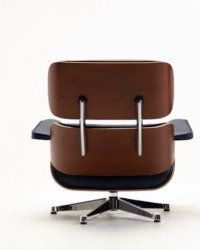
Chair (4) - Leather


03
days
18
hours
24
minutes
51
seconds
Current bid
€ 100
Reserve price not met

Expert
Selected by Alexander Fahl
Art historian with over 10 years' experience and expertise in Italian design.
Estimate € 400 - € 450
 | €100 |
|---|
Catawiki Buyer Protection
Your payment’s safe with us until you receive your object.View details
Trustpilot 4.4 | 143139 reviews
Rated Excellent on Trustpilot.
Description from the seller
The timeless charm of the cantilever chair: an icon of rationalist design between Italian history and Bauhaus avant-garde
If there is a piece of furniture capable of synthesizing the very essence of aesthetic and structural modernity, this is undoubtedly the set of chairs shown in the images. Characterized by a sinuous line in black tubular metal and a solid black full-grain leather seat, these seats perfectly embody the stylistic heritage of European functionalism, enhanced by the renowned craftsmanship quality of Made in Italy.
The lot presents itself in a refined geometric cantilever configuration, a structural solution that eliminates the need for traditional four legs to exploit the flexibility of metal. Structure: Continuous steel tube formed with a matte black anodized or painted finish. The continuity of the frame creates both the ground-support base and the armrests, clad in coordinated leather for a warm and ergonomic grip.
Seat and backrest: Made in noble heavy leather (cuoietto) saddle-stitched, stretched directly over the frame. The visible double perimeter stitches testify to high-level artisanal craftsmanship, designed to maintain tension and resist wear over time.
The presence of the original "Made in Italy" label under the seat guarantees origin from Italian laboratories of excellence, active between the 1970s and 1980s, a golden period for reissues of classic design.
Historical References and Creators of the Genre
The design of these chairs traces back to the aesthetic revolution promoted by the Bauhaus school in the 1920s, directly recalling the insights of the masters who redefined the concept of domestic and office furnishings.
Mart Stam: The Dutch architect historically credited with the first cantilever chair (Model S33 and S34 with arms, dated 1926). Stam conceived the idea by uniting gas tubes and elbow fittings, inspired by the flexibility of industrial structures.
Marcel Breuer: Absolute pioneer in the use of chromed and bent steel tubing (inspired by the handlebars of his Adler bicycle), creator of the famous Wassily and Cesca chairs. The model exhibited here directly references the rigorous proportions of his line of desk and conference chairs.
Italian Craftsmanship (Matteo Grassi and Fasem): During the postmodern boom, prestigious Italian companies specializing in leatherworking—such as Matteo Grassi and Fasem—took these modernist archetypes, perfecting the ergonomics of leather combined with metal and producing minimalist total-black editions of extraordinary elegance, highly sought after in the vintage market.
Purchasing a coordinated set of four vintage chairs of this pedigree represents a unique opportunity both functionally and collectible.
Thanks to the total black look, these chairs integrate magistrally into any contemporary context. They find their perfect placement around a glass or solid wood dining table, or as formal seating in a professional study or in an industrial-flavored meeting room.
Designer quality does not devalue; on the contrary, coordinated lots kept in good condition maintain or increase their value on the modernist market, constituting a true investment rather than a simple consumption expense. Uniting the geometric rigor of Bauhaus with Italian manufacturing mastery means bringing a piece of history into your spaces that will never go out of style.
The timeless charm of the cantilever chair: an icon of rationalist design between Italian history and Bauhaus avant-garde
If there is a piece of furniture capable of synthesizing the very essence of aesthetic and structural modernity, this is undoubtedly the set of chairs shown in the images. Characterized by a sinuous line in black tubular metal and a solid black full-grain leather seat, these seats perfectly embody the stylistic heritage of European functionalism, enhanced by the renowned craftsmanship quality of Made in Italy.
The lot presents itself in a refined geometric cantilever configuration, a structural solution that eliminates the need for traditional four legs to exploit the flexibility of metal. Structure: Continuous steel tube formed with a matte black anodized or painted finish. The continuity of the frame creates both the ground-support base and the armrests, clad in coordinated leather for a warm and ergonomic grip.
Seat and backrest: Made in noble heavy leather (cuoietto) saddle-stitched, stretched directly over the frame. The visible double perimeter stitches testify to high-level artisanal craftsmanship, designed to maintain tension and resist wear over time.
The presence of the original "Made in Italy" label under the seat guarantees origin from Italian laboratories of excellence, active between the 1970s and 1980s, a golden period for reissues of classic design.
Historical References and Creators of the Genre
The design of these chairs traces back to the aesthetic revolution promoted by the Bauhaus school in the 1920s, directly recalling the insights of the masters who redefined the concept of domestic and office furnishings.
Mart Stam: The Dutch architect historically credited with the first cantilever chair (Model S33 and S34 with arms, dated 1926). Stam conceived the idea by uniting gas tubes and elbow fittings, inspired by the flexibility of industrial structures.
Marcel Breuer: Absolute pioneer in the use of chromed and bent steel tubing (inspired by the handlebars of his Adler bicycle), creator of the famous Wassily and Cesca chairs. The model exhibited here directly references the rigorous proportions of his line of desk and conference chairs.
Italian Craftsmanship (Matteo Grassi and Fasem): During the postmodern boom, prestigious Italian companies specializing in leatherworking—such as Matteo Grassi and Fasem—took these modernist archetypes, perfecting the ergonomics of leather combined with metal and producing minimalist total-black editions of extraordinary elegance, highly sought after in the vintage market.
Purchasing a coordinated set of four vintage chairs of this pedigree represents a unique opportunity both functionally and collectible.
Thanks to the total black look, these chairs integrate magistrally into any contemporary context. They find their perfect placement around a glass or solid wood dining table, or as formal seating in a professional study or in an industrial-flavored meeting room.
Designer quality does not devalue; on the contrary, coordinated lots kept in good condition maintain or increase their value on the modernist market, constituting a true investment rather than a simple consumption expense. Uniting the geometric rigor of Bauhaus with Italian manufacturing mastery means bringing a piece of history into your spaces that will never go out of style.
Details
Era
1900-2000
Weight
3 kg
Number of objects
4
Country of origin
Italy
Material
Leather
Style
Bauhaus
Colour
Black
Condition
Good condition - used with small signs of aging & blemishes
Height
80 cm
Width
60 cm
Depth
57 cm
Estimated period
1970-1980
Sold by