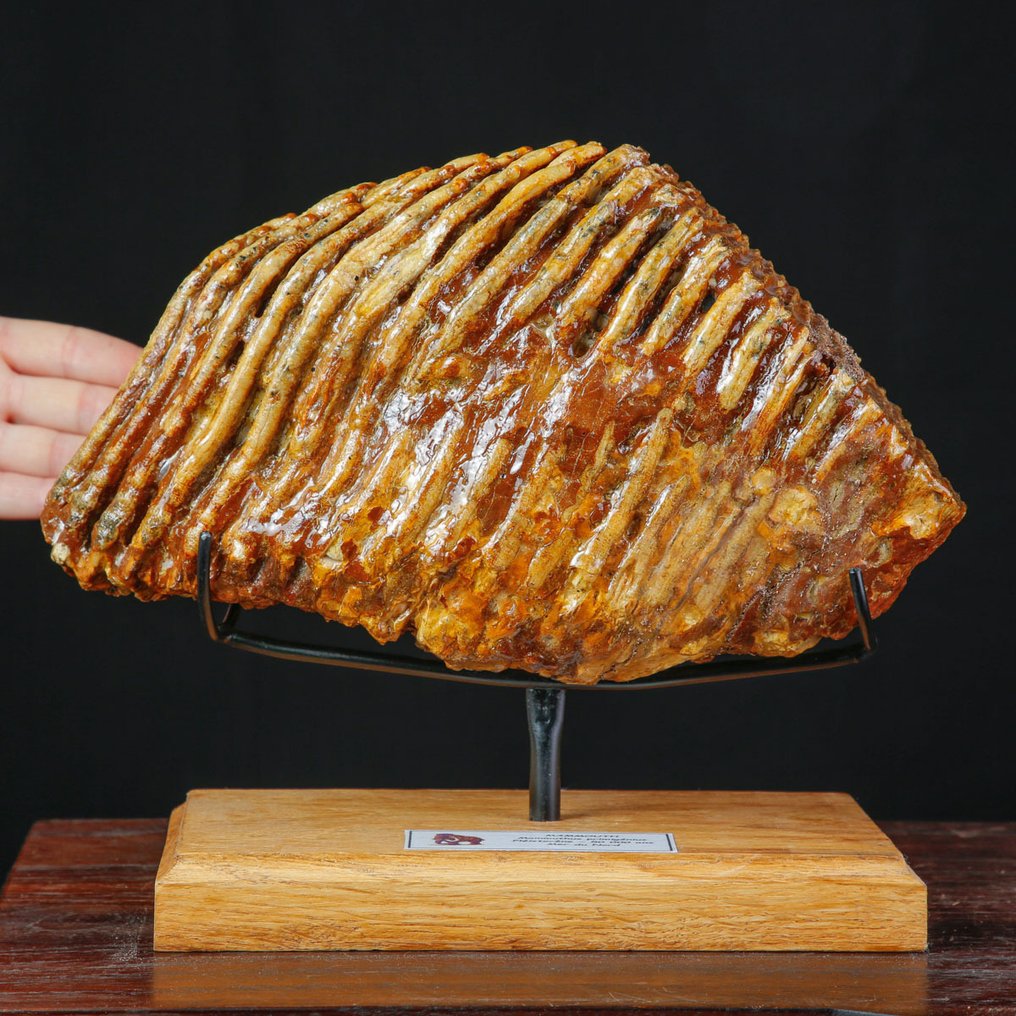
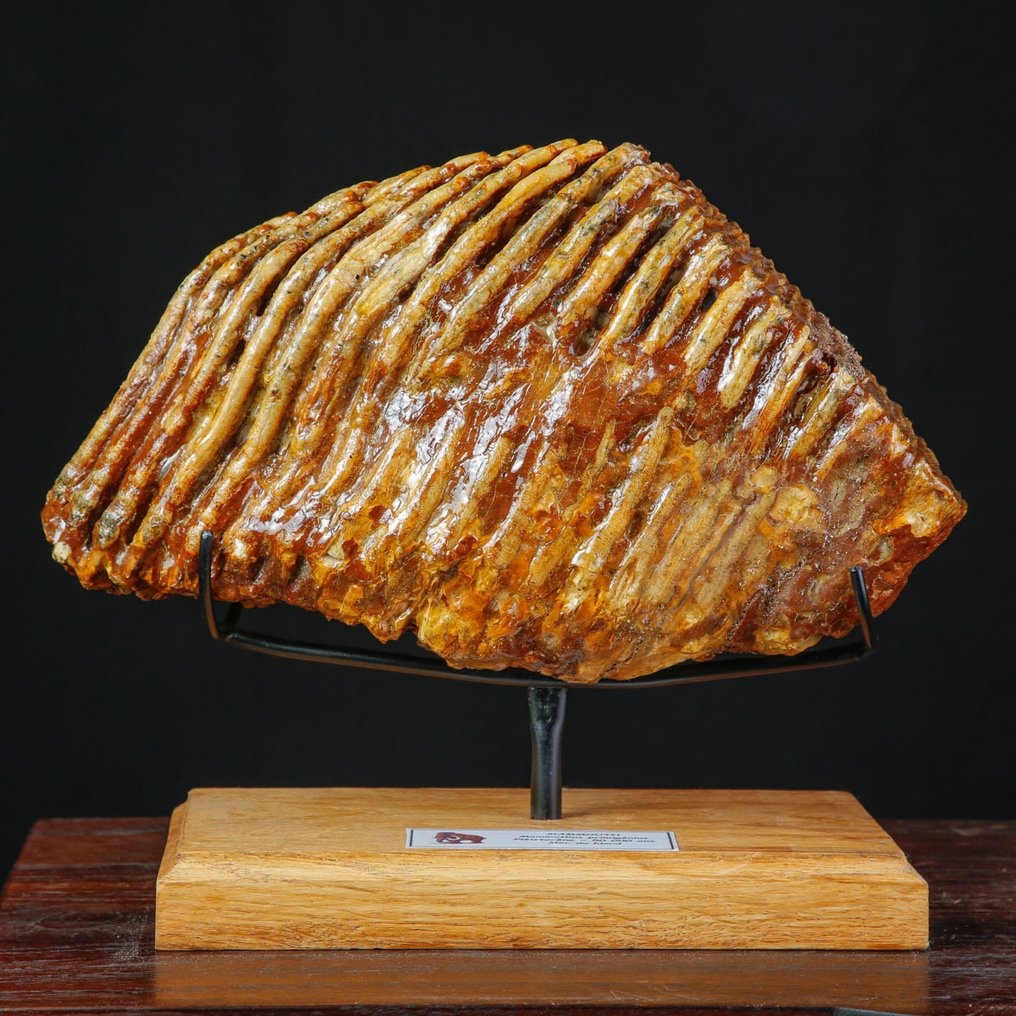
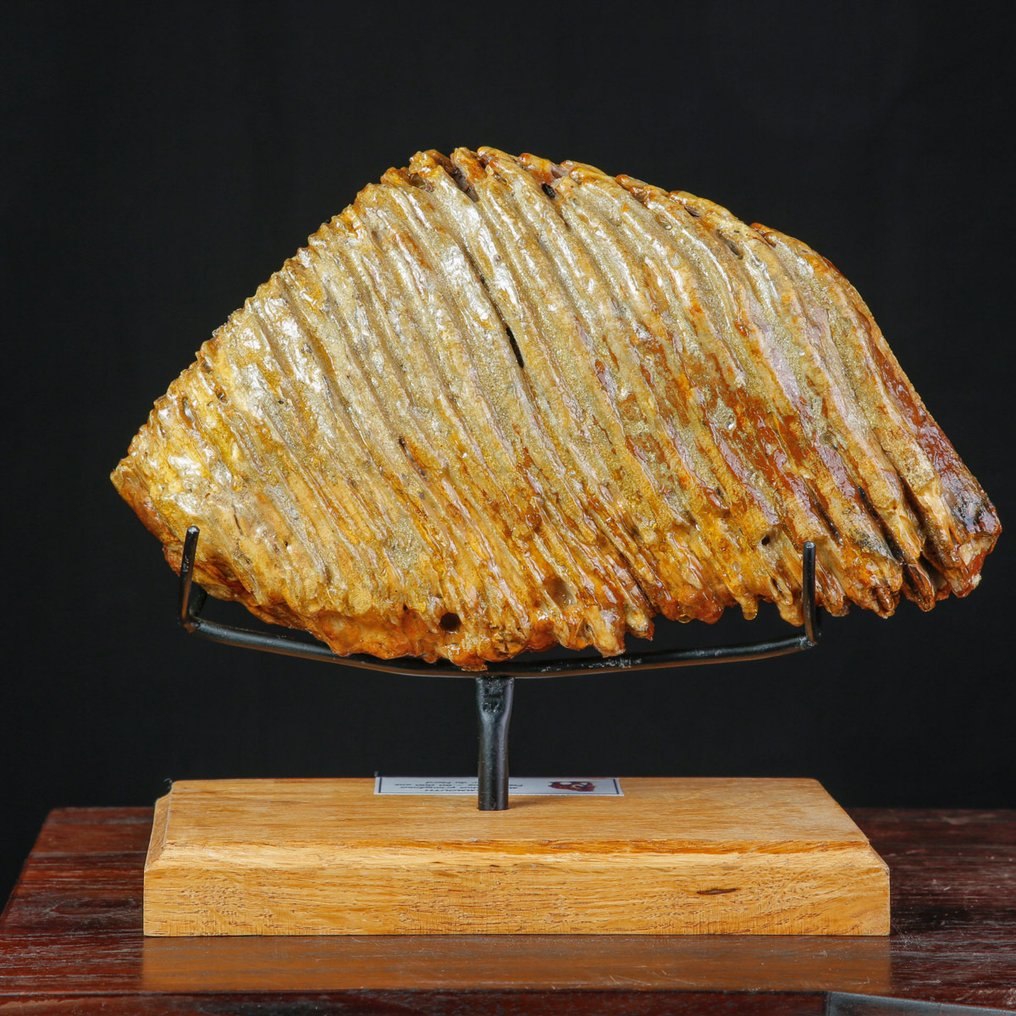
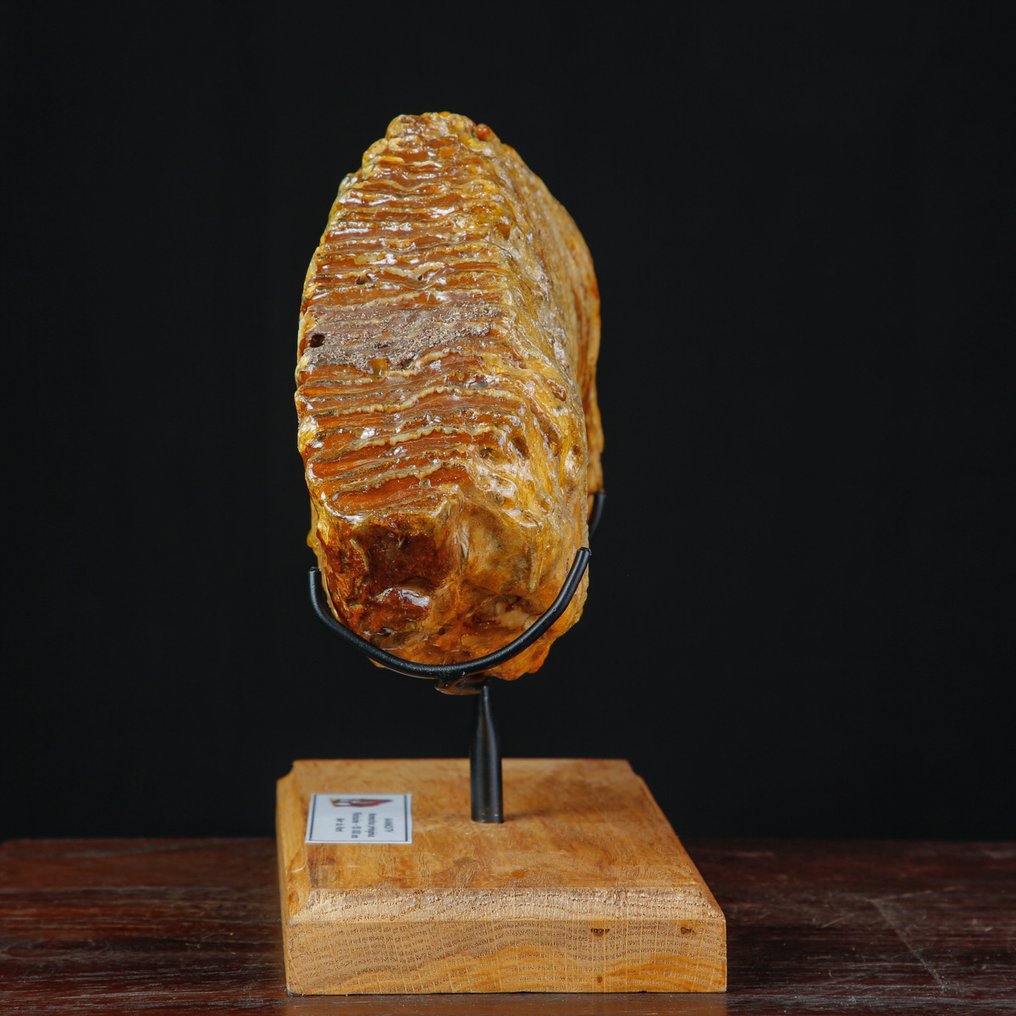
Large Fossil Molar of Mammuthus primigenius – Adult – North Sea. Tooth - Mammuthus Primigenius XXL Molar - 245 mm - 80 mm - 290 mm

04
days
02
hours
22
minutes
29
seconds

 | €80 | |
|---|---|---|
 | €75 | |
 | €1 |
Catawiki Buyer Protection
Your payment’s safe with us until you receive your object.View details
Trustpilot 4.4 | 142947 reviews
Rated Excellent on Trustpilot.
Scientific name Mammuthus Primigenius XXL Molar; Large Fossil Molar of Mammuthus primigenius – Adult – North Sea, from the Pleistocene, in good condition.
AI-assisted summary
Description from the seller
This imposing fossil molar of Mammuthus primigenius, dating back to the Pleistocene, is an exceptional example of the complex dental structure of these giants of prehistory. Characterized by a series of parallel enamel crests, the tooth was perfectly adapted to grind large amounts of fibrous vegetation, such as tough grasses and shrubs of the glacial tundra.
Mammoth molars were composed of enamel plates interleaved by layers of dentin and cement, an evolutionary configuration that guaranteed considerable wear resistance. In its lifetime, a mammoth could consume up to 200 kg of vegetation per day, requiring a highly efficient dentition for survival in extreme environments.
The fossil presents an excellent state of preservation, with its characteristic laminated structure well visible and defined details. The discovery in the sediments of the North Sea is direct testimony of the last glacial period, when wide areas of present-day Europe were covered by tundra and cold steppe, ideal habitat for this species.
Seller's Story
The Mineral Art Gallery offers minerals, fossils, shells and natural elements.
Born in Italy in 2017, today she collaborates with international galleries and collectors, she is a direct importer of large minerals and naturalistic collectible elements; deals with the processing to insert them inside the living space. A section of the gallery was dedicated to the Wunderkammer, "chamber of wonders or cabinet of curiosities" in which Mirabilia elements are presented: naturalia and italiania, a union between "the present is the past".
All lots are shipped via DHL Express and Fercam couriers, with insured parcel and tracking.
Translated by Google TranslateThis imposing fossil molar of Mammuthus primigenius, dating back to the Pleistocene, is an exceptional example of the complex dental structure of these giants of prehistory. Characterized by a series of parallel enamel crests, the tooth was perfectly adapted to grind large amounts of fibrous vegetation, such as tough grasses and shrubs of the glacial tundra.
Mammoth molars were composed of enamel plates interleaved by layers of dentin and cement, an evolutionary configuration that guaranteed considerable wear resistance. In its lifetime, a mammoth could consume up to 200 kg of vegetation per day, requiring a highly efficient dentition for survival in extreme environments.
The fossil presents an excellent state of preservation, with its characteristic laminated structure well visible and defined details. The discovery in the sediments of the North Sea is direct testimony of the last glacial period, when wide areas of present-day Europe were covered by tundra and cold steppe, ideal habitat for this species.
Seller's Story
The Mineral Art Gallery offers minerals, fossils, shells and natural elements.
Born in Italy in 2017, today she collaborates with international galleries and collectors, she is a direct importer of large minerals and naturalistic collectible elements; deals with the processing to insert them inside the living space. A section of the gallery was dedicated to the Wunderkammer, "chamber of wonders or cabinet of curiosities" in which Mirabilia elements are presented: naturalia and italiania, a union between "the present is the past".
All lots are shipped via DHL Express and Fercam couriers, with insured parcel and tracking.
Translated by Google TranslateDetails
Era
Before 1400
Culture
Pleistocene
Specimen
Large Fossil Molar of Mammuthus primigenius – Adult – North Sea.
Century/timeframe
Pleistocene, 2.58 million to 11,700 years ago
Scientific name
Mammuthus Primigenius XXL Molar
Acquired from
Private collection
Year acquired
2023
Country of origin
North Sea
Country acquired from
Italy
Previous owner acquired from
Private collection
Previous owner - year acquired
2020
Condition
Good condition
Previous owner - country acquired from
Italy
I verify that I have obtained this object legally and that I am allowed to sell it
Yes
Year
2025
Weight
4267 g
Depth
290 mm
Height
245 mm
Width
80 mm
Sold by
