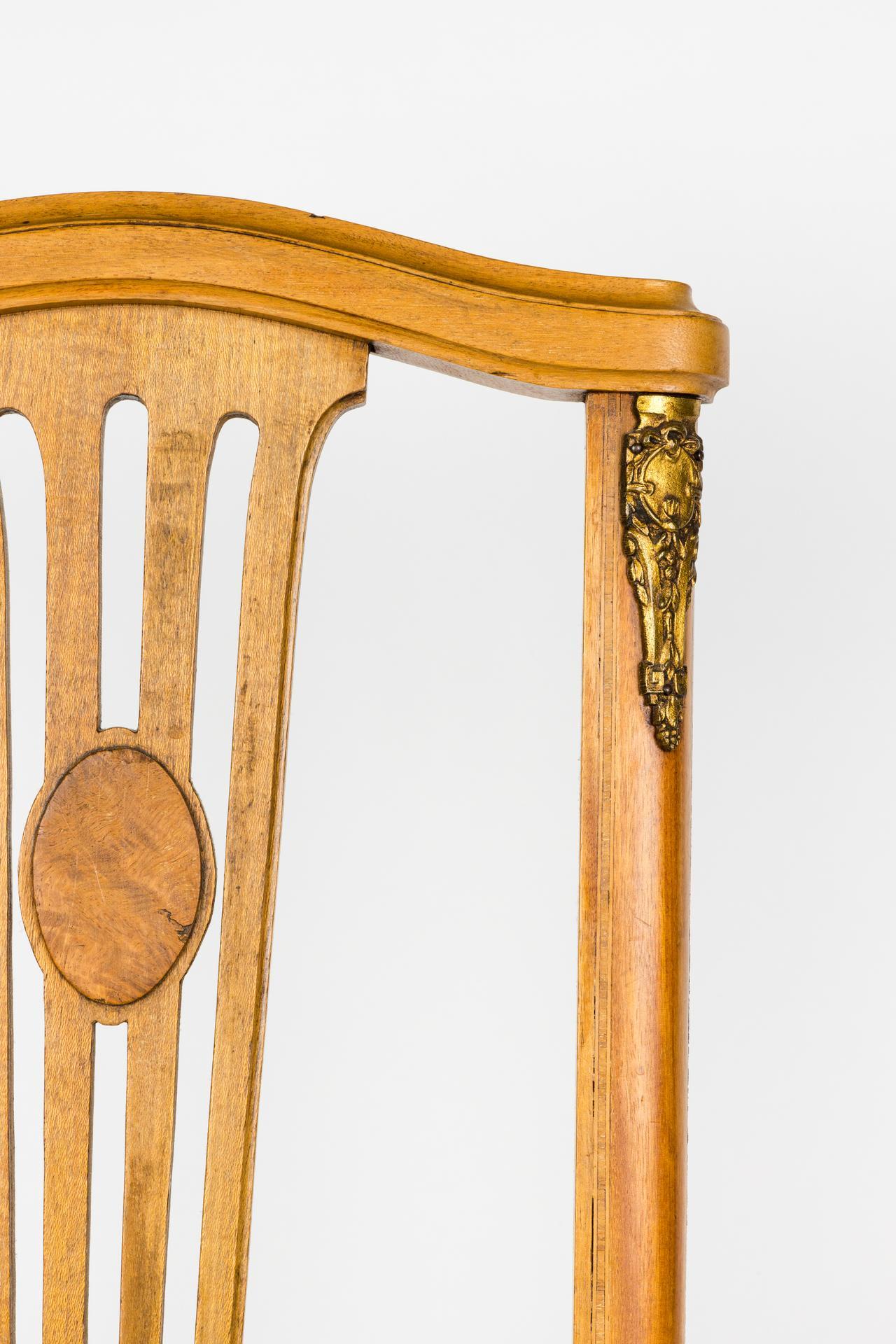
Thonet - Chair - Armchair / office chair No. 233 - Beech


01
day
22
hours
55
minutes
10
seconds
Current bid
€ 55
No reserve price

Expert
Selected by Michel Karis
Art historian with extensive experience working at various auction houses in antiques.
Estimate € 130 - € 190
 | €55 | |
|---|---|---|
 | €50 | |
| €45 | |
Catawiki Buyer Protection
Your payment’s safe with us until you receive your object.View details
Trustpilot 4.4 | 143727 reviews
Rated Excellent on Trustpilot.
Thonet armchair model no. 233, produced after WWII in a former Thonet factory in Radomsko, Poland; dating to the 1950s–1960s, beech construction with Art Nouveau/Jugendstil pauwen feather inlay, dimensions W 57 cm x D 52 cm x H 82 cm, seat Ø 47 cm, seat height approx. 47 cm, weight about 5 kg, in good used condition with minor signs of aging and spotting.
AI-assisted summary
Description from the seller
Extremely beautiful Thonet armchair / desk chair. It concerns model no. 233, a Thonet chair that was made after World War II in a former Thonet factory in Radomsko, Poland, in the Radomszczański region (near Kraków). After World War II, all those factories (in the former Warsaw Pact countries) were nationalized by the communist regimes and continued producing Thonet chairs. The original Thonet machines and Thonet molds were used and the same workers made the chairs. Technically this is therefore a Thonet chair, but officially no longer. Under the chair there is a faint stamp reading 'Made in Poland' (see photos).
The chair is in very good condition and shows only logical signs of use. Very beautiful is the peacock seat. Precisely for this type of armchair (No. 233) they pressed the very recognizable, elegant peacock feather- or fan motifs into the plywood seats to give them a luxurious Art Nouveau / Jugendstil look. The chair is 100% original and also 100% stable. All joints are still very solid and all original connecting materials are present.
The chair is 82 cm high and the seat diameter is 47 cm. The seat height is about 47 cm, the width from armrest to armrest is 57 cm, the depth is 52 cm and the weight is about 5 kg. It dates from the 1950s or 1960s of the last century.
Michael Thonet is regarded as the first and most important furniture designer. He was also the first to perfect bending wood with steam to such an extent that it could be applied in industrial furniture manufacturing. In this chair too, the steam-bent elements are clearly visible. The use of bent wood instead of joined loose elements gave the Thonet chair its stability. It is remarkable how stable this chair is even after about 75 years!
The chair is professionally packed and insured for shipment."
Seller's Story
I sell antique and vintage products. The items I sell are very diverse in nature; from lamps to side tables, from phones to wooden sculptures, from vintage kitchen equipment to Art Deco and Art Nouveau coat racks, and everything in between. The things I buy are usually objects that I personally like and that are of high quality. It sometimes takes effort to part with them!
My expertise lies primarily in products from the 20th century.
I ship in used boxes combined with paper filler material. The boxes are sturdy. Usually made of double-wall cardboard. I ship, unless otherwise agreed, always within two days of purchase. I attach great importance to friendly, decent and reliable contact with my buyers.
Translated by Google TranslateExtremely beautiful Thonet armchair / desk chair. It concerns model no. 233, a Thonet chair that was made after World War II in a former Thonet factory in Radomsko, Poland, in the Radomszczański region (near Kraków). After World War II, all those factories (in the former Warsaw Pact countries) were nationalized by the communist regimes and continued producing Thonet chairs. The original Thonet machines and Thonet molds were used and the same workers made the chairs. Technically this is therefore a Thonet chair, but officially no longer. Under the chair there is a faint stamp reading 'Made in Poland' (see photos).
The chair is in very good condition and shows only logical signs of use. Very beautiful is the peacock seat. Precisely for this type of armchair (No. 233) they pressed the very recognizable, elegant peacock feather- or fan motifs into the plywood seats to give them a luxurious Art Nouveau / Jugendstil look. The chair is 100% original and also 100% stable. All joints are still very solid and all original connecting materials are present.
The chair is 82 cm high and the seat diameter is 47 cm. The seat height is about 47 cm, the width from armrest to armrest is 57 cm, the depth is 52 cm and the weight is about 5 kg. It dates from the 1950s or 1960s of the last century.
Michael Thonet is regarded as the first and most important furniture designer. He was also the first to perfect bending wood with steam to such an extent that it could be applied in industrial furniture manufacturing. In this chair too, the steam-bent elements are clearly visible. The use of bent wood instead of joined loose elements gave the Thonet chair its stability. It is remarkable how stable this chair is even after about 75 years!
The chair is professionally packed and insured for shipment."
Seller's Story
I sell antique and vintage products. The items I sell are very diverse in nature; from lamps to side tables, from phones to wooden sculptures, from vintage kitchen equipment to Art Deco and Art Nouveau coat racks, and everything in between. The things I buy are usually objects that I personally like and that are of high quality. It sometimes takes effort to part with them!
My expertise lies primarily in products from the 20th century.
I ship in used boxes combined with paper filler material. The boxes are sturdy. Usually made of double-wall cardboard. I ship, unless otherwise agreed, always within two days of purchase. I attach great importance to friendly, decent and reliable contact with my buyers.
Translated by Google TranslateDetails
Specific region of origin
Radomsko (Radomszczański)
Style subtype
Jugendstil
Weight
5 kg
Era
1900-2000
Country of origin
Poland
Manufacturer/brand
Thonet
Model
Armchair / office chair No. 233
Material
Beech
Style
Art Nouveau
Colour
Brown
Condition
Good condition - used with small signs of aging & blemishes
Height
82 cm
Width
57 cm
Depth
52 cm
Diameter
47 cm
Estimated period
1950-1960
Seating height
47 cm