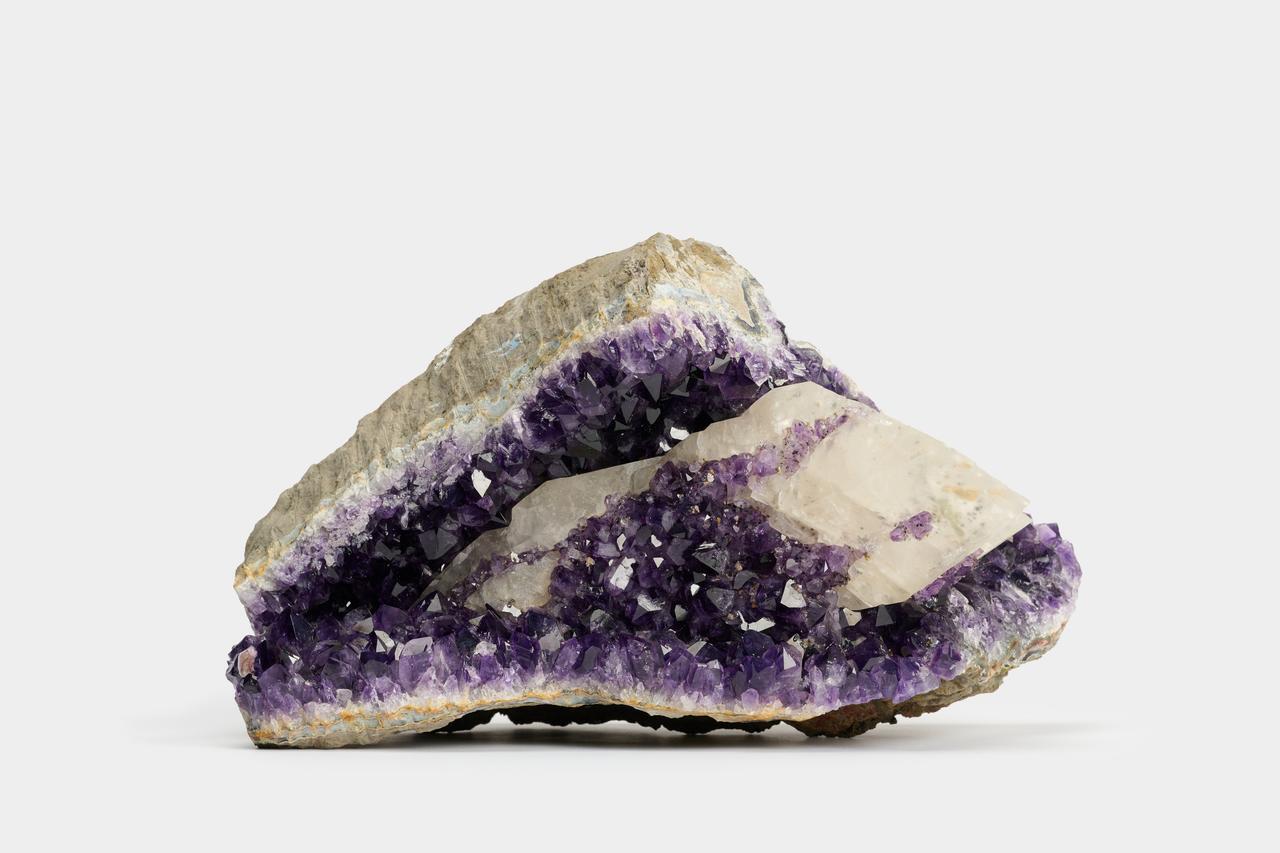
Botryoidal limonite, goethite. golden nodules. - Height: 110 mm - Width: 50 mm- 209 g - (1)


01
day
11
hours
11
minutes
23
seconds

 | €53 | |
|---|---|---|
 | €50 |
Catawiki Buyer Protection
Your payment’s safe with us until you receive your object.View details
Trustpilot 4.4 | 143216 reviews
Rated Excellent on Trustpilot.
Meteorite from China, originating in Hubei province, featuring limonite botryoidal with golden nodules, weight 209 g and dimensions 110 × 50 × 45 mm.
AI-assisted summary
Description from the seller
Weight: 209g. Dimensions: 110x50x45mm. Provenance: Hubei province, China.
Beautiful brown-red botryoidal Limonite, with these golden nodules and these rusty reflections. For a better view of this Limonite, some photos are taken with LED lighting, others in natural light with sun and without.
Limonite is not a single mineral, but a natural mix of iron oxides and hydroxides. It appears as masses that are brown, yellow, or ochre. It is often found in soils or marshy areas under the historical name “bog iron.” Goethite is a very common mineral composed of iron oxyhydroxide and forms by the weathering of iron-rich rocks, and constitutes the main component of natural rust.
Limonite is a generic term for a group of hydrated iron oxides, often amorphous. Limonite is recognized by its swollen nodules and golden reflections. The mineral has more red-brown hues, which is typical of limonite, with these well-formed nodules and more pronounced rust reflections.
Limonite, in fact, is a grouping of hydrated iron oxides, somewhat amorphous, so it does not have a well-defined crystal structure. It often forms by the alteration of iron-rich minerals, such as magnetite or pyrite. It is commonly found in soils, wetlands, or as a secondary ore in iron deposits. It is sometimes used as a pigment for its ochre tones. So we very often find the two minerals together.
Weight: 209g. Dimensions: 110x50x45mm. Provenance: Hubei province, China.
Beautiful brown-red botryoidal Limonite, with these golden nodules and these rusty reflections. For a better view of this Limonite, some photos are taken with LED lighting, others in natural light with sun and without.
Limonite is not a single mineral, but a natural mix of iron oxides and hydroxides. It appears as masses that are brown, yellow, or ochre. It is often found in soils or marshy areas under the historical name “bog iron.” Goethite is a very common mineral composed of iron oxyhydroxide and forms by the weathering of iron-rich rocks, and constitutes the main component of natural rust.
Limonite is a generic term for a group of hydrated iron oxides, often amorphous. Limonite is recognized by its swollen nodules and golden reflections. The mineral has more red-brown hues, which is typical of limonite, with these well-formed nodules and more pronounced rust reflections.
Limonite, in fact, is a grouping of hydrated iron oxides, somewhat amorphous, so it does not have a well-defined crystal structure. It often forms by the alteration of iron-rich minerals, such as magnetite or pyrite. It is commonly found in soils, wetlands, or as a secondary ore in iron deposits. It is sometimes used as a pigment for its ochre tones. So we very often find the two minerals together.
Details
Number of objects
1
Main mineral
Botryoidal limonite, goethite.
Mineral form
golden nodules.
Weight
209 g
Origin (region/city)
Hubei Province
Country of origin
China
Height
110 mm
Width
50 mm
Depth
45 mm
Sold by