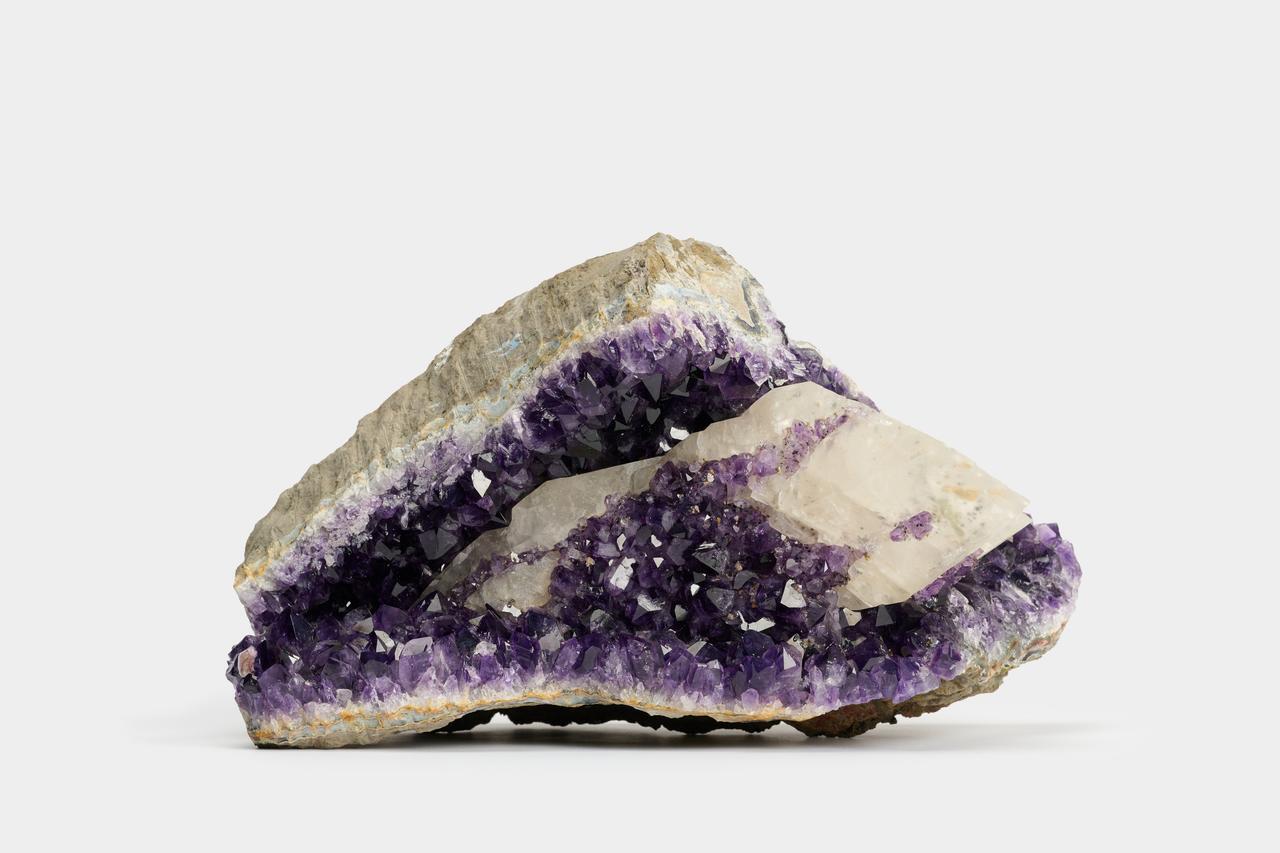
An impressive natural cluster of selenite crystals on the host rock – * Height: 20 cm * Crystal on matrix - Height: 20 cm - Width: 33 cm- 23.5 kg


03
days
15
hours
16
minutes
58
seconds

No bids placed
Catawiki Buyer Protection
Your payment’s safe with us until you receive your object.View details
Trustpilot 4.4 | 142947 reviews
Rated Excellent on Trustpilot.
Description from the seller
Impressive natural cluster of selenite crystals on the host rock – 23.50 kg – Almería, Spain
Caption under the photo
Natural, exceptionally striking needle-like selenite crystal cluster on its original host rock. Monumental, collectible specimen weighing 23.50 kg, originating from Almería, Spain. Well-preserved, untrimmed form with outstanding decorative and mineralogical value.
Description
The presented specimen is a particularly large natural cluster of selenite crystals (gypsum variety – CaSO4·2H2O) developed on its host rock. It is an impressive collectible exhibit weighing 23.50 kg, featuring a well-preserved natural structure and an extremely decorative growth form.
The specimen consists of numerous elongated, needle-like selenite crystals, between which more massive, blocky crystal forms have grown. Overall, it forms a spectacular, multi-tiered composition with a highly spacious internal structure.
The rock lying beneath and around the specimen is sedimentary in nature, indicating that the specimen was separated from the deposit without mechanical processing or cutting. It has retained its natural form and geological authenticity.
The color of the crystals is ivory-white with a delicate honey tint, typical for selenite containing small amounts of calcium. The structure is very well preserved and presents an extremely striking appearance both up close and as a large display piece.
Condition is very good — without cracks and without damaged or fractured parts.
Correct mineralogical name
This is not a single crystal or a simple aggregate.
The correct name of the specimen is:
Natural cluster of selenite crystals
or more precisely:
Natural cluster of needle-like selenite crystals on the host rock.
It can also be described as:
* decorative gypsum cluster,
* “Selenite Flower” cluster (due to the flower-like character of the cluster parts),
* large display cabinet specimen.
Origin
Selenite is a transparent or translucent variety of gypsum (CaSO4·2H2O), formed primarily in evaporative environments where highly sulfate-rich waters gradually evaporate.
The growth process of such crystals depends on many factors, including:
* geothermal conditions,
* sulfate concentration of solutions,
* rate of water evaporation,
* available space for growth.
In the case of a specimen of this size, the crystallization process took a very long time.
The estimated formation time for such a large specimen ranges from about 50,000 years to several hundred thousand years, though under favorable geological conditions growth of similar clusters can take even several million years.
For its formation, exceptionally stable geological conditions, low pressure, and a long-standing presence of sulfate-rich solutions were necessary.
Origin
The most probable origin is:
Almería (Spain)
This region is renowned for high-quality selenite, while specimens of such substantial size are rare.
Dimensions
* Height: 20 cm
* Width: 33 cm
* Depth: 31 cm
* Weight: 23.50 kg
Condition
Natural specimen
No cracks
No broken elements
Untrimmed
Not subjected to mechanical processing
Very well-preserved crystal structure
Collector value
Monumental selenite aggregates of this size are among the most impressive display specimens. Thanks to its heft, natural form, and excellent preservation, this exhibit is ideal for advanced mineral collections as well as a representative interior decor piece.
This is a unique, large-format mineral specimen that combines scientific, aesthetic, and collectible values, making it an excellent choice for discerning collectors.
Impressive natural cluster of selenite crystals on the host rock – 23.50 kg – Almería, Spain
Caption under the photo
Natural, exceptionally striking needle-like selenite crystal cluster on its original host rock. Monumental, collectible specimen weighing 23.50 kg, originating from Almería, Spain. Well-preserved, untrimmed form with outstanding decorative and mineralogical value.
Description
The presented specimen is a particularly large natural cluster of selenite crystals (gypsum variety – CaSO4·2H2O) developed on its host rock. It is an impressive collectible exhibit weighing 23.50 kg, featuring a well-preserved natural structure and an extremely decorative growth form.
The specimen consists of numerous elongated, needle-like selenite crystals, between which more massive, blocky crystal forms have grown. Overall, it forms a spectacular, multi-tiered composition with a highly spacious internal structure.
The rock lying beneath and around the specimen is sedimentary in nature, indicating that the specimen was separated from the deposit without mechanical processing or cutting. It has retained its natural form and geological authenticity.
The color of the crystals is ivory-white with a delicate honey tint, typical for selenite containing small amounts of calcium. The structure is very well preserved and presents an extremely striking appearance both up close and as a large display piece.
Condition is very good — without cracks and without damaged or fractured parts.
Correct mineralogical name
This is not a single crystal or a simple aggregate.
The correct name of the specimen is:
Natural cluster of selenite crystals
or more precisely:
Natural cluster of needle-like selenite crystals on the host rock.
It can also be described as:
* decorative gypsum cluster,
* “Selenite Flower” cluster (due to the flower-like character of the cluster parts),
* large display cabinet specimen.
Origin
Selenite is a transparent or translucent variety of gypsum (CaSO4·2H2O), formed primarily in evaporative environments where highly sulfate-rich waters gradually evaporate.
The growth process of such crystals depends on many factors, including:
* geothermal conditions,
* sulfate concentration of solutions,
* rate of water evaporation,
* available space for growth.
In the case of a specimen of this size, the crystallization process took a very long time.
The estimated formation time for such a large specimen ranges from about 50,000 years to several hundred thousand years, though under favorable geological conditions growth of similar clusters can take even several million years.
For its formation, exceptionally stable geological conditions, low pressure, and a long-standing presence of sulfate-rich solutions were necessary.
Origin
The most probable origin is:
Almería (Spain)
This region is renowned for high-quality selenite, while specimens of such substantial size are rare.
Dimensions
* Height: 20 cm
* Width: 33 cm
* Depth: 31 cm
* Weight: 23.50 kg
Condition
Natural specimen
No cracks
No broken elements
Untrimmed
Not subjected to mechanical processing
Very well-preserved crystal structure
Collector value
Monumental selenite aggregates of this size are among the most impressive display specimens. Thanks to its heft, natural form, and excellent preservation, this exhibit is ideal for advanced mineral collections as well as a representative interior decor piece.
This is a unique, large-format mineral specimen that combines scientific, aesthetic, and collectible values, making it an excellent choice for discerning collectors.
Details
Main mineral
An impressive natural cluster of selenite crystals on the host rock – * Height: 20 cm *
Mineral form
Crystal on matrix
Supplement
Impressive natural cluster of selenite crystals on the host rock – 23.50 kg – Almería,
Weight
23.5 kg
Origin (region/city)
Almeria
Country of origin
Spain
Height
20 cm
Width
33 cm
Depth
31 cm
Sold by