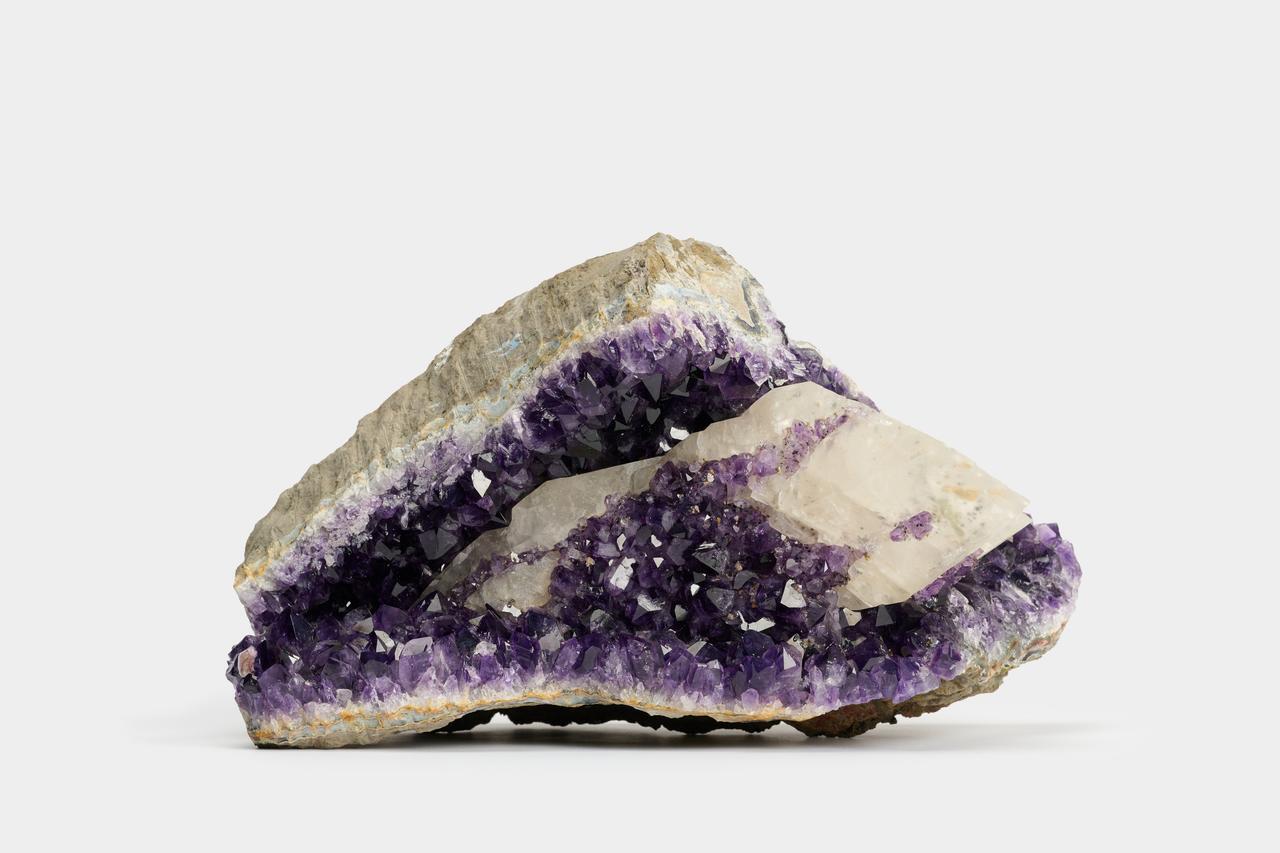
Vivid Turquoise Chrysocolla with 'Eye' Formations Specimen Intricate Orbicular and Botryoidal Patterns - Height: 140 mm - Width: 90 mm- 344 g - (1)


07
days
01
hour
56
minutes
14
seconds

 | €11 |
|---|
Catawiki Buyer Protection
Your payment’s safe with us until you receive your object.View details
Trustpilot 4.4 | 143216 reviews
Rated Excellent on Trustpilot.
Natural polished chrysocolla with malachite specimen from the Democratic Republic of the Congo, a vibrant blue‑green piece with orbicular and botryoidal eye‑forming patterns, dimensions 140 x 90 x 25 mm and weight 344 g.
AI-assisted summary
Description from the seller
Natural Polished Chrysocolla with Malachite Specimen from Congo
This specimen, coming from the rich deposits of the Democratic Republic of the Congo, is a superb polished slab that reveals the intimate association between Chrysocolla and Malachite. The free, sculptural form of the piece, worked to emphasize its surface, transforms the mineral into a natural work of art. The visual impact is immediate, dominated by a vibrant blue-t turquoise hue that evokes tropical waters, dotted with and traversed by green orbital patterns that give the sample a unique and hypnotic character. Careful observation of the glossy surface is like looking out onto an abstract geological landscape. Chrysocolla constitutes the main matrix, with its intense and saturated color. Within it, Malachite manifests through spectacular botryoidal formations and concentric rings, known as "eyes". These patterns, ranging from forest green to lighter green, attest to slow, layered growth. The color contrast between blue and green is exceptionally vivid, creating a dynamic and highly elegant composition. You can also notice fine mineralized fracture lines and a delicate natural crazing that add depth and history to the texture of the piece. The genesis of such a specimen lies in the oxidation processes affecting copper deposits. Chrysocolla, a hydrated copper phyllosilicate, and Malachite, a copper carbonate, are secondary minerals that form when meteoric waters, enriched with oxygen and carbon dioxide, percolate through rocks containing primary copper minerals. This chemical alteration dissolves the copper and re-deposits it in new mineral forms, layer by layer, giving rise to these marvelous colored concretions. The orbital patterns are the signature of this gradual growth process. The association of Chrysocolla and Malachite is particularly valued in the collecting world not only for its beauty but also because it represents a direct visual testimony to the geochemical processes of copper. The polishing, in this case, does not deform the piece but reveals its soul, allowing appreciation of every minute detail of its internal structure, otherwise hidden in its rough form. This specimen is much more than a simple mineral; it is a fragment of Earth’s history, a conversation piece that catches the eye and stimulates curiosity. Its strong aesthetic presence makes it ideal for display in a contemporary Wunderkammer, in a professional studio, or as a focal point in an interior design setting that values the authenticity and beauty of natural materials. It is a small abstract painting drawn by nature.
Technical details
Name: Chrysocolla with Malachite
Origin: Democratic Republic of the Congo
Dimensions: 140 x 90 x 25 mm
Weight: 344 g
Treatments: Surface polishing
Condition: Natural
Seller's Story
The Mineral Art Gallery offers minerals, fossils, shells and natural elements.
Born in Italy in 2017, today she collaborates with international galleries and collectors, she is a direct importer of large minerals and naturalistic collectible elements; deals with the processing to insert them inside the living space. A section of the gallery was dedicated to the Wunderkammer, "chamber of wonders or cabinet of curiosities" in which Mirabilia elements are presented: naturalia and italiania, a union between "the present is the past".
All lots are shipped via DHL Express and Fercam couriers, with insured parcel and tracking.
Translated by Google TranslateNatural Polished Chrysocolla with Malachite Specimen from Congo
This specimen, coming from the rich deposits of the Democratic Republic of the Congo, is a superb polished slab that reveals the intimate association between Chrysocolla and Malachite. The free, sculptural form of the piece, worked to emphasize its surface, transforms the mineral into a natural work of art. The visual impact is immediate, dominated by a vibrant blue-t turquoise hue that evokes tropical waters, dotted with and traversed by green orbital patterns that give the sample a unique and hypnotic character. Careful observation of the glossy surface is like looking out onto an abstract geological landscape. Chrysocolla constitutes the main matrix, with its intense and saturated color. Within it, Malachite manifests through spectacular botryoidal formations and concentric rings, known as "eyes". These patterns, ranging from forest green to lighter green, attest to slow, layered growth. The color contrast between blue and green is exceptionally vivid, creating a dynamic and highly elegant composition. You can also notice fine mineralized fracture lines and a delicate natural crazing that add depth and history to the texture of the piece. The genesis of such a specimen lies in the oxidation processes affecting copper deposits. Chrysocolla, a hydrated copper phyllosilicate, and Malachite, a copper carbonate, are secondary minerals that form when meteoric waters, enriched with oxygen and carbon dioxide, percolate through rocks containing primary copper minerals. This chemical alteration dissolves the copper and re-deposits it in new mineral forms, layer by layer, giving rise to these marvelous colored concretions. The orbital patterns are the signature of this gradual growth process. The association of Chrysocolla and Malachite is particularly valued in the collecting world not only for its beauty but also because it represents a direct visual testimony to the geochemical processes of copper. The polishing, in this case, does not deform the piece but reveals its soul, allowing appreciation of every minute detail of its internal structure, otherwise hidden in its rough form. This specimen is much more than a simple mineral; it is a fragment of Earth’s history, a conversation piece that catches the eye and stimulates curiosity. Its strong aesthetic presence makes it ideal for display in a contemporary Wunderkammer, in a professional studio, or as a focal point in an interior design setting that values the authenticity and beauty of natural materials. It is a small abstract painting drawn by nature.
Technical details
Name: Chrysocolla with Malachite
Origin: Democratic Republic of the Congo
Dimensions: 140 x 90 x 25 mm
Weight: 344 g
Treatments: Surface polishing
Condition: Natural
Seller's Story
The Mineral Art Gallery offers minerals, fossils, shells and natural elements.
Born in Italy in 2017, today she collaborates with international galleries and collectors, she is a direct importer of large minerals and naturalistic collectible elements; deals with the processing to insert them inside the living space. A section of the gallery was dedicated to the Wunderkammer, "chamber of wonders or cabinet of curiosities" in which Mirabilia elements are presented: naturalia and italiania, a union between "the present is the past".
All lots are shipped via DHL Express and Fercam couriers, with insured parcel and tracking.
Translated by Google TranslateDetails
Number of objects
1
Main mineral
Vivid Turquoise Chrysocolla with 'Eye' Formations
Mineral form
Specimen Intricate Orbicular and Botryoidal Patterns
Supplement
Chrysocolla
Weight
344 g
Country of origin
Congo
Height
140 mm
Width
90 mm
Depth
25 mm
Sold by