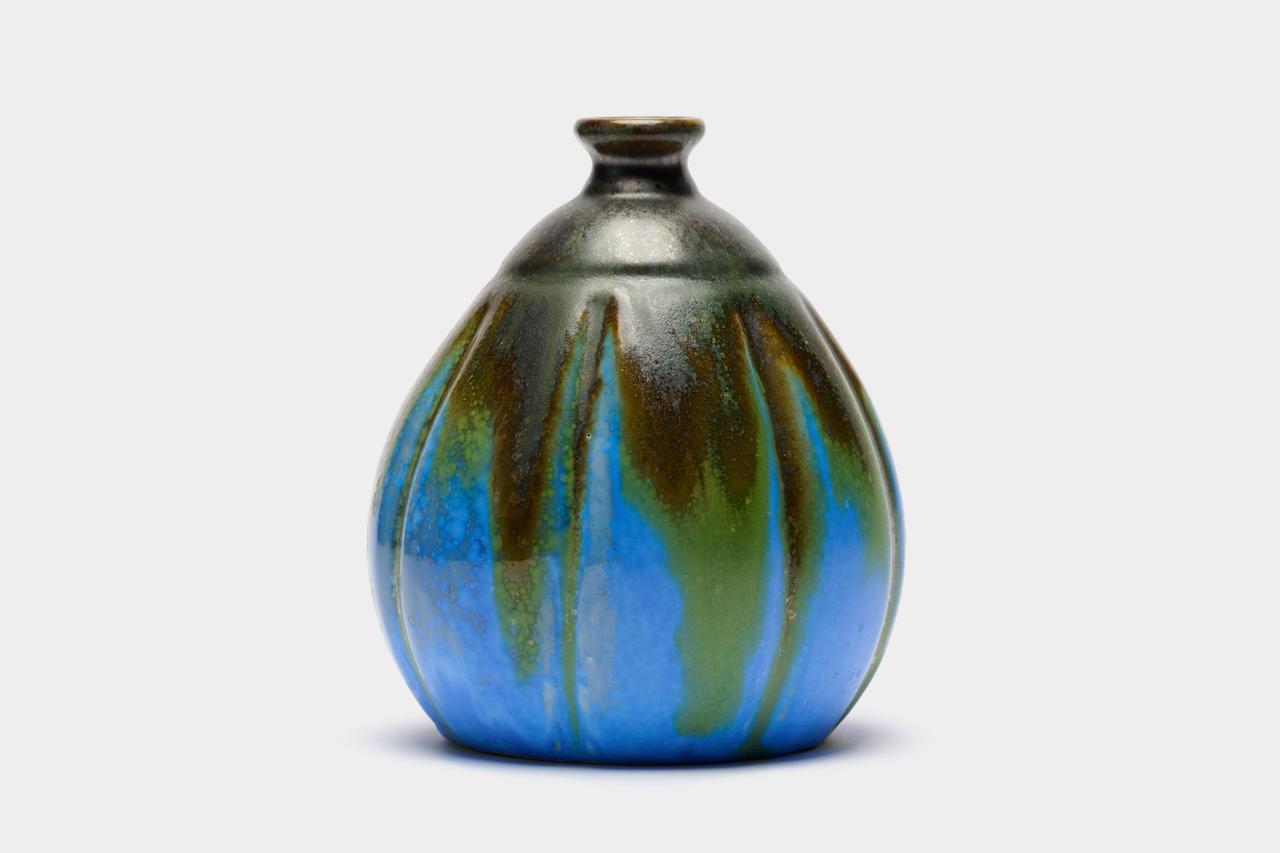
1915–1925 - Floraal 32 cm - Art Nouveau - Faiencefabriek Rijnland (Alphen a/d Rijn) - Platter - Earthenware - Plateel Jardinière


05
days
02
hours
17
minutes
43
seconds
Current bid
€ 2
No reserve price

Expert
Selected by Michel Karis
Art historian with extensive experience working at various auction houses in antiques.
Estimate € 150 - € 200
 | €2 |
|---|
Catawiki Buyer Protection
Your payment’s safe with us until you receive your object.View details
Trustpilot 4.4 | 143727 reviews
Rated Excellent on Trustpilot.
Antique faience jardinière by Faiencefabriek Rijnland of Alphen aan den Rijn, ca. 1920, in refined Art Nouveau (Jugendstil) style, oval hand-painted plateel with a floral motif in green and pale yellow on a cream glaze, measuring 32 × 16 × 10 cm and weighing 820 g, with two original holes in the base for hanging and bearing the Rijnland factory stamp and a swastika motif, in very good antique condition with only a minimal glaze speck on the rim and no restorations.
AI-assisted summary
Description from the seller
Antique Faience Jardinière – Rijnland Faience Factory (Alphen aan den Rijn) – Art Nouveau – Circa 1920
Fine, hand-painted oval faience jardinière in a refined Art Nouveau style.
This piece was manufactured by the relatively rare Rijnland Faience and Earthenware Factory in Alphen aan den Rijn, which operated in the first quarter of the 20th century (circa 1915–1925)
The dish is decorated all around with a beautifully stylized floral motif in typical green and soft yellow tones on a cream-white glaze. The interior is notably clean and bright, without the heavy lime or earth residues common for such decorative objects.
The underside features two original, baked-in holes in the base. During the Art Nouveau period these served two purposes: on one hand to allow air to escape during firing in the oven, and on the other to thread an iron wire through so that the jardinière could be hung as a decorative showpiece on the wall at the time.
On the underside the object is fully and authentically marked with:
The original factory stamp 'Rijnland Alphen a/d Rijn'.
The historic Swastika symbol (used as the original Eastern good-luck symbol)
The handwritten model number 895, the decoration number 25 and the color/artist's designation E.
In very good antique condition. The glaze has a nice sheen. No restorations or major cracks. Only one minimal glaze- or kiln-point at the edge, which is inherent to the age and the artisanal production process of this type of soft-fired faience (see detail photo). The two holes in the bottom are fully original from the factory and are therefore explicitly not later damage.
Details
Specific region of origin
Alphen a/d Rijn
Style subtype
Jugendstil
Weight
820 g
Era
1900-2000
Title additional information
Plateel Jardinière
Number of objects
1
Material
Earthenware
Manufacturer/brand
1915–1925 - Floraal 32 cm - Art Nouveau
Designer/artist/maker
Faiencefabriek Rijnland (Alphen a/d Rijn)
Country of origin
Netherlands
Style
Art Nouveau
Condition
Good condition - used with small signs of aging & blemishes
Height
10 cm
Width
32 cm
Depth
16 cm
Decor
Floral
Estimated period
1910-1920