Prof. A.M. Hammacher - De Wereld van Henry van de Velde - 1967


Starting bid
€ 1
Add to your favourites to get an alert when the auction starts.

Expert
Selected by Michel Karis
Art historian with extensive experience working at various auction houses in antiques.
Estimate € 180 - € 220
Catawiki Buyer Protection
Your payment’s safe with us until you receive your object.View details
Trustpilot 4.4 | 143539 reviews
Rated Excellent on Trustpilot.
Description from the seller
The World of Henry van de Velde - Prof. A.M. Hammacher
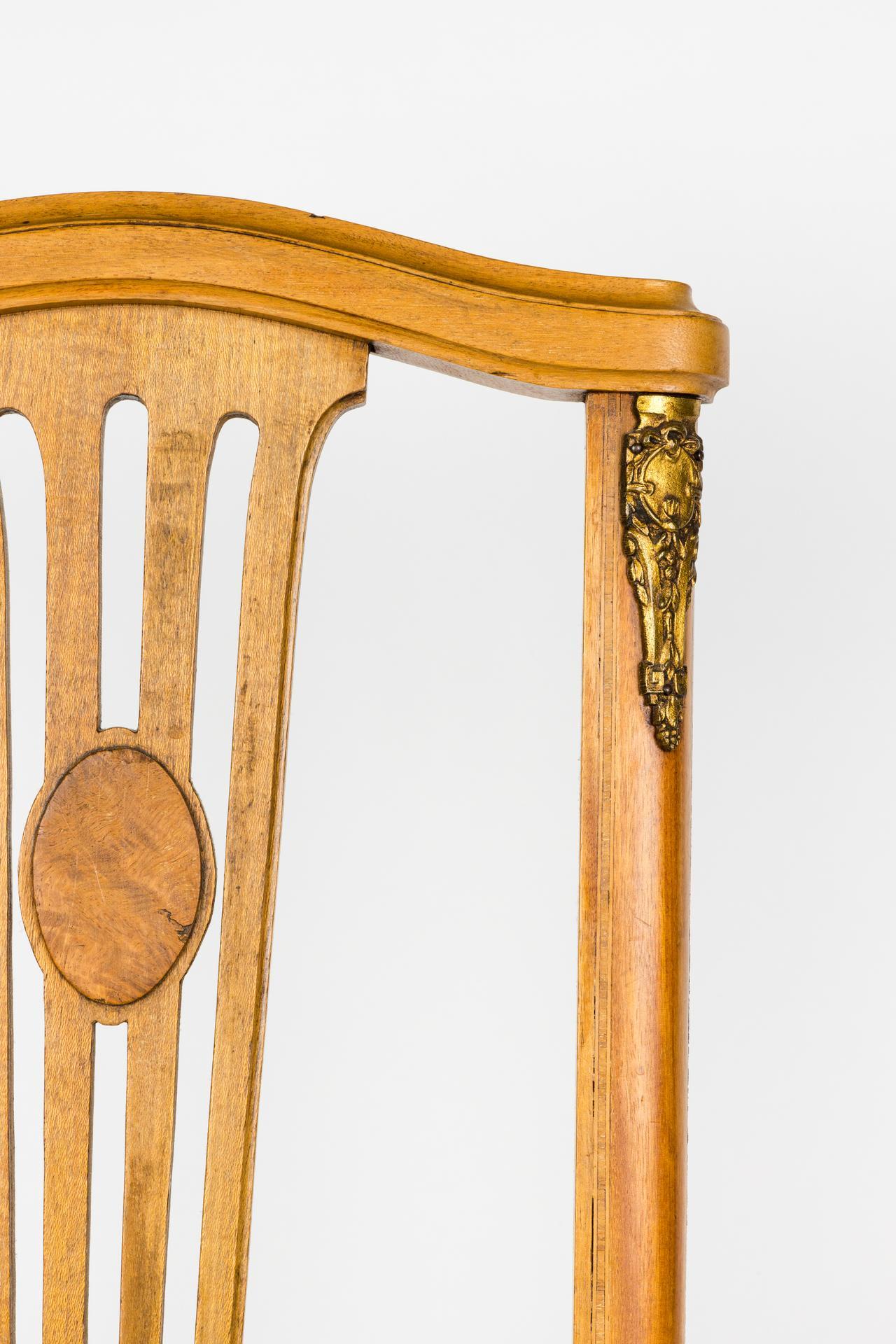
Excellent monograph that documents his architectural works, furniture, objects, paintings, drawings and etchings. IN DUTCH
Magnificent edition, rare!! from 1967.
Excellent condition!, except for a few small damages to the cardboard case (see photos)
Extensive illustrations (see photos)
Carefully packed and shipped with tracking and insurance.
Good luck with the bidding!!
"Van de Velde studied painting with Karel Verlat at the Royal Academy of Fine Arts in Antwerp and with the painter Carolus-Duran in Paris. He was deeply influenced by Paul Signac and Georges Seurat and painted in a Neo-Impressionist style (pointillism).
When he was twenty-two, he moved to the remote Wechelderzande. The landscape and the villagers were the subject of his paintings for four years. His aversion to the academism of Antwerp artists and his visit to the French artist colony of Barbizon led him to choose the countryside. He followed in the footsteps of painters like Isidore Meyers and Adriaan Joseph Heymans and moved to the Noorderkempen. It was the latest hot spot for young artists full of "Sturm und Drang".[22]
Wechelderzande had not yet been opened up by a tram or the main road. Henry Van de Velde found lodging at inn De Keizer, in the shadow of the Wechelse church. With the influx of artists, the farm with its inn was converted into a lodging. The inn gained a second floor with bedrooms and a painter’s studio. Van de Velde painted his Woman at the Window from the open window on the south side. This canvas is one of a series of eight depicting impressions of village life.
The inn is in 2019 a brasserie-restaurant named De Nieuwe Keizer. Little remains of the artists’ days of yore. The artist’s studio has disappeared; only on the north side the rounded studio window is still visible.
In 1889 Van de Velde joined the artists’ group Les XX in Brussels. After Vincent van Gogh exhibited several works at the annual Les XX exhibition, Van de Velde became one of the first painters influenced by Van Gogh. On his honeymoon to the Netherlands he visited the widow of Theo van Gogh, brother of the recently deceased Vincent van Gogh. He gained a fairly complete idea of almost the entire oeuvre of the painter and realized he would never reach that overwhelming level. For him, that marked the end of his career as a painter.
Henry Van de Velde as designer and architect
From 1892 Van de Velde left painting, turning to the applied arts: (metalwork, porcelain and cutlery, fashion design, rug and upholstery design) and also to architecture, including the construction of his own house in Uccle, Bloemenwerf. In his house, furnishings and design formed an organic whole. In 1895 he designed interiors and furniture for the influential art dealer L'Art Nouveau, run by Samuel Bing in Paris. Van de Velde’s work was also shown in Bing’s pavilion at the 1900 World’s Fair in Paris. Van de Velde was influenced by the English Arts and Crafts movement with John Ruskin and William Morris, and was one of the first architects and furniture designers to work in an abstract style with curved lines. He opposed copying historical styles and chose for an original form of expression. He wanted to dispel banalities and ugliness from the human spirit.
In 1899 he settled in Germany. He received several commissions here, including for the Museum Folkwang and the Hohenhof villa in Hagen and for the Nietzsche House in Weimar. Together with Harry Kessler, he was the founder of the Kunstgewerbeschule[23] and the academy in Weimar, the precursor of the Bauhaus later developed further by Walter Gropius at Dessau. He also maintained a close relationship with the Deutscher Werkbund.
Portrait of Maria Sèthe, Van de Velde’s future wife, 1891, by Théo Van Rysselberghe. It was through the painter that Van de Velde and Maria Sèthe met.
During World War I Van de Velde stayed in Switzerland and the Netherlands. On behalf of Helene Kröller-Müller he designed a foreman’s house and a workers’ house in Schipborg (building permits dated 1921), next to the farm De Schepbord designed by architect Hendrik Petrus Berlage in 1914. Van de Velde ultimately designed the Kröller-Müller Museum in Otterlo, opened in 1938. In 1925 he was appointed to the Higher Institute for Art History and Archaeology of Ghent University, where he taught architectural history and applied arts from 1926 to 1936. In 1933 he was commissioned to design the university library; the Boekentoren. Construction began in 1936, but completion only occurred after World War II and, for budgetary reasons, not entirely according to the original plans. Thus the floor of the reading room was marble instead of black rubber as Van de Velde had intended. Van de Velde also contributed to the construction of Ghent University Hospital.
In Leuven he built his last building, a technical school, on Diestsestraat between 1936 and 1942, which between 1997 and 2000 was restored and transformed by architect Georges Baines into the Municipal Library and City Archive, De Tweebronnen. The original building served in 1997 as a backdrop for the choreography with minimal music by the Rosas group of Anne Teresa De Keersmaeker for the dance film Rosas danst Rosas.
Contrary to popular belief, Van de Velde was not the designer of the logo of the National Railway Company of Belgium; the famous B-shaped letter in a horizontal ellipse was conceived by Jean de Roy. As the NMBS’s then artistic advisor, Van de Velde did persuade the management to choose this design. He also designed the interior of the first Belgian electric multiple units (AM35) and several carriages. Van de Velde also left his mark on Blankenberge station.
After World War II Van de Velde was accused of collaboration. The case never went to trial, but Van de Velde went into voluntary exile; he retreated to Oberägeri in Switzerland, where he wrote his memoirs, released posthumously in 1962 under the title Die Geschichte meines Lebens.
Van de Velde died in 1957 at the age of 94 in Zurich and was buried in Tervuren, near Brussels.
Details
Number of books
1
Subject
Art
Book title
De Wereld van Henry van de Velde
Author/ Illustrator
Prof. A.M. Hammacher
Condition
Very good
Artist
Henry van de Velde
Publication year oldest item
1967
Height
30.5 cm
Edition
1st Edition
Width
24.5 cm
Language
Dutch
Original language
Yes
Binding/ Material
Hardback
Extras
Dust jacket
Number of pages
353