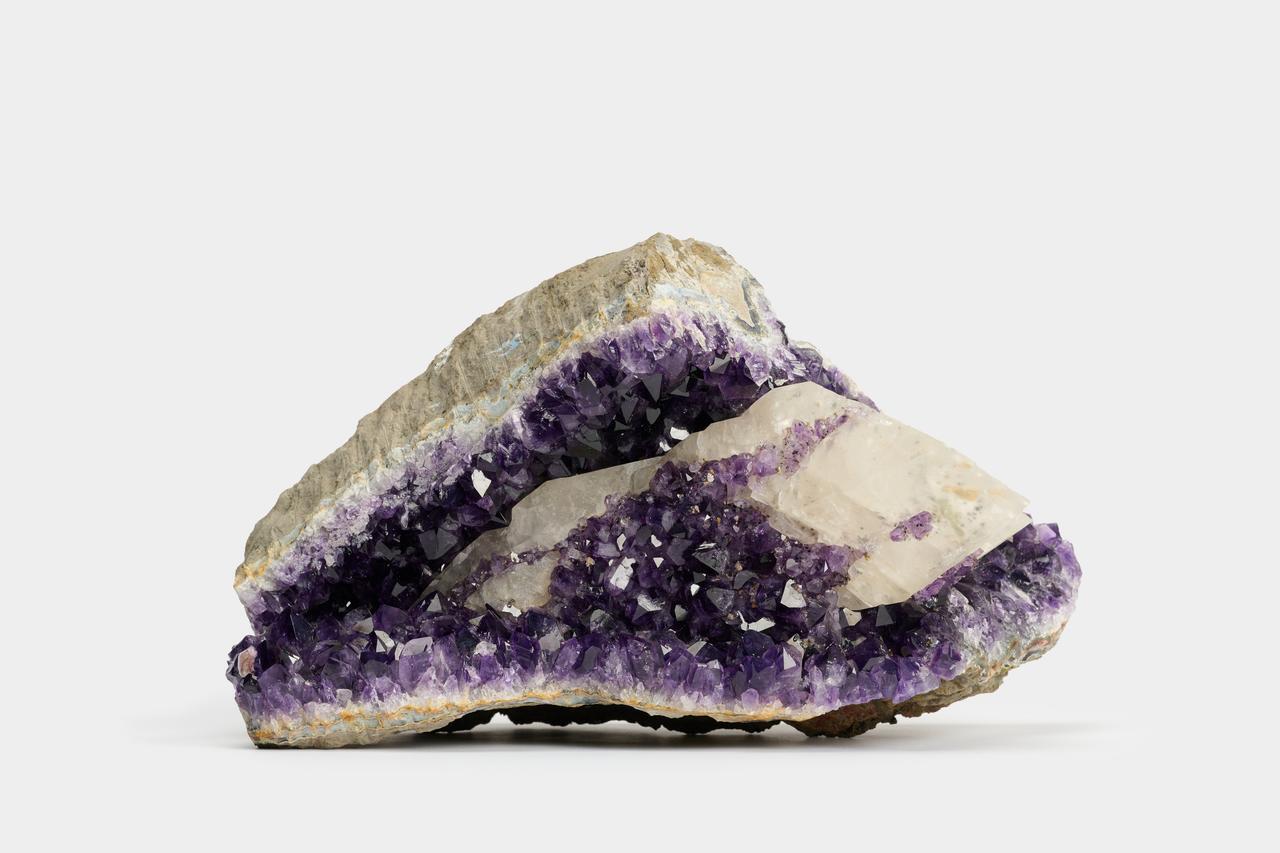
Turquoise chrysocolla with green botryoidal malachite. Free-form polished massif – concentric banding and botroidal formations. - Height: 205 mm - Width: 195 mm- 6600 g - (1)


06
days
19
hours
05
minutes
29
seconds

 | €111 |
|---|
Catawiki Buyer Protection
Your payment’s safe with us until you receive your object.View details
Trustpilot 4.4 | 143216 reviews
Rated Excellent on Trustpilot.
Description from the seller
Magnificent 6.6 kg Display Specimen — A monumental specimen of Chrysocolla and Malachite in association, coming from the famous mines of the Democratic Republic of the Congo. This piece stands out for its imposing size and sculptural form, partly polished to enhance the magnificent color contrast between the blue-green Chrysocolla and the deep green Malachite. Weighing almost 7 kilograms, this specimen represents a natural history object with great visual impact and collectible value. Direct observation reveals a dynamic surface, where mirror-polished areas alternate with cavities and crevices that preserve the natural, velvety texture of the mineral. The polish has highlighted the complex internal morphology, characterized by botryoidal structures—aggregates in grape-like shapes—and mammillaries. On the worked surfaces, Malachite displays its iconic concentric bands, circles, and “eye” patterns ranging from emerald green to near black, creating hypnotic designs. Chrysocolla envelops and interpenetrates Malachite with its tones evoking tropical waters, from turquoise to blue-green, with a nearly glassy luster. This fascinating mineral combination is the result of specific geological processes. Chrysocolla (hydrated copper silicate) and Malachite (copper carbonate hydroxide) are secondary minerals that form in the oxidation zone of copper deposits. Water, enriched with carbon dioxide and oxygen, percolates through rocks and alters the primary copper sulfide minerals, gradually depositing these new compounds. The famous Katanga region in the Democratic Republic of the Congo is world-renowned for producing some of the most spectacular specimens of this association. Botryoidal growth occurs when crystals develop radially from a nucleus, layer by layer, testimony to the chemical fluctuations of the formation environment over thousands of years. In addition to its obvious mineralogical interest, this piece qualifies as an exceptional decorative element and a high-level collectible object. Its sculptural presence makes it an ideal focal point for a professional study, a library, an art gallery, or a contemporary design interior. It is a piece that invites contemplation, a tangible fragment of the Earth’s creative power, perfect for enriching a modern Wunderkammer or a cabinet of curiosities. The interaction between vivid colors and organic forms offers a continual dialogue between art and science, making it a timeless natural history work. Technical details Name: Chrysocolla with Malachite Classification: Hydrated copper silicate and Copper carbonate hydroxide Provenance: Democratic Republic of the Congo Locality or mine: Star of the Congo Mine Dimensions: 205 x 195 x 140 mm Weight: 6600 g Conditions: Natural, free-form with partially polished surfaces Treatments: Mechanical polishing Restorations: None present
Seller's Story
The Mineral Art Gallery offers minerals, fossils, shells and natural elements.
Born in Italy in 2017, today she collaborates with international galleries and collectors, she is a direct importer of large minerals and naturalistic collectible elements; deals with the processing to insert them inside the living space. A section of the gallery was dedicated to the Wunderkammer, "chamber of wonders or cabinet of curiosities" in which Mirabilia elements are presented: naturalia and italiania, a union between "the present is the past".
All lots are shipped via DHL Express and Fercam couriers, with insured parcel and tracking.
Translated by Google TranslateMagnificent 6.6 kg Display Specimen — A monumental specimen of Chrysocolla and Malachite in association, coming from the famous mines of the Democratic Republic of the Congo. This piece stands out for its imposing size and sculptural form, partly polished to enhance the magnificent color contrast between the blue-green Chrysocolla and the deep green Malachite. Weighing almost 7 kilograms, this specimen represents a natural history object with great visual impact and collectible value. Direct observation reveals a dynamic surface, where mirror-polished areas alternate with cavities and crevices that preserve the natural, velvety texture of the mineral. The polish has highlighted the complex internal morphology, characterized by botryoidal structures—aggregates in grape-like shapes—and mammillaries. On the worked surfaces, Malachite displays its iconic concentric bands, circles, and “eye” patterns ranging from emerald green to near black, creating hypnotic designs. Chrysocolla envelops and interpenetrates Malachite with its tones evoking tropical waters, from turquoise to blue-green, with a nearly glassy luster. This fascinating mineral combination is the result of specific geological processes. Chrysocolla (hydrated copper silicate) and Malachite (copper carbonate hydroxide) are secondary minerals that form in the oxidation zone of copper deposits. Water, enriched with carbon dioxide and oxygen, percolates through rocks and alters the primary copper sulfide minerals, gradually depositing these new compounds. The famous Katanga region in the Democratic Republic of the Congo is world-renowned for producing some of the most spectacular specimens of this association. Botryoidal growth occurs when crystals develop radially from a nucleus, layer by layer, testimony to the chemical fluctuations of the formation environment over thousands of years. In addition to its obvious mineralogical interest, this piece qualifies as an exceptional decorative element and a high-level collectible object. Its sculptural presence makes it an ideal focal point for a professional study, a library, an art gallery, or a contemporary design interior. It is a piece that invites contemplation, a tangible fragment of the Earth’s creative power, perfect for enriching a modern Wunderkammer or a cabinet of curiosities. The interaction between vivid colors and organic forms offers a continual dialogue between art and science, making it a timeless natural history work. Technical details Name: Chrysocolla with Malachite Classification: Hydrated copper silicate and Copper carbonate hydroxide Provenance: Democratic Republic of the Congo Locality or mine: Star of the Congo Mine Dimensions: 205 x 195 x 140 mm Weight: 6600 g Conditions: Natural, free-form with partially polished surfaces Treatments: Mechanical polishing Restorations: None present
Seller's Story
The Mineral Art Gallery offers minerals, fossils, shells and natural elements.
Born in Italy in 2017, today she collaborates with international galleries and collectors, she is a direct importer of large minerals and naturalistic collectible elements; deals with the processing to insert them inside the living space. A section of the gallery was dedicated to the Wunderkammer, "chamber of wonders or cabinet of curiosities" in which Mirabilia elements are presented: naturalia and italiania, a union between "the present is the past".
All lots are shipped via DHL Express and Fercam couriers, with insured parcel and tracking.
Translated by Google TranslateDetails
Number of objects
1
Main mineral
Turquoise chrysocolla with green botryoidal malachite.
Mineral form
Free-form polished massif – concentric banding and botroidal formations.
Supplement
XXL collector-level specimen
Weight
6600 g
Country of origin
Congo, the Democratic Republic of the Congo
Height
205 mm
Width
195 mm
Depth
140 mm
Sold by