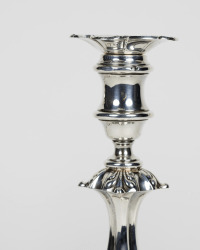
Perfume bottle - Precious Travel Flask in 925 Sterling Silver, Hallmarked and Crystal - John Tongue (J.T.) Birmingham


02
days
18
hours
19
minutes
21
seconds
Starting bid
€ 1
Reserve price not met

Expert
Selected by Inés Fernández
Specialised in Spanish and Portuguese silver with over 10 years in galleries and auctions.
Estimate € 150 - € 200
No bids placed
Catawiki Buyer Protection
Your payment’s safe with us until you receive your object.View details
Trustpilot 4.4 | 143397 reviews
Rated Excellent on Trustpilot.
Fine PREZIOSO Flacone da Viaggio in Argento 925 by John Tongue of Birmingham, UK, dating to circa 1850–1900, 10 cm high and 2 cm deep, about 40 g, with lead crystal, diamond-cut glass, a plain solid silver cap, and four British hallmarks including the J.T sponsor mark, in good used condition.
AI-assisted summary
Description from the seller
Splendid and elegant travel or purse perfume bottle (scent bottle) dating from the refined transition between the Late Victorian Era and the Edwardian Period (circa 1895–1905).
This precious grooming accessory represents a classic example of high British craftsmanship at the turn of the century. The bottle is distinguished by its characteristic era-specific "space-saving" shape: an ultra-slim, flattened profile designed to discreetly and comfortably slip into jacket pockets or inside the small, luxurious traveling necessaires of the high society ladies.
TECHNICAL SPECIFICATION AND EXPERTISE
• Era / Style: Late Victorian / Edwardian (circa 1900)
• Manufacture: Birmingham, England
• Materials: Lead crystal with high refractive index and solid Sterling Silver (silver fineness 925/1000).
• Height: 10 cm (classic portable proportion).
• Depth/Thickness: 2 cm (flat anti-rolling profile).
• Overall weight: 40 grams (excellent balance between crystal thickness and the lightness of the silver mounting).
• Glass design: Extremely fine hand engraving with the traditional diamond-cut geometric motif, designed to catch ambient light and create splendid reflections.
• Stopper: Smooth domed finish in solid silver, free of engravings (ready for a personalized monogram).
THE 4 BRITISH HOST MARKS (HALLMARKS)
On the sterling silver collar are impressed in sequence the four official assay marks of the British Crown, which legally certify its age and authenticity:
1. Maker's Mark (Sponsor): Mark with the silversmith's initials (J.T).
2. The Lion Passant (Standard Mark): State assurance for the fineness of Sterling Silver 925.
3. The Anchor (Town Mark): Official symbol of the ancient Birmingham Assay Office.
4. The Date Letter: A cursive/gothic letter enclosed in the final shield, typical of the late 19th to early 20th-century cycle.
FOCUS ON THE SILVERSMITH: WHO WAS J.T.?
The mark with the initials "J.T" on the top of the lid identifies the work of the celebrated master silversmith John Tongue, registered with the Birmingham Assay Office.
• History: John Tongue opened his jeweller’s workshop in Birmingham in the early decades of the 19th century (the first official marks in his name were registered as early as July 1831 at the Summer Row labs and later at Parade). His business flourished throughout the Victorian era.
• Elite Specialization: Tongue quickly became one of Britain’s most renowned and sought-after silversmiths for luxury “pocket” curios and travel accessories (such as portable scent bottles, vinaigrettes, pill boxes, and fine finishes for dressing-room crystal). He was famous for the robustness and millimetric precision of his closures and smooth silver mouths, designed to pair with hand-cut crystal from the period’s historic English glassworks.
• Manufacturing Guarantee: Finding John Tongue’s mark on a perfume bottle guarantees the buyer that the mounting is not a mass-produced item, but the fruit of Birmingham’s artisanal jewellery district at its historical peak. The mark stamped on both the neck mount and the cap attests to the final quality control personally performed by the master silversmith or his senior workshop assistants.
TOP LINE CURIOSITIES FOR EXPERT COLLECTORS
• The secret of the "Voice Salts" and Noble Essences: At the beginning of the 20th century, bottles of this very slender form did not only hold liquids or volatile perfumes, but were often filled with the famous "aromatic salts against fainting" (Smelling Salts). They were an indispensable rescue accessory for high society ladies, who, due to their tightly corseted fashion, often suffered sudden drops in blood pressure during balls or long train journeys.
• The "Crushed Ice" effect against gas light: The choice of the deep diamond-cut geometric motif was not only aesthetic but served a precise historical need. In 1900 noble households were transitioning from gas lamps to the first electric filament bulbs. This particular grinding created a refractive effect resembling crushed ice, designed to amplify and make the bottle sparkle even under the dim, warm artificial lights of the era.
• The importance of 40 grams: In the British antique market, bottles weighing around 40/50 grams with a flat profile are the most sought after by Chatelaine collectors. The Chatelaine was the waist belt with hooks for accessories that women wore at the waist: a bottle that was too heavy would damage the fabric, while this feather-light weight was considered the perfect balance between visible luxury and comfort.
• A piece to be personalized: The complete absence of monograms or initials engraved on the domed cap increases the object’s collectible value. In Edwardian England, buying a piece "plain" meant purchasing it from a luxury jewellery shop without ever completing personalization, leaving the silver intact, free of re-engraving wear, and still today, after more than a century, ready to host the new owner's initials.
CONDITION
EXCELLENT / COLLECTIBLE. The crystal body is entirely intact, an extraordinary and very rare feature for an object over 120 years old; there are no cracks, fissures, or chipping on the sharp edges of the diamond cut. The silver on the cap retains its genuine, attractively dark patina from time (natural oxidation), intentionally left to attest to its antiquity (can be polished to mirror finish at the buyer’s discretion).
100% authentic piece, perfect for enriching collections of antique English silver, vintage perfume bottles, or early-century grooming items.
Seller's Story
Lover of beauty … of curiosities .. Of art.. Of the sacred.. of the profane .. I have lost
Catawiki gave me the opportunity to make my collection known to other connoisseurs ..
That is the true meaning of collecting ; sharing ..
and a piece will never be well-collected unless it reaches another eye that appreciates it, another destination, another showcase ..
Through the ages of ages ..
Davide
Translated by Google TranslateSplendid and elegant travel or purse perfume bottle (scent bottle) dating from the refined transition between the Late Victorian Era and the Edwardian Period (circa 1895–1905).
This precious grooming accessory represents a classic example of high British craftsmanship at the turn of the century. The bottle is distinguished by its characteristic era-specific "space-saving" shape: an ultra-slim, flattened profile designed to discreetly and comfortably slip into jacket pockets or inside the small, luxurious traveling necessaires of the high society ladies.
TECHNICAL SPECIFICATION AND EXPERTISE
• Era / Style: Late Victorian / Edwardian (circa 1900)
• Manufacture: Birmingham, England
• Materials: Lead crystal with high refractive index and solid Sterling Silver (silver fineness 925/1000).
• Height: 10 cm (classic portable proportion).
• Depth/Thickness: 2 cm (flat anti-rolling profile).
• Overall weight: 40 grams (excellent balance between crystal thickness and the lightness of the silver mounting).
• Glass design: Extremely fine hand engraving with the traditional diamond-cut geometric motif, designed to catch ambient light and create splendid reflections.
• Stopper: Smooth domed finish in solid silver, free of engravings (ready for a personalized monogram).
THE 4 BRITISH HOST MARKS (HALLMARKS)
On the sterling silver collar are impressed in sequence the four official assay marks of the British Crown, which legally certify its age and authenticity:
1. Maker's Mark (Sponsor): Mark with the silversmith's initials (J.T).
2. The Lion Passant (Standard Mark): State assurance for the fineness of Sterling Silver 925.
3. The Anchor (Town Mark): Official symbol of the ancient Birmingham Assay Office.
4. The Date Letter: A cursive/gothic letter enclosed in the final shield, typical of the late 19th to early 20th-century cycle.
FOCUS ON THE SILVERSMITH: WHO WAS J.T.?
The mark with the initials "J.T" on the top of the lid identifies the work of the celebrated master silversmith John Tongue, registered with the Birmingham Assay Office.
• History: John Tongue opened his jeweller’s workshop in Birmingham in the early decades of the 19th century (the first official marks in his name were registered as early as July 1831 at the Summer Row labs and later at Parade). His business flourished throughout the Victorian era.
• Elite Specialization: Tongue quickly became one of Britain’s most renowned and sought-after silversmiths for luxury “pocket” curios and travel accessories (such as portable scent bottles, vinaigrettes, pill boxes, and fine finishes for dressing-room crystal). He was famous for the robustness and millimetric precision of his closures and smooth silver mouths, designed to pair with hand-cut crystal from the period’s historic English glassworks.
• Manufacturing Guarantee: Finding John Tongue’s mark on a perfume bottle guarantees the buyer that the mounting is not a mass-produced item, but the fruit of Birmingham’s artisanal jewellery district at its historical peak. The mark stamped on both the neck mount and the cap attests to the final quality control personally performed by the master silversmith or his senior workshop assistants.
TOP LINE CURIOSITIES FOR EXPERT COLLECTORS
• The secret of the "Voice Salts" and Noble Essences: At the beginning of the 20th century, bottles of this very slender form did not only hold liquids or volatile perfumes, but were often filled with the famous "aromatic salts against fainting" (Smelling Salts). They were an indispensable rescue accessory for high society ladies, who, due to their tightly corseted fashion, often suffered sudden drops in blood pressure during balls or long train journeys.
• The "Crushed Ice" effect against gas light: The choice of the deep diamond-cut geometric motif was not only aesthetic but served a precise historical need. In 1900 noble households were transitioning from gas lamps to the first electric filament bulbs. This particular grinding created a refractive effect resembling crushed ice, designed to amplify and make the bottle sparkle even under the dim, warm artificial lights of the era.
• The importance of 40 grams: In the British antique market, bottles weighing around 40/50 grams with a flat profile are the most sought after by Chatelaine collectors. The Chatelaine was the waist belt with hooks for accessories that women wore at the waist: a bottle that was too heavy would damage the fabric, while this feather-light weight was considered the perfect balance between visible luxury and comfort.
• A piece to be personalized: The complete absence of monograms or initials engraved on the domed cap increases the object’s collectible value. In Edwardian England, buying a piece "plain" meant purchasing it from a luxury jewellery shop without ever completing personalization, leaving the silver intact, free of re-engraving wear, and still today, after more than a century, ready to host the new owner's initials.
CONDITION
EXCELLENT / COLLECTIBLE. The crystal body is entirely intact, an extraordinary and very rare feature for an object over 120 years old; there are no cracks, fissures, or chipping on the sharp edges of the diamond cut. The silver on the cap retains its genuine, attractively dark patina from time (natural oxidation), intentionally left to attest to its antiquity (can be polished to mirror finish at the buyer’s discretion).
100% authentic piece, perfect for enriching collections of antique English silver, vintage perfume bottles, or early-century grooming items.
Seller's Story
Lover of beauty … of curiosities .. Of art.. Of the sacred.. of the profane .. I have lost
Catawiki gave me the opportunity to make my collection known to other connoisseurs ..
That is the true meaning of collecting ; sharing ..
and a piece will never be well-collected unless it reaches another eye that appreciates it, another destination, another showcase ..
Through the ages of ages ..
Davide
Translated by Google TranslateDetails
Era
1400-1900
Country of origin
United Kingdom
Material
Precious Travel Flask in 925 Sterling Silver, Hallmarked and Crystal - John Tongue (J.T.) Birmingham
Condition
Good condition - used with small signs of ageing
Height
10 cm
Width
2 cm
Depth
2 cm
Estimated period
1850-1900
Sold by