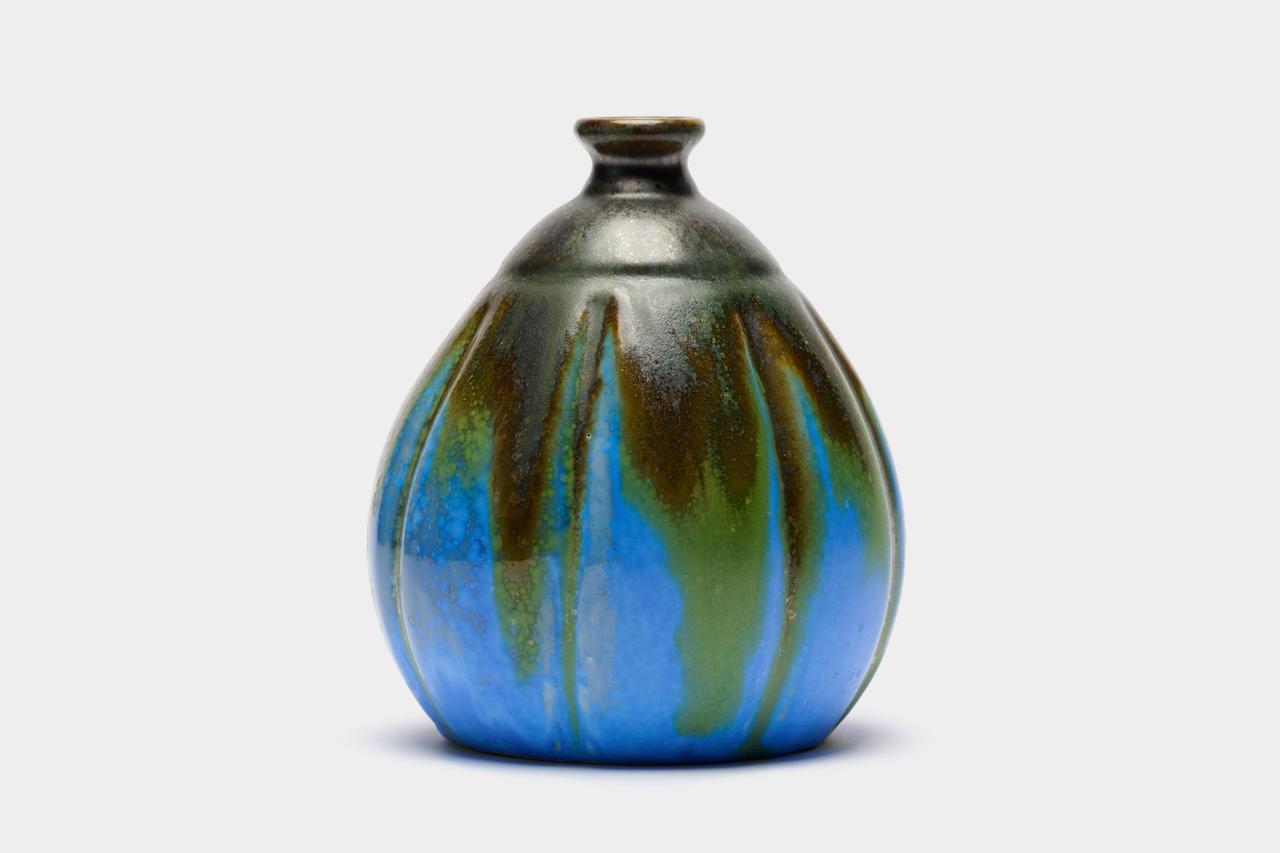
Nalda S.A. - Víctor de Nalda - Vase - No. 345/7 - Porcelain - Vase by Victor de Nalda


04
days
03
hours
03
minutes
12
seconds
Starting bid
€ 1
Reserve price not met

Expert
Selected by John Laurance
Thirty years' experience in decorative objects and two decades as shop owner.
Estimate € 150 - € 200
No bids placed
Catawiki Buyer Protection
Your payment’s safe with us until you receive your object.View details
Trustpilot 4.4 | 143856 reviews
Rated Excellent on Trustpilot.
Porcelain vase by Víctor de Nalda, model N.º 345/7, produced by Nalda S.A. in Almàssera, Valencia, Spain, dating to circa 1960–1970, a unique limited piece (No. 24) with equestrian motifs, 31 cm high, 23 cm wide and 29.5 cm deep (diameter 9.7 cm), in excellent condition with minimal signs of wear.
AI-assisted summary
Description from the seller
Ancient vase by Víctor de Nalda (1960). Piece number 24, unique and limited, with equestrian motifs, taming of wild horses.
Between 1947 and 1970, the Víctor de Nalda Porcelain and Refractories Factory (Nalda S.A.) focused on the production of artistic porcelain, equaling the great German firms in technical excellence and originality. Under the leadership of Víctor de Nalda, the factory served as a highly significant training ground, highlighting figures such as the Lladró brothers.
Unlike Lladró and its 'mass' production, Víctor de Nalda's works were limited.
Toward the late 1950s and throughout the 1960s, the rise of international avant-garde design (Mid-Century Modern) led Nalda's artistic section to push creative boundaries. With a strong influence from the San Carlos de Valencia School of Fine Arts —from which the firm's key sculptors and modellers came— the workshop opened the way for creators to produce very short, selective and innovative editions.
23 cm wide x 31 cm high x 9.7 cm in diameter.
Details
Era
1900-2000
Specific region of origin
Almàssera (Valencia)
Title additional information
Vase by Victor de Nalda
Number of objects
1
Country of origin
Spain
Model
No. 345/7
Designer/artist/maker
Víctor de Nalda
Material
Porcelain
Style
Mid-century modern
Manufacturer/brand
Nalda S.A.
Condition
Excellent condition: barely used with minimal signs of wear
Height
31 cm
Width
23 cm
Depth
29.5 cm
Diameter
9.7 cm
Estimated period
1960-1970
Sold by