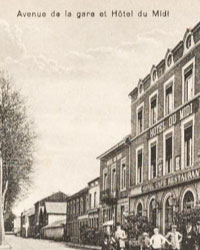
Indochine - City & Landscape, Ethnology (Ethnic / Ethnographic Postcards), Military, Women (Women at work, in the army, dressed like men, in penal colony,...), Portraits - Hanoi; Tonkin; Saigon; Hue; Cochinchina - Postcard (105) - 1898-1915


06
days
04
hours
36
minutes
32
seconds
Current bid
€ 200
Reserve price not met

Expert
Selected by Anton Stikkelman
Over 30 years' trade experience specialising in postcards with a vast international network.
Estimate € 500 - € 550
 | €200 |
|---|
Catawiki Buyer Protection
Your payment’s safe with us until you receive your object.View details
Trustpilot 4.4 | 143856 reviews
Rated Excellent on Trustpilot.
A collection of 105 Indochina postcards (1898–1915) with themes including city landscapes, ethnology, military, women and portraits, centred on Hanoi, Tonkin, Saigon, Hué and Cochinchine; condition Good.
AI-assisted summary
Description from the seller
Fantastic ensemble of postcards on the theme of Indochina. A very large part is marked "Dieulefils" a great photographer and publisher of CPAs.
1/ This historic postcard from the editor Pierre Dieulefils in Hanoi represents two wives (concubines) of the Emperor Thành Thái, who reigned over Annam (Vietnam) under the French protectorate from 1889 to 1907.
Pierre Dieulefils (1862-1937) was a French photographer, explorer and publisher, famous for being one of the first and most important publishers of postcards in French Indochina.
2/ This document presents four old postcards of French Indochina, published by the editor Mme G. Wirth, Saigon. They illustrate scenes of daily life, landscapes and the region's traditions in the early 20th century. During the golden age of the postcard (mainly between 1900 and 1910), Mme G. Wirth ran a publishing house in Saigon. Her productions are easily recognizable by the vertical signature placed on the margin of the photos: Mme G. Wirth, editor, Saigon. (as seen on your four documents).
3/ The printer S. Watanabe was a Japanese photographer and publisher active in Hanoi (Indochina) between 1910 and 1915. He ran a photography studio and owned the business “Bazar Nippon” (or Japanese Bazaar), first located on Tiên Tsin street.
4/ The Maison Passignat, famed engraving and publishing house based at the Quai du Commerce in Hanoi at the start of the 20th century, published a significant series of old postcards (CPAs) documenting French Indochina and more specifically Tonkin.
5/ Jumillard refers to a famous French professional photographer and publisher active in Hanoi during the era of French Indochina, between 1897 and 1903.
Details
Era
1900-2000
Number of objects
105
Country of origin
Indochine
Subject
Portraits, City & Landscape, Ethnology (Ethnic / Ethnographic Postcards), Military, Women (Women at work, in the army, dressed like men, in penal colony,...)
Theme detail/city
Hanoi; Tonkin; Saigon; Hue; Cochinchina
Year - youngest item
1915
Year - oldest item
1898
Condition
Good
Sold by