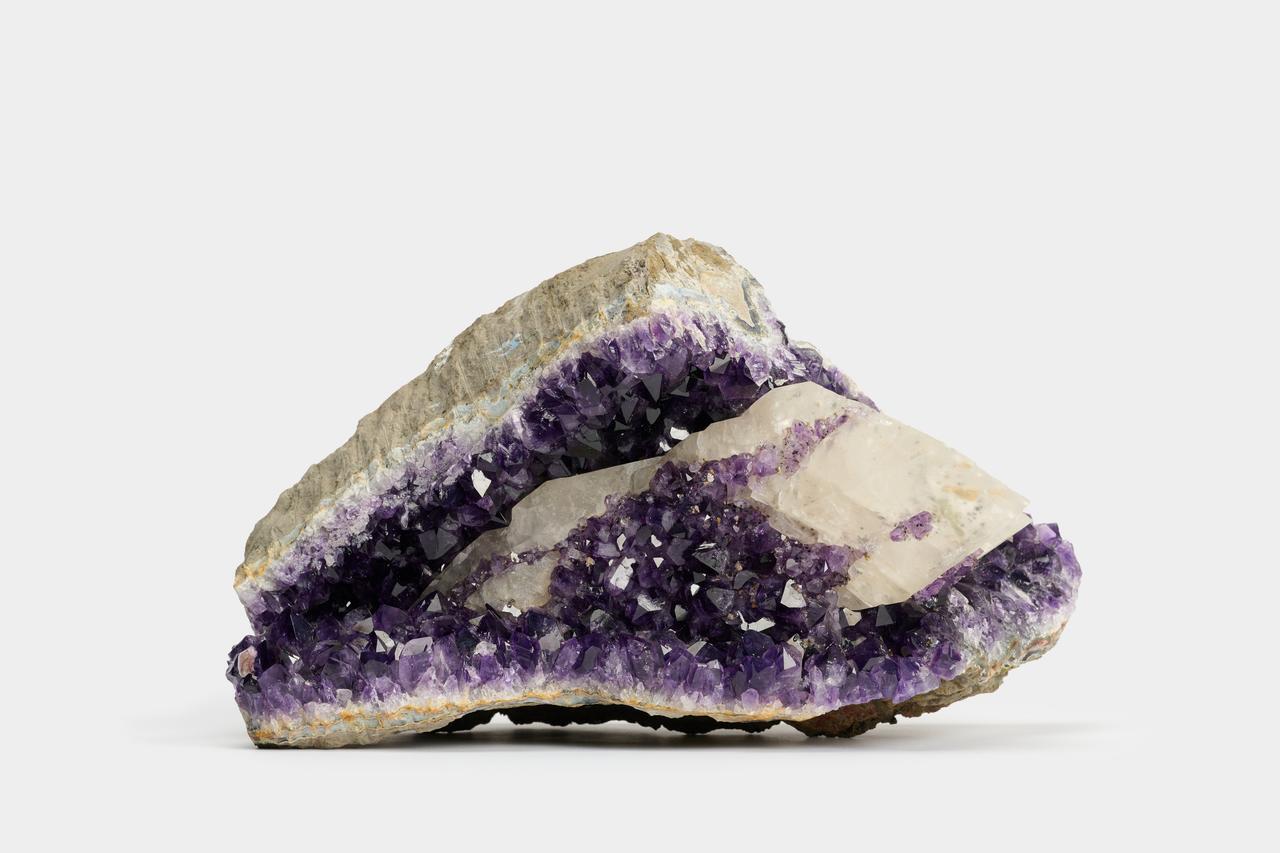
Deep Purple Purpurite Mineral Specimen - Striking Rough Nodule of Purpurite on Wood and Brass Base - Height: 180 mm - Width: 180 mm- 1130 g - (1)


04
days
00
hours
58
minutes
31
seconds

 | €6 | |
|---|---|---|
 | €5 | |
| €4 | |
Catawiki Buyer Protection
Your payment’s safe with us until you receive your object.View details
Trustpilot 4.4 | 143878 reviews
Rated Excellent on Trustpilot.
A single purpurite specimen of intense violet color mounted on a professional wood and brass display base, originating from Namibia and measuring 180 mm in height, width and depth and weighing 1130 g.
AI-assisted summary
Description from the seller
A Purpurite specimen on a display base — This exceptional specimen represents a formation of purpurite, an iron- and manganese phosphate mineral ((Mn,Fe)PO4), which crystallizes in the orthorhombic system. Purpurite typically forms as a product of secondary alteration of primary manganese- and iron-bearing minerals, such as triphylite, in pegmatitic contexts, where oxidation converts Mn2+ and Fe2+ to higher oxidation states, giving the mineral its distinctive coloration. Visually, the mineral shows an intense violet, almost magenta color, with hues that vary slightly depending on the distribution and Fe:Mn ratio within the structure. Its surface displays a vitreous to sub-metallic luster, typical of high-quality specimens, with striations and pale white inclusions that delineate fractures or secondary alteration zones, adding an interesting aesthetic contrast. The specimen is a massive fragment, lacking macroscopic crystal forms, but with a finely granular texture and a compact appearance. The origin of this specimen is Namibia, a locality renowned for producing purpurite of superior color and quality. In particular, deposits such as those in the Karibib region are known for yielding some of the best samples of this mineral, where geochemical conditions favored the formation of sizeable purpurite masses with intense color saturation, often associated with lithium-rich pegmatitic deposits. From an aesthetic perspective, the specimen stands out for its vibrant color and the relative purity of the block. The inclusions and white veining do not diminish its beauty, but rather enhance its natural character and geological complexity. The shape is irregular, as one would expect from a massive mineral, but well balanced, making it an appealing piece for display. The preservation state is excellent, with no signs of manipulation or artificial treatments. Purpurite is a relatively soft mineral (Mohs hardness 4–4.5) and can cleave easily, but this specimen is intact. It is mounted on a professional display base, which enhances its presence and facilitates its placement in a collection, guaranteeing stability and optimal visibility. The support, made of brass and wood, is proportioned and discreet. This piece offers an opportunity for collectors of rare and colorful minerals. Purpurite, with its distinctive violet color, is highly valued for both its aesthetics and its mineralogical interest, bearing witness to unique geochemical processes. Specimens of this level of color intensity and size, from classic localities such as Namibia, are increasingly sought after and represent a valuable investment for expanding a curated collection, standing out clearly from lower-quality or uncertain-origin specimens.
Seller's Story
The Mineral Art Gallery offers minerals, fossils, shells and natural elements.
Born in Italy in 2017, today she collaborates with international galleries and collectors, she is a direct importer of large minerals and naturalistic collectible elements; deals with the processing to insert them inside the living space. A section of the gallery was dedicated to the Wunderkammer, "chamber of wonders or cabinet of curiosities" in which Mirabilia elements are presented: naturalia and italiania, a union between "the present is the past".
All lots are shipped via DHL Express and Fercam couriers, with insured parcel and tracking.
Translated by Google TranslateA Purpurite specimen on a display base — This exceptional specimen represents a formation of purpurite, an iron- and manganese phosphate mineral ((Mn,Fe)PO4), which crystallizes in the orthorhombic system. Purpurite typically forms as a product of secondary alteration of primary manganese- and iron-bearing minerals, such as triphylite, in pegmatitic contexts, where oxidation converts Mn2+ and Fe2+ to higher oxidation states, giving the mineral its distinctive coloration. Visually, the mineral shows an intense violet, almost magenta color, with hues that vary slightly depending on the distribution and Fe:Mn ratio within the structure. Its surface displays a vitreous to sub-metallic luster, typical of high-quality specimens, with striations and pale white inclusions that delineate fractures or secondary alteration zones, adding an interesting aesthetic contrast. The specimen is a massive fragment, lacking macroscopic crystal forms, but with a finely granular texture and a compact appearance. The origin of this specimen is Namibia, a locality renowned for producing purpurite of superior color and quality. In particular, deposits such as those in the Karibib region are known for yielding some of the best samples of this mineral, where geochemical conditions favored the formation of sizeable purpurite masses with intense color saturation, often associated with lithium-rich pegmatitic deposits. From an aesthetic perspective, the specimen stands out for its vibrant color and the relative purity of the block. The inclusions and white veining do not diminish its beauty, but rather enhance its natural character and geological complexity. The shape is irregular, as one would expect from a massive mineral, but well balanced, making it an appealing piece for display. The preservation state is excellent, with no signs of manipulation or artificial treatments. Purpurite is a relatively soft mineral (Mohs hardness 4–4.5) and can cleave easily, but this specimen is intact. It is mounted on a professional display base, which enhances its presence and facilitates its placement in a collection, guaranteeing stability and optimal visibility. The support, made of brass and wood, is proportioned and discreet. This piece offers an opportunity for collectors of rare and colorful minerals. Purpurite, with its distinctive violet color, is highly valued for both its aesthetics and its mineralogical interest, bearing witness to unique geochemical processes. Specimens of this level of color intensity and size, from classic localities such as Namibia, are increasingly sought after and represent a valuable investment for expanding a curated collection, standing out clearly from lower-quality or uncertain-origin specimens.
Seller's Story
The Mineral Art Gallery offers minerals, fossils, shells and natural elements.
Born in Italy in 2017, today she collaborates with international galleries and collectors, she is a direct importer of large minerals and naturalistic collectible elements; deals with the processing to insert them inside the living space. A section of the gallery was dedicated to the Wunderkammer, "chamber of wonders or cabinet of curiosities" in which Mirabilia elements are presented: naturalia and italiania, a union between "the present is the past".
All lots are shipped via DHL Express and Fercam couriers, with insured parcel and tracking.
Translated by Google TranslateDetails
Number of objects
1
Main mineral
Deep Purple Purpurite Mineral Specimen -
Mineral form
Striking Rough Nodule of Purpurite on Wood and Brass Base
Supplement
Rare Intense Violet Purpurite from Namibia
Weight
1130 g
Country of origin
Namibia
Height
180 mm
Width
180 mm
Depth
180 mm
Sold by