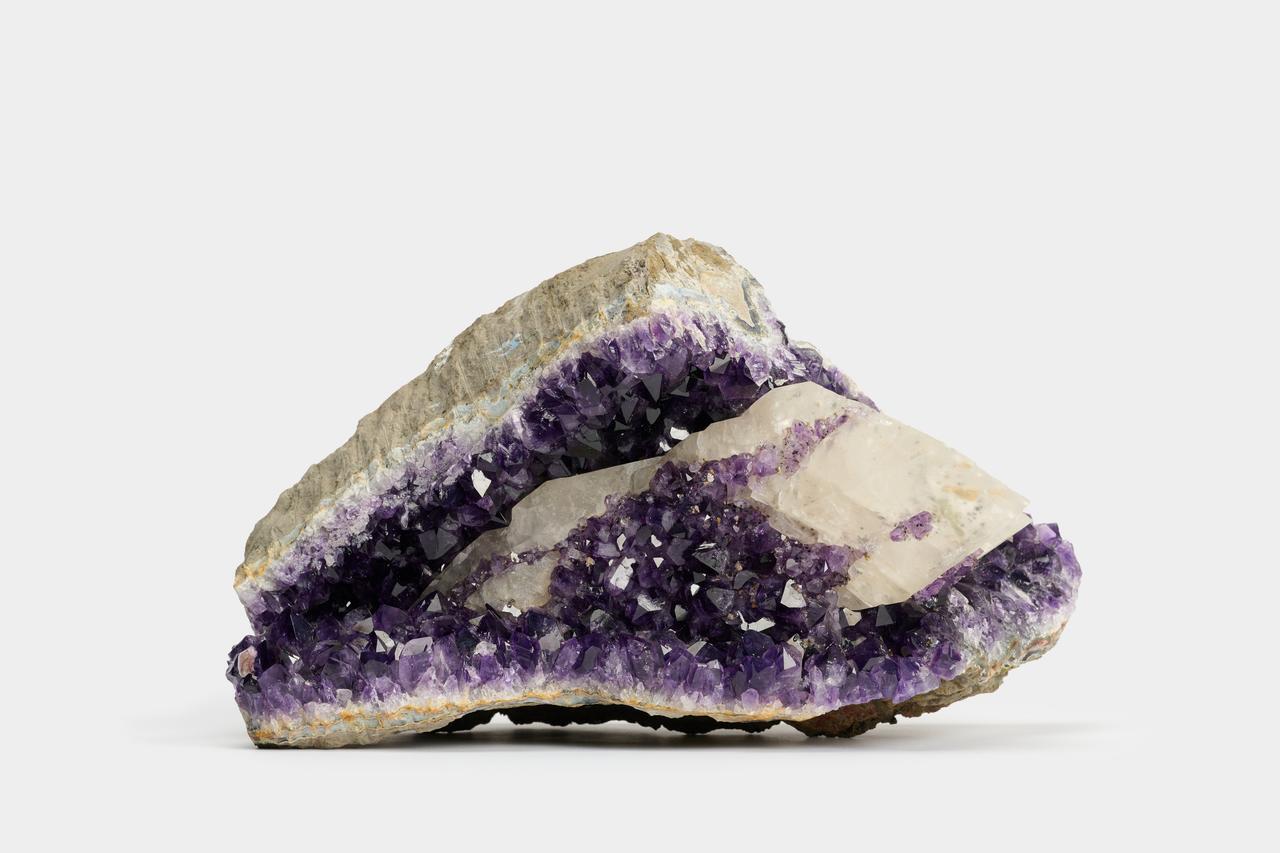
Important mineralogical collection with monumental actinolite Mineral Collection- 5600 g - (26)


04
days
22
hours
10
minutes
04
seconds

 | €10 |
|---|
Catawiki Buyer Protection
Your payment’s safe with us until you receive your object.View details
Trustpilot 4.4 | 143878 reviews
Rated Excellent on Trustpilot.
Monumental actinolite from the Valle d’Aosta, Italy, is the centerpiece of a 26‑sample mineral collection weighing 5.6 kg.
AI-assisted summary
Description from the seller
Important mineral collection with monumental actinolite from the Aosta Valley – 26 selected samples, 5.6 kg
This important mineral collection brings together 26 selected samples, for a total weight of 5.6 kg, equal to 5,600 grams.
The collection includes a significant variety of Italian and foreign minerals, with specimens from historic localities of the Apennines, the Alps and Tuscany, alongside interesting international samples from the Dominican Republic, Congo, Pakistan, Spain, Morocco, Switzerland, Australia, Portugal and Russia.
The unquestioned centerpiece of the collection is a gigantic historic actinolite specimen from the Aosta Valley, an exceptionally large piece with museum-quality display presence and notable mineralogical interest.
In addition, there are several particularly interesting species, including Spanish aerinite, blue spinel from Gilgit-Baltistan, Peruvian tetrahedrite, Dominican larimar and the association of chrysocolla and malachite from Congo.
A collection that combines a monumental specimen, rare minerals, classic localities and internationally sourced samples of great collecting value.
The lot includes:
• Actinolite – Valle d’Aosta, Italy
The most important piece of the entire collection. A massive historic actinolite specimen, characterized by decidedly extraordinary dimensions and a museum-grade display presence.
Actinolite belongs to the amphibole group and is typical of several metamorphic environments. The exceptional size of this specimen makes it particularly significant, representing the true centerpiece of the entire lot.
• Datolite – Sasso di Castro, Firenzuola, Tuscany
Classic specimen from one of Italy’s most famous localities for datolite. Valued for the crystal brilliance and the characteristic ophiolitic Alpine context.
• Sulfur – Pereta Mine, Grosseto, Tuscany
Interesting native sulfur specimen from the historic mining area of Pereta, known especially for antimoniferous mineralizations. A provenance of particular collecting interest.
• Black beta quartz – Castelluccio di Moscheda, Modena, Emilia-Romagna
Classic dark quartz from the Modenese Apennines, characterized by the particular crystal habit commonly defined as beta. A representative specimen of the ophiolitic mineralizations of the area.
• Quartz with limonite pseudomorphs on pyrite – Bruzolo, Turin, Piedmont
Interesting association in which ferriferous alteration products preserve the original morphology of pyrite crystals. A particularly meaningful specimen to observe the pseudomorphism phenomenon.
• Larimar – Dominican Republic
Beautiful larimar specimen, blue variety of pectolite from the Dominican Republic. A mineral highly valued for its blue tones, often with lighter veining.
• Chrysocolla and malachite – Democratic Republic of Congo
Fascinating association of copper secondary minerals, featuring the contrast between the blue tones of chrysocolla and the deep green of malachite. A specimen of great aesthetic interest.
• Quartz – Selvino, Bergamo, Lombardy
Specimen from a Lombard locality known in Italian mineral collecting. Interesting for crystallization and origin.
• Topaz and quartz – Shigar Valley, Gilgit-Baltistan, Pakistan
Elegant association from one of Pakistan’s most important pegmatite regions. The presence of topaz with quartz makes the specimen particularly interesting.
• Siphoning quartz – Porretta Terme, Bologna, Emilia-Romagna
Specimen characterized by the typical skeletal crystal growth, commonly defined as a hopper (trumpet) habit. A morphology highly valued for its crystallographic particularity and interest.
• Gypsum – Gabicce Mare, Pesaro e Urbino, Marche
Classic gypsum specimen from the Adriatic area. Interesting for crystallization and link to evaporitic formations of the Apennines.
• Pyrite – Location not specified
Pyrite specimen from the collection, interesting for its metallic luster and the systematic value of this important iron sulfide.
• Sulfur – Le Cetine di Cotorniano, Chiusdino, Siena, Tuscany
Classic native sulfur specimen from the historic Tuscan locality of Le Cetine, known for antimoniferous mineralizations.
• Sulfur and celestine – Caltanissetta, Sicily
Interesting mineral association from the famous Sicilian sulfide contexts. The contrast between sulfur and celestine makes the specimen particularly appreciable.
• Aerinite – Lleida area, Catalonia, Spain (locality to be confirmed)
One of the most distinctive species in the selection. Aerinite is a complex silicate characterized by blue and blue-green tones, known especially for Pyrenean mineralizations. A specimen of notable systematic interest.
• Blue spinel – Gilgit-Baltistan, Pakistan
Interesting blue spinel crystal from Pakistan. Spinel is a magnesium-aluminum oxide, valued in both mineralogical and gemological contexts for its crystal characteristics.
• Hematite – Nador, Morocco
Classic Moroccan hematite specimen, valued for its metallic luster and crystallization characteristics. A very representative aesthetic of North African mineralogy.
• Cubic pyrite – Navajún, La Rioja, Spain
Specimen from one of the world’s most famous localities for cubic pyrite crystals. Navajún is particularly known for the exceptionally regular geometries of its crystals.
• Axinite (identification to be confirmed) – Ticino, Switzerland
Alpine specimen labeled as “zanite,” likely part of the axinite group. A species of systematic interest, documented also in Alpine mineralizations of the Canton Ticino.
• Fluorite – Berbes, Asturias, Spain
Classic fluorite specimen from one of Europe’s most famous localities for this species. Berbes is particularly valued for the quality of crystallization and collecting value.
• Pyrite – San Clemente, Bologna, Emilia-Romagna
Specimen from a historic Bologna locality, valued for metallic crystallizations and the strong collecting interest of its samples.
• Tetrahedrite – Peru
One of the collection’s mineral rarities. Pyrite-family sulfosalt of particular interest to collectors specialized in metallic mineralizations.
• Celestine – Spain
Spanish celestine specimen, strontium sulfate valued for its brilliance and crystallization. An interesting presence in the international component of the lot.
• Beta quartz – Ca’ de Ladri, Bologna, Emilia-Romagna
Classic Appennine quartz with the characteristic crystal habit commonly defined as beta. A representative specimen of the mineralizations linked to Emilia-Romagna ophiolitic contexts.
• Natrolite – Trentino-Alto Adige, Italy
Italian natrolite specimen, a zeolite group mineral valued for its systematic interest and often acicular crystallizations.
• Rhodochrosite – Russia
Rhodochrosite specimen from Russia, manganese carbonate known for its pink to red tones. A highly appreciated species for color and mineralogical interest.
⸻
This important mineral collection brings together 26 selected samples, for a total weight of 5,600 grams, offering a significant variety of species, natural associations and Italian and international provenance.
The main point of interest is the enormous actinolite from the Valle d’Aosta, a monumental historic specimen of exceptional dimensions, capable of giving the entire collection a special display importance.
Beside this monumental piece, there are interesting rarities and great classical minerals, including the Spanish aerinite, the Pakistani blue spinel, the Peruvian tetrahedrite, the Dominican larimar and the chrysocolla-malachite association from Congo.
The presence of numerous Italian specimens from the Appennines and the Alps, together with international minerals of systematic and aesthetic interest, makes this selection particularly complete and varied.
Kire Minerals is proud to present this important mineral collection, personally selected by Erik Lombini with the usual passion and expertise. Each specimen has been chosen for its aesthetic, scientific or collecting interest, with particular attention to valuing historic localities and less common species.
Kire Minerals – your collection, with passion.
Details
Number of objects
26
Main mineral
Important mineralogical collection with monumental actinolite
Mineral form
Mineral Collection
Weight
5600 g
Country of origin
Italy
Sold by