Historic collection from the late 1980s! Mineral Collection- 5000 g - (25)


04
days
04
hours
09
minutes
04
seconds

 | €1 |
|---|
Catawiki Buyer Protection
Your payment’s safe with us until you receive your object.View details
Trustpilot 4.4 | 143966 reviews
Rated Excellent on Trustpilot.
A mixed mineral collection of 25 specimens totalling 5 kg, predominantly Italian with notable foreign pieces from Russia, Egypt, Madagascar, Tunisia, Switzerland, Pakistan and the United States.
AI-assisted summary
Description from the seller
Mixed mineral collection – 25 selected samples, 5 kg of Italian and foreign minerals
⸻
Mixed mineral collection – 25 selected samples, 5 kg of Italian and foreign minerals
This important selection brings together 25 mineral samples with a total weight of 5 kg, about 5000 grams. The lot is composed largely of Italian minerals, accompanied by some foreign specimens from Russia, Egypt, Madagascar, Tunisia, Switzerland, Pakistan and the United States.
The strength of the collection lies in the great variety of species and localities represented: Sardinian, Tuscan, Elban, Emilian-Romagnol minerals, Piedmontese samples and international pieces of strong aesthetic and collecting interest. Present are carbonates, sulfides, sulfates, silicates, oxides, pseudomorphs and particular mineral associations, with some genuine rarities such as fluorite with emimorphite from the Santa Lucia Mine, sulfur from Pereta, Tunisian celestine and the famous “sun” pyrite from Illinois.
The lot includes:
• Dolomite and pyrite – San Giovanni Mine, Iglesias, Sardinia
Interesting association from one of the most important mining areas in Sardinia. Dolomite, a calcium-magnesium carbonate, is accompanied by pyrite, copper-iron sulfide with the typical yellow-bronze metallic luster. A representative sample of the Sardinian mining context.
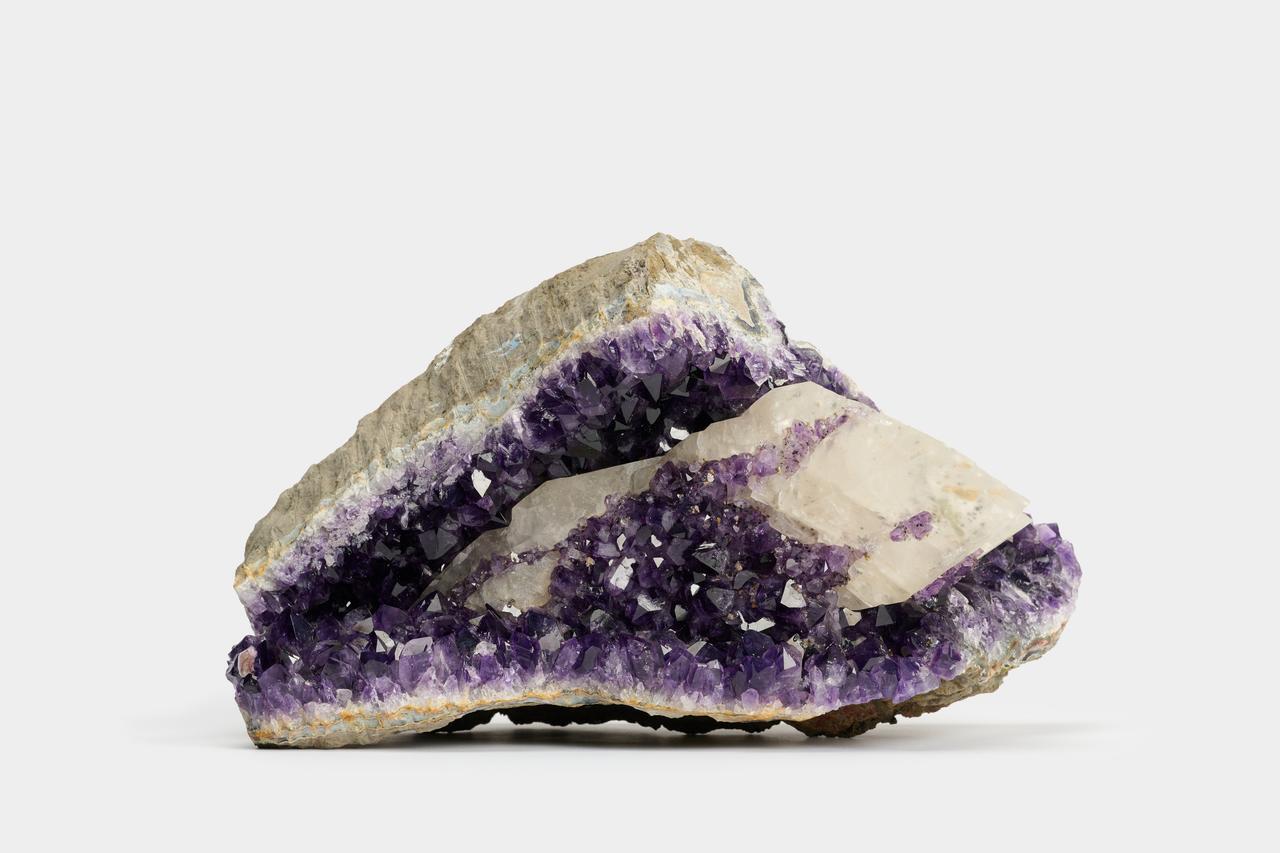
• Amethyst quartz – Osilo, Sardinia
Sample of amethyst quartz from one of Sardinia’s most famous localities for this variety. The violet color, even when delicate, makes Osilo amethyst highly valued by Italian collectors.
• Septarian gypsum – Secchiano, Emilia-Romagna
A special sample in which gypsum develops in relation to a septarian structure. Interesting for morphology, provenance and educational value.
• Calcite – Riolo Terme, Ravenna, Emilia-Romagna
Calcite from a classic area of Romagna mineralogy, linked to gypsum-sulfur and sedimentary contexts. A representative specimen, appreciated for its luster and origin.
• Fluorite and emimorphite – Santa Lucia Mine, Sardinia
A very rare piece of great collecting interest. The association of fluorite with emimorphite, a secondary zinc mineral, is especially fascinating for mineralogical contrast and provenance. The Santa Lucia Mine adds further historical and territorial value to the piece.
• Steatite – Piedmont
Piedmont steatite sample, a rock/metamorphic rock rich in talc, noted for its compact appearance and the distinctive slippery feel. Interesting to complete the lithological variety of the lot.
• Calcite – Tuscany
Tuscan calcite sample, a classic mineral but always very important in collections for its wide variety of crystal forms and geological contexts in which it can form.
• Hematite – Rio Marina, Elba Island, Tuscany
Classic Ferriferous Elba specimen from one of Italy’s most famous localities. Hematite from Rio Marina is appreciated for its metallic luster, historical value and link to the island’s ancient iron mines.
• Gypsum slice – Gabicce Mare, Marche
Gypsum specimen from the Adriatic area, cut as a slice to observe structure and texture. Interesting for provenance and educational appearance.
• Sulfur – Le Cetine di Cotorniano, Chiusdino, Siena, Tuscany
Native sulfur from the historic Tuscan locality of Cetine, tied to antimony mineralizations. The intense yellow color and historic provenance make the piece highly representative.
• Pyrite – San Clemente, Bologna, Emilia-Romagna
Pyrite specimen from a locality highly sought after by Emilian-Romagnol collectors. Metallic luster and crystal geometry make pyrite always highly appreciated.
• Pyrite – Rio Marina, Elba Island, Tuscany
Elban pyrite from one of Italy’s most famous ferrous localities. A piece that adds further value to the Elba portion.
• Aragonite variety “rice grain” – Secchiano, Emilia-Romagna
Aragonite with small, granular morphology, known as the “rice grain” variety. A curious, very characteristic specimen of morphological interest.
• Sulfur – Pereta, Grosseto, Tuscany
Rare and distinctive sample from the historic Pereta mining area, known especially for antimony mineralizations. The presence of sulfur makes the piece even more interesting and less common.
• Datolite – Sasso di Castro, Firenzuola, Tuscany
Classic sample from one of Italy’s most renowned localities for datolite. A mineral highly valued for its brilliance, crystallization and the ophiolitic geological context of the Tuscan-Emilian Apennines.
• Quartz “hopper” – Porretta Terme, Emilia-Romagna
Quartz specimen with hopper growth, characterized by a distinctive and very interesting crystal formation. The Apennine provenance adds territorial value to the piece.
• Rhodochrosite – Russia
Foreign sample of rhodochrosite, manganese carbonate known for pink to rose-red hues. A very appreciated mineral for color and systematic value.
• Limonite pseudomorph after pyrite
Piece of great morphological interest: limonite preserves the original form of pyrite, progressively replacing its composition. Pseudomorphism is always a fascinating phenomenon as it shows the chemical transformation history of the mineral while maintaining the original crystal habit.
• Desert rose – Egypt
Gypsum aggregate with a typical rosette morphology, formed in arid environments by evaporation and crystal growth in sandy sediments. A very scenographic and instantly recognizable specimen.
• Celestine – Castepi, Madagascar
Celestine sample from Madagascar, a strontium sulfate valued for its luster and delicate tones. An elegant foreign specimen, interesting for systematic position and provenance.
• Celestine – Zaghouan, Tunisia
Tunisian celestine sample, interesting for North African provenance and collecting value. Celestine is always highly regarded for crystallization, color and brilliance.
• Cianite – Ticino, Switzerland
Swiss cianite sample, aluminum silicate typical of metamorphic environments. Provenance from Ticino adds geographic and Alpine interest to the selection.
• Barite – Iglesias, Sardinia
Sardinian barite from one of Italy’s most important mining areas. Barite is known for its high specific gravity and for the variety of its crystallizations.
• Black tourmaline, schorl variety – Pakistan
Black tourmaline, schorl variety, from Pakistan. A mineral highly valued for its prismatic habit, luster and strong aesthetic contrast.
• Pyrite “sun” – Illinois, United States
Famous morphological variety of pyrite known as “pyrite sun,” characterized by discoid aggregates and radiating crystal terminations. It is one of the most recognizable and sought-after forms of American pyrite, greatly valued for aesthetics and peculiarity.
This collection brings together 25 samples selected for variety, provenance and collecting interest. Italian components are dominant, with specimens from Sardinia, Tuscany, Emilia-Romagna, Marche, Piedmont and Elba Island, paired with foreign samples chosen for aesthetics and peculiarity.
The value of the lot lies precisely in its richness: classical minerals, historic localities, rare species, pseudomorphs, aesthetic specimens and unique forms such as the desert rose and the pyrite “sun.” A broad, balanced and very interesting ensemble, ideal for enriching a mineral collection with well-representative Italian and international samples.
Kire Minerals is proud to propose this mineral selection, personally chosen by Erik Lombini with the usual passion and expertise. Each specimen has been evaluated for aesthetic, scientific or collecting interest, with the aim of offering an authentic, diverse and enchanting lot.
Kire Minerals – your collection, with passion.
Mixed mineral collection – 25 selected samples, 5 kg of Italian and foreign minerals
⸻
Mixed mineral collection – 25 selected samples, 5 kg of Italian and foreign minerals
This important selection brings together 25 mineral samples with a total weight of 5 kg, about 5000 grams. The lot is composed largely of Italian minerals, accompanied by some foreign specimens from Russia, Egypt, Madagascar, Tunisia, Switzerland, Pakistan and the United States.
The strength of the collection lies in the great variety of species and localities represented: Sardinian, Tuscan, Elban, Emilian-Romagnol minerals, Piedmontese samples and international pieces of strong aesthetic and collecting interest. Present are carbonates, sulfides, sulfates, silicates, oxides, pseudomorphs and particular mineral associations, with some genuine rarities such as fluorite with emimorphite from the Santa Lucia Mine, sulfur from Pereta, Tunisian celestine and the famous “sun” pyrite from Illinois.
The lot includes:
• Dolomite and pyrite – San Giovanni Mine, Iglesias, Sardinia
Interesting association from one of the most important mining areas in Sardinia. Dolomite, a calcium-magnesium carbonate, is accompanied by pyrite, copper-iron sulfide with the typical yellow-bronze metallic luster. A representative sample of the Sardinian mining context.
• Amethyst quartz – Osilo, Sardinia
Sample of amethyst quartz from one of Sardinia’s most famous localities for this variety. The violet color, even when delicate, makes Osilo amethyst highly valued by Italian collectors.
• Septarian gypsum – Secchiano, Emilia-Romagna
A special sample in which gypsum develops in relation to a septarian structure. Interesting for morphology, provenance and educational value.
• Calcite – Riolo Terme, Ravenna, Emilia-Romagna
Calcite from a classic area of Romagna mineralogy, linked to gypsum-sulfur and sedimentary contexts. A representative specimen, appreciated for its luster and origin.
• Fluorite and emimorphite – Santa Lucia Mine, Sardinia
A very rare piece of great collecting interest. The association of fluorite with emimorphite, a secondary zinc mineral, is especially fascinating for mineralogical contrast and provenance. The Santa Lucia Mine adds further historical and territorial value to the piece.
• Steatite – Piedmont
Piedmont steatite sample, a rock/metamorphic rock rich in talc, noted for its compact appearance and the distinctive slippery feel. Interesting to complete the lithological variety of the lot.
• Calcite – Tuscany
Tuscan calcite sample, a classic mineral but always very important in collections for its wide variety of crystal forms and geological contexts in which it can form.
• Hematite – Rio Marina, Elba Island, Tuscany
Classic Ferriferous Elba specimen from one of Italy’s most famous localities. Hematite from Rio Marina is appreciated for its metallic luster, historical value and link to the island’s ancient iron mines.
• Gypsum slice – Gabicce Mare, Marche
Gypsum specimen from the Adriatic area, cut as a slice to observe structure and texture. Interesting for provenance and educational appearance.
• Sulfur – Le Cetine di Cotorniano, Chiusdino, Siena, Tuscany
Native sulfur from the historic Tuscan locality of Cetine, tied to antimony mineralizations. The intense yellow color and historic provenance make the piece highly representative.
• Pyrite – San Clemente, Bologna, Emilia-Romagna
Pyrite specimen from a locality highly sought after by Emilian-Romagnol collectors. Metallic luster and crystal geometry make pyrite always highly appreciated.
• Pyrite – Rio Marina, Elba Island, Tuscany
Elban pyrite from one of Italy’s most famous ferrous localities. A piece that adds further value to the Elba portion.
• Aragonite variety “rice grain” – Secchiano, Emilia-Romagna
Aragonite with small, granular morphology, known as the “rice grain” variety. A curious, very characteristic specimen of morphological interest.
• Sulfur – Pereta, Grosseto, Tuscany
Rare and distinctive sample from the historic Pereta mining area, known especially for antimony mineralizations. The presence of sulfur makes the piece even more interesting and less common.
• Datolite – Sasso di Castro, Firenzuola, Tuscany
Classic sample from one of Italy’s most renowned localities for datolite. A mineral highly valued for its brilliance, crystallization and the ophiolitic geological context of the Tuscan-Emilian Apennines.
• Quartz “hopper” – Porretta Terme, Emilia-Romagna
Quartz specimen with hopper growth, characterized by a distinctive and very interesting crystal formation. The Apennine provenance adds territorial value to the piece.
• Rhodochrosite – Russia
Foreign sample of rhodochrosite, manganese carbonate known for pink to rose-red hues. A very appreciated mineral for color and systematic value.
• Limonite pseudomorph after pyrite
Piece of great morphological interest: limonite preserves the original form of pyrite, progressively replacing its composition. Pseudomorphism is always a fascinating phenomenon as it shows the chemical transformation history of the mineral while maintaining the original crystal habit.
• Desert rose – Egypt
Gypsum aggregate with a typical rosette morphology, formed in arid environments by evaporation and crystal growth in sandy sediments. A very scenographic and instantly recognizable specimen.
• Celestine – Castepi, Madagascar
Celestine sample from Madagascar, a strontium sulfate valued for its luster and delicate tones. An elegant foreign specimen, interesting for systematic position and provenance.
• Celestine – Zaghouan, Tunisia
Tunisian celestine sample, interesting for North African provenance and collecting value. Celestine is always highly regarded for crystallization, color and brilliance.
• Cianite – Ticino, Switzerland
Swiss cianite sample, aluminum silicate typical of metamorphic environments. Provenance from Ticino adds geographic and Alpine interest to the selection.
• Barite – Iglesias, Sardinia
Sardinian barite from one of Italy’s most important mining areas. Barite is known for its high specific gravity and for the variety of its crystallizations.
• Black tourmaline, schorl variety – Pakistan
Black tourmaline, schorl variety, from Pakistan. A mineral highly valued for its prismatic habit, luster and strong aesthetic contrast.
• Pyrite “sun” – Illinois, United States
Famous morphological variety of pyrite known as “pyrite sun,” characterized by discoid aggregates and radiating crystal terminations. It is one of the most recognizable and sought-after forms of American pyrite, greatly valued for aesthetics and peculiarity.
This collection brings together 25 samples selected for variety, provenance and collecting interest. Italian components are dominant, with specimens from Sardinia, Tuscany, Emilia-Romagna, Marche, Piedmont and Elba Island, paired with foreign samples chosen for aesthetics and peculiarity.
The value of the lot lies precisely in its richness: classical minerals, historic localities, rare species, pseudomorphs, aesthetic specimens and unique forms such as the desert rose and the pyrite “sun.” A broad, balanced and very interesting ensemble, ideal for enriching a mineral collection with well-representative Italian and international samples.
Kire Minerals is proud to propose this mineral selection, personally chosen by Erik Lombini with the usual passion and expertise. Each specimen has been evaluated for aesthetic, scientific or collecting interest, with the aim of offering an authentic, diverse and enchanting lot.
Kire Minerals – your collection, with passion.
Details
Number of objects
25
Main mineral
Historic collection from the late 1980s!
Mineral form
Mineral Collection
Weight
5000 g
Origin (region/city)
Italy
Country of origin
Italy
Sold by