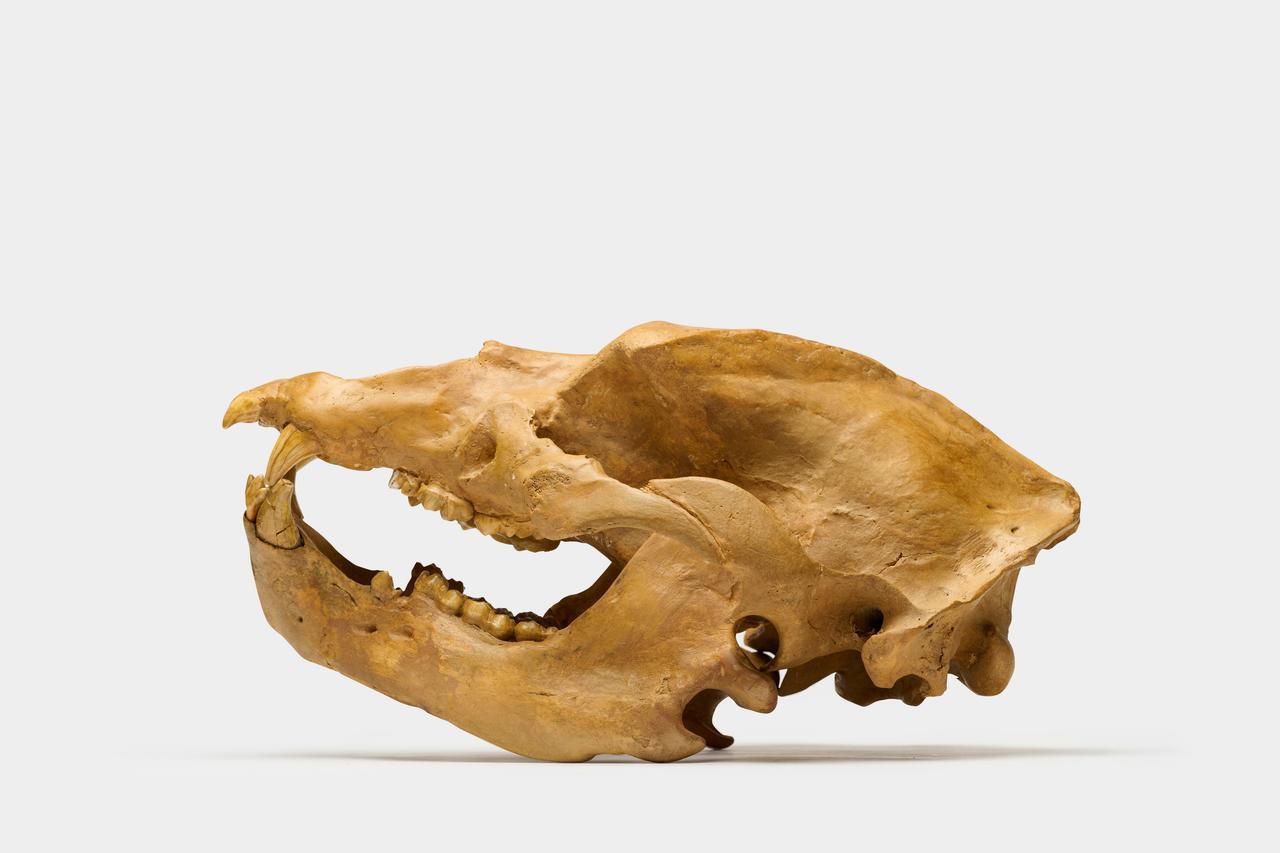
steppe Tarpan - Fossil bone - Equus ferus ( wild paard ) - 25 cm - 10 cm (No reserve price)


03
days
02
hours
07
minutes
42
seconds

 | €7 | |
|---|---|---|
 | €6 | |
| €5 | |
Catawiki Buyer Protection
Your payment’s safe with us until you receive your object.View details
Trustpilot 4.4 | 143856 reviews
Rated Excellent on Trustpilot.
Original fossil jaw bone of a wild European horse (Equus ferus, steppe tarpan) from the North Sea, dating to the Late Pleistocene to Early Quaternary (2.58–0.0117 million years ago), measuring 25 cm high, 10 cm wide and 5 cm deep.
AI-assisted summary
Description from the seller
Jaw fragment of a wild horse
This very beautiful jaw of a wild European horse that lived among the mammoths
European wild horse (E. f. ferus), also known as tarpan, steppe tarpan or forest tarpan. The name tarpan is derived from the Turkmen word for 'wild horse'.
Wild horses were a common animal species in Doggerland, the prehistoric land bridge between the Netherlands and England, inhabited during the last Ice Ages and afterwards by large grazers. These horses grazed on the cold grass plains and in the river valleys of the current North Sea bed and are now often recovered as fossils.
Habitat: They lived in a landscape with mammoths, woolly rhinoceroses and reindeer, often along riverbanks.
Fossil finds: Horse bones and teeth are regularly fished up by fishermen from the North Sea, indicating a large population.
Research into these vanished horses is part of scientific projects on the ecology of prehistoric Doggerland.
The horses could roam freely between present-day Netherlands and England, because the area was a continuous landmass.
After the last Ice Age, the steppe wisent, wild horses, mammoths and woolly rhinoceros disappeared permanently.
This radius bone is desalinated and still in clean water; everyone preserves it in their own way, and I am happy to leave that to the next owner as well.
Doggerland no longer exists, but traces of it can still be found on the beaches of the North Sea. It happens regularly that walkers, enthusiasts and researchers find something special there.
Also amazing treasures such as a radius bone of a wild horse. Even in dredged sand flats and in fishing nets bones are brought to the surface, as also this Summer 2024
Info:
Fossilized radius bone of a wild horse
Late Pleistocene
Locality: North Sea
Equus ferus (wild horse)
Length 25 cm
Width 10 cm
Thickness 5 cm
Beautiful jaw in good condition, retrieved from the North Sea
will be well packed and sent by registered mail
Details
Number of objects
1
Specimen
steppe Tarpan
Scientific name
Equus ferus ( wild paard )
Country of origin
North Sea
Geological period
Quaternary, Pleistocene (2.58 - 0.0117 million years)
Condition
Natural
Height
25 cm
Width
10 cm
Depth
5 cm
Authenticity
Original/official
Sold by