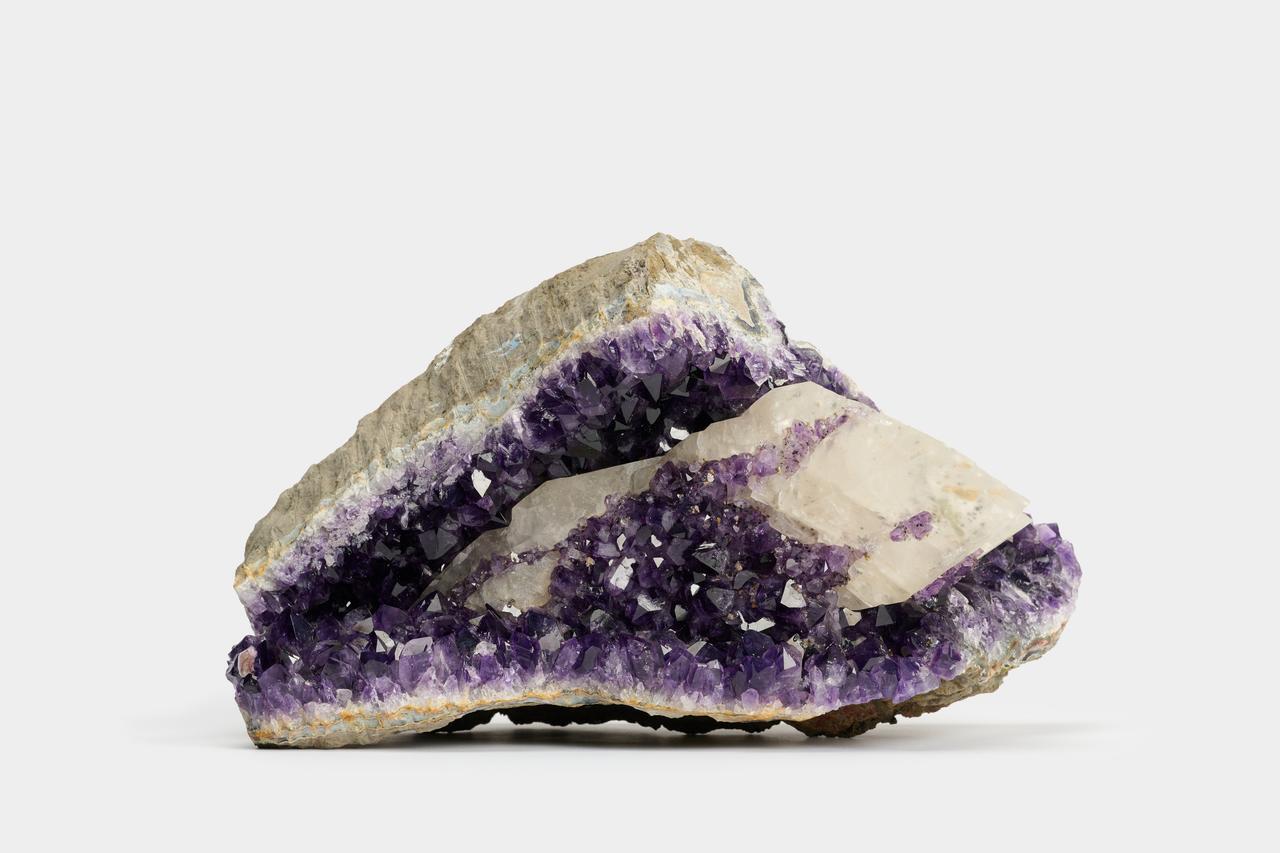
Vibrant Magenta-Purple Purpurite with a Rich, Velvety Luster Freeform Specimen on a Custom-Made Black Wood Display Stand - Height: 164 mm - Width: 71 mm- 408 g - (1)


01
day
21
hours
30
minutes
57
seconds

 | €1 |
|---|
Catawiki Buyer Protection
Your payment’s safe with us until you receive your object.View details
Trustpilot 4.4 | 144154 reviews
Rated Excellent on Trustpilot.
Purpurite specimen from Namibia, mounted on a custom dark wooden base with a metal support, weighing 408 g and measuring 164 × 71 × 60 mm.
AI-assisted summary
Description from the seller
Natural Purpurite Stone on Wooden Base — A specimen of purpurite from Namibia that stands out for its extraordinary color intensity, presented as a true natural sculpture. Mounted on a dark wooden base with a metal support, this piece is a magnificent example of how geology can become art. Its vibrant purple-magenta hue, a distinctive trait of this rare phosphate, makes it a visually captivating and collectible object. The mineral's surface reveals, upon careful inspection, a matte, finely grainy texture, almost velvety, which enhances the depth of its saturated color. Light is absorbed and softly diffused, highlighting subtle tonal variations from purple to the brighter magenta. The shape of the specimen is asymmetric and elongated, a rough fragment that preserves all the authenticity of its origin, its verticality accentuated by the elegant mounting. Interrupting the dominant purple, there are inclusions and residual areas of a white-gray mineral. These details are not imperfections, but precious testimonials of the specimen's genetic process. Purpurite is indeed a secondary mineral formed by alteration and oxidation of primary manganese- and iron-rich phosphates, such as Triphylite. The lighter spots probably represent remnants of the original mineral, creating a color contrast that is also a geological narrative. Purpurite owes its name, derived from the Latin
Seller's Story
The Mineral Art Gallery offers minerals, fossils, shells and natural elements.
Born in Italy in 2017, today she collaborates with international galleries and collectors, she is a direct importer of large minerals and naturalistic collectible elements; deals with the processing to insert them inside the living space. A section of the gallery was dedicated to the Wunderkammer, "chamber of wonders or cabinet of curiosities" in which Mirabilia elements are presented: naturalia and italiania, a union between "the present is the past".
All lots are shipped via DHL Express and Fercam couriers, with insured parcel and tracking.
Translated by Google TranslateNatural Purpurite Stone on Wooden Base — A specimen of purpurite from Namibia that stands out for its extraordinary color intensity, presented as a true natural sculpture. Mounted on a dark wooden base with a metal support, this piece is a magnificent example of how geology can become art. Its vibrant purple-magenta hue, a distinctive trait of this rare phosphate, makes it a visually captivating and collectible object. The mineral's surface reveals, upon careful inspection, a matte, finely grainy texture, almost velvety, which enhances the depth of its saturated color. Light is absorbed and softly diffused, highlighting subtle tonal variations from purple to the brighter magenta. The shape of the specimen is asymmetric and elongated, a rough fragment that preserves all the authenticity of its origin, its verticality accentuated by the elegant mounting. Interrupting the dominant purple, there are inclusions and residual areas of a white-gray mineral. These details are not imperfections, but precious testimonials of the specimen's genetic process. Purpurite is indeed a secondary mineral formed by alteration and oxidation of primary manganese- and iron-rich phosphates, such as Triphylite. The lighter spots probably represent remnants of the original mineral, creating a color contrast that is also a geological narrative. Purpurite owes its name, derived from the Latin
Seller's Story
The Mineral Art Gallery offers minerals, fossils, shells and natural elements.
Born in Italy in 2017, today she collaborates with international galleries and collectors, she is a direct importer of large minerals and naturalistic collectible elements; deals with the processing to insert them inside the living space. A section of the gallery was dedicated to the Wunderkammer, "chamber of wonders or cabinet of curiosities" in which Mirabilia elements are presented: naturalia and italiania, a union between "the present is the past".
All lots are shipped via DHL Express and Fercam couriers, with insured parcel and tracking.
Translated by Google TranslateDetails
Number of objects
1
Main mineral
Vibrant Magenta-Purple Purpurite with a Rich, Velvety Luster
Mineral form
Freeform Specimen on a Custom-Made Black Wood Display Stand
Supplement
Rare Namibian Specimen
Weight
408 g
Country of origin
Namibia
Height
164 mm
Width
71 mm
Depth
60 mm
Sold by