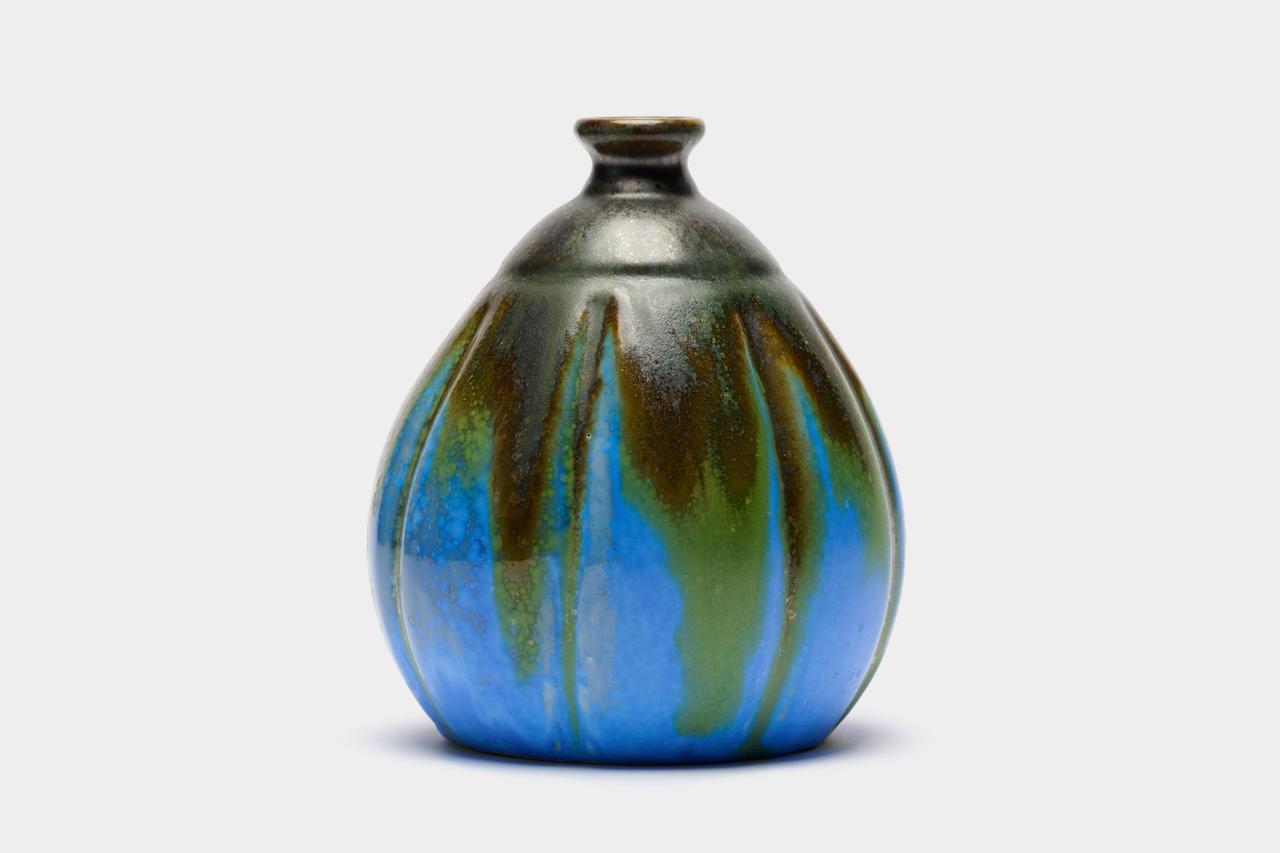
Kralik - Bohemia, Wilhelm Kralik Sohn - Vase - ART Nouveau - Glass - Pique Fleurs


01
day
12
hours
41
minutes
33
seconds
Current bid
€ 25
No reserve price

Expert
Selected by Michel Karis
Art historian with extensive experience working at various auction houses in antiques.
Estimate € 150 - € 200
 | €25 | |
|---|---|---|
 | €20 | |
| €15 | |
Catawiki Buyer Protection
Your payment’s safe with us until you receive your object.View details
Trustpilot 4.4 | 144426 reviews
Rated Excellent on Trustpilot.
Kralik Art Nouveau iridescent spotted glass rose bowl from Bohemia with its original metal flower holder, circa 1900–1930, in excellent condition and measuring 12 cm high, 11 cm wide and 11 cm deep.
AI-assisted summary
Description from the seller
Kralik – Art Nouveau Iridescent Spotted Glass Rose Bowl with Original Flower Holder – Bohemia, circa 1900
A beautiful and unusual Art Nouveau rose bowl, or pic-fleur, attributed to the Bohemian glassmaker Wilhelm Kralik, dating from the late 19th to early 20th century.
The vase features spectacular multicoloured spotted glass in vibrant shades of ruby red, amber, yellow and green, enhanced by a shimmering iridescent finish that produces fascinating rainbow-like reflections.
This remarkable effect, known as iridescence, was achieved through the application of metallic compounds to the glass surface, creating a delicate, mirror-like lustre. Such decorative techniques became particularly fashionable during the Belle Époque and Art Nouveau periods and were famously developed by Louis Comfort Tiffany in his celebrated Favrile glass.
The vase retains its original decorative metal flower holder, featuring an openwork floral design and a grid for arranging individual flower stems.
A rare and exceptionally decorative example of Bohemian art glass, combining the rich colours and experimental techniques of the Art Nouveau era.
Height: approximately 12 cm, including the metal holder.
Historical Background – Wilhelm Kralik Söhne
Wilhelm Kralik Söhne was one of the most important Bohemian art glass manufacturers of the late 19th and early 20th centuries. Established in 1881 from the historic Meyr glassmaking enterprise, the company played a significant role in the development of Art Nouveau glass in Bohemia, then part of the Austro-Hungarian Empire.
Kralik became particularly celebrated for its experimental decorative techniques, combining richly coloured glass, unusual organic forms, intricate surface patterns and spectacular iridescent finishes.
The characteristic rainbow-like lustre was achieved by treating the glass surface with metallic compounds, often through exposure to metal-salt vapours during heating. This process created delicate, shimmering reflections in shades of violet, blue, gold and green.
Iridescent glass became one of the defining artistic expressions of the Art Nouveau and Belle Époque periods, famously associated with Louis Comfort Tiffany’s Favrile glass and the celebrated Bohemian manufacturer Loetz.
Through its remarkable variety of designs and innovative decorative techniques, Kralik made an important contribution to the international reputation of Bohemian art glass and remains highly appreciated by collectors today.
Will be carefully packaged, well protected and insured
Details
Era
1900-2000
Title additional information
Pique Fleurs
Country of origin
Czechia
Model
ART Nouveau
Designer/artist/maker
Bohemia, Wilhelm Kralik Sohn
Material
Glass
Style
Art Nouveau
Manufacturer/brand
Kralik
Condition
Excellent condition: barely used with minimal signs of wear
Height
12 cm
Width
11 cm
Depth
11 cm
Estimated period
1920-1930
Sold by