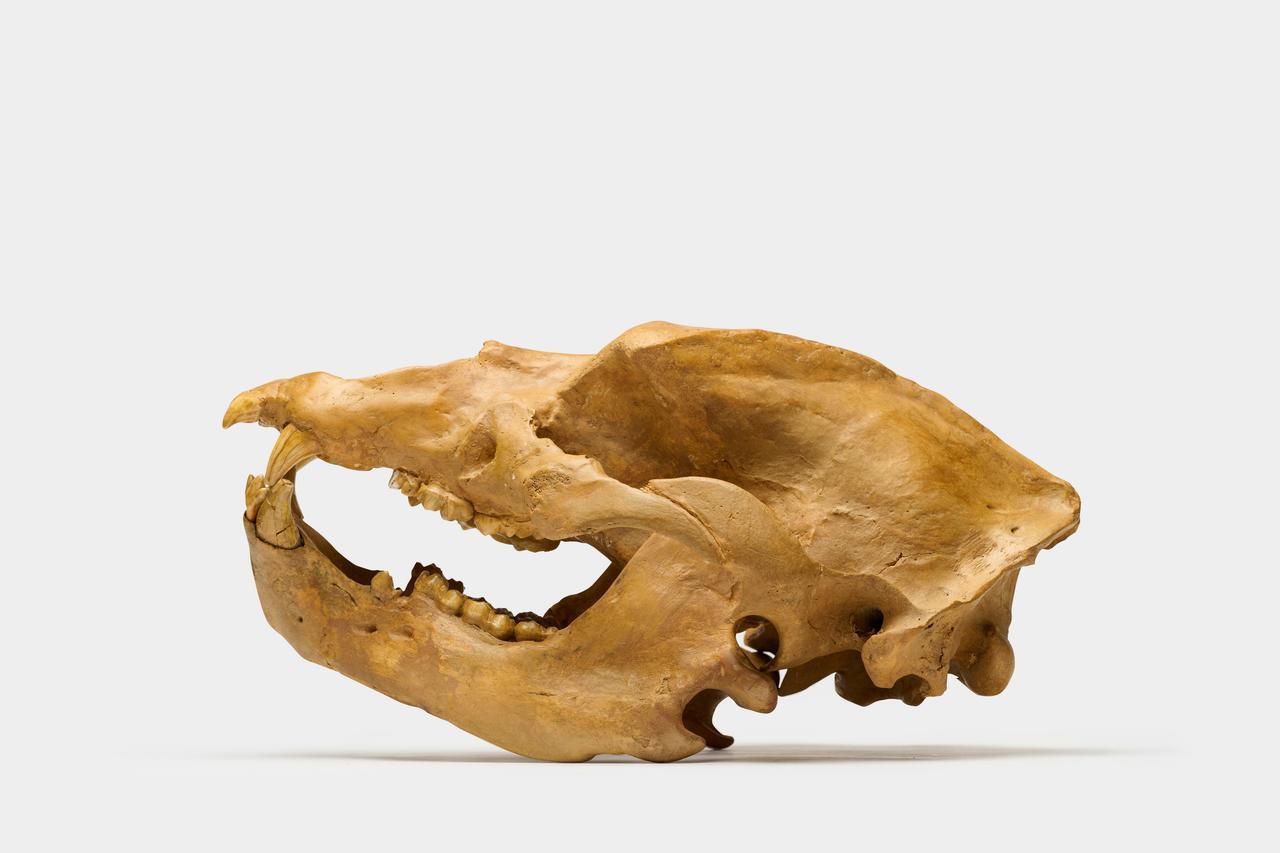
Fossil skull - Pachycephalosaurus - Museum-Grade Replica - 34 cm - 28 cm


05
days
00
hours
34
minutes
30
seconds

No bids placed
Catawiki Buyer Protection
Your payment’s safe with us until you receive your object.View details
Trustpilot 4.4 | 143856 reviews
Rated Excellent on Trustpilot.
Pachycephalosaurus – Museum-Grade replica skull specimen from the Cretaceous period (145–66 million years ago), weighing 500 g and measuring 34 cm high by 28 cm wide by 20 cm deep, in Composed condition and authentic/original.
AI-assisted summary
Description from the seller
Why does it look real? Because it is real stone!
Ossatorum Aeterna is a company specializing in the creation of ultra-realistic replicas of dinosaur skeletons and other extinct or endangered animals. Using an innovative mineral-coating technique, our creations achieve an authentic, museum-quality appearance. This unique approach was born from a simple observation: painted replicas often lack realism, while traditional molds, although more faithful, provide limited detail and restrict the creation of fine anatomical features. Our hybrid technique combines the best of both worlds, accurately capturing anatomical complexity while giving a lifelike mineral texture reminiscent of natural fossils. The result is arguably among the most realistic replicas currently available for discerning collectors and enthusiasts.
Item for Sale: Replica Skull of Pachycephalosaurus
Overall Dimensions (with base):
• Length: 34 cm
• Height: 28 cm
• Depth: 20 cm
Discover a museum-quality, ultra-realistic replica of the Pachycephalosaurus skull, crafted for dinosaur enthusiasts, collectors, paleo-artists, and anyone who appreciates scientifically inspired prehistoric specimens with striking visual presence.
About Pachycephalosaurus
Pachycephalosaurus was a herbivorous or potentially omnivorous dinosaur that lived approximately 70 to 66 million years ago during the Late Cretaceous period in what is now western North America. Its fossils have been discovered in regions that include present-day Montana, South Dakota, and Wyoming. It inhabited prehistoric ecosystems populated by a diverse range of dinosaurs and other animals during the final millions of years of the Cretaceous.
Pachycephalosaurus is particularly famous for its exceptionally thick, dome-shaped skull roof, which gives the dinosaur its name, meaning “thick-headed lizard.” This distinctive cranial structure could reach considerable thickness and was surrounded by small bony knobs and projections. These features make Pachycephalosaurus one of the most recognizable dinosaurs and an especially fascinating subject for paleontological reconstruction.
Its skull displays a remarkable combination of anatomical features, including a tall, rounded cranial dome, relatively short snout, large eye sockets, and distinctive bony ornamentation along the rear of the skull. The thickened skull roof is its most characteristic feature and has attracted considerable scientific interest. Researchers have proposed that the dome and surrounding ornamentation may have played a role in visual display, species recognition, or social interactions.
Pachycephalosaurus was a bipedal dinosaur estimated to have reached approximately 4 to 5 meters in length. Its relatively small teeth, compact jaws, and general body structure suggest a diet that may have included plant material, fruits, seeds, and possibly other food sources. Although it is traditionally classified as a herbivore, the precise composition of its diet remains uncertain.
One of the most debated aspects of Pachycephalosaurus biology concerns the function of its thick cranial dome. The idea that individuals used their heads for forceful head-to-head combat has long been popular, but the extent to which the skull was adapted for this behavior remains disputed. Other interpretations emphasize display and non-contact social interactions. Its unusual cranial anatomy continues to provide valuable evidence for studying dinosaur behavior and evolution.
The species is known from skull material and other skeletal remains, although many specimens are incomplete. Its distinctive dome, cranial ornamentation, and characteristic skull proportions have made it an important subject in research on pachycephalosaurid dinosaurs. Fossil discoveries have helped paleontologists understand the diversity and evolutionary relationships of these unusual dome-headed animals.
Pachycephalosaurus occupies a significant place in paleontology as one of the best-known members of the pachycephalosaur family. Its remarkable cranial structure offers insight into the evolution of specialized skull anatomy, ornamental features, and possible social behaviors among Late Cretaceous dinosaurs.
Key Features (Superior Craftsmanship)
Weight and Stability
With the base included, the skull weighs 500 g. Its solid construction ensures a stable and secure display suitable for shelves, desks, or museum cases.
Mineralized Hyper-Realistic Finish
This piece has undergone a multi-step artisanal process, including a hand-applied mineral coating that replicates fossilized bone, subtle surface irregularities, micro-abrasion patterns, and the fine sedimentary textures characteristic of genuine fossil specimens.
For an enhanced museum-like presentation, we recommend a well-positioned lighting setup. The interplay of light with the mineral layers emphasizes the rounded cranial dome, the bony knobs and projections, the eye sockets, and the contours of the skull, enhancing depth and realism.
Exceptional Detail
Surface structures are reproduced with remarkable precision, faithfully capturing the characteristic cranial morphology of Pachycephalosaurus, including its exceptionally thick dome, short snout, prominent orbital openings, and distinctive bony ornamentation. The overall design highlights the unusual anatomical features that make this dinosaur one of the most recognizable members of the Late Cretaceous fauna.
Museum-Grade Mounting
The skull is mounted on a modern black plastic base. This museum-style sculpture is designed to stand out in any natural history collection, from private studios to professional exhibition environments.
Material
Polymer coated with Ossatorum Aeterna’s hand-applied mineral coating, crafted from carefully selected rocks chosen for their natural coloration and finely ground to achieve an authentically fossilized texture.
Scientific Accuracy
Based on established paleontological research and anatomical references for Pachycephalosaurus, this replica is intended to reproduce the characteristic cranial morphology of the species.
Seller's Story
Ossatorum Aterna creates ultra-realistic replicas of dinosaur skeletons and other extinct or endangered animals, using a specialized mineral-coating technique that gives the pieces an authentic, museum-grade appearance.
Translated by Google TranslateWhy does it look real? Because it is real stone!
Ossatorum Aeterna is a company specializing in the creation of ultra-realistic replicas of dinosaur skeletons and other extinct or endangered animals. Using an innovative mineral-coating technique, our creations achieve an authentic, museum-quality appearance. This unique approach was born from a simple observation: painted replicas often lack realism, while traditional molds, although more faithful, provide limited detail and restrict the creation of fine anatomical features. Our hybrid technique combines the best of both worlds, accurately capturing anatomical complexity while giving a lifelike mineral texture reminiscent of natural fossils. The result is arguably among the most realistic replicas currently available for discerning collectors and enthusiasts.
Item for Sale: Replica Skull of Pachycephalosaurus
Overall Dimensions (with base):
• Length: 34 cm
• Height: 28 cm
• Depth: 20 cm
Discover a museum-quality, ultra-realistic replica of the Pachycephalosaurus skull, crafted for dinosaur enthusiasts, collectors, paleo-artists, and anyone who appreciates scientifically inspired prehistoric specimens with striking visual presence.
About Pachycephalosaurus
Pachycephalosaurus was a herbivorous or potentially omnivorous dinosaur that lived approximately 70 to 66 million years ago during the Late Cretaceous period in what is now western North America. Its fossils have been discovered in regions that include present-day Montana, South Dakota, and Wyoming. It inhabited prehistoric ecosystems populated by a diverse range of dinosaurs and other animals during the final millions of years of the Cretaceous.
Pachycephalosaurus is particularly famous for its exceptionally thick, dome-shaped skull roof, which gives the dinosaur its name, meaning “thick-headed lizard.” This distinctive cranial structure could reach considerable thickness and was surrounded by small bony knobs and projections. These features make Pachycephalosaurus one of the most recognizable dinosaurs and an especially fascinating subject for paleontological reconstruction.
Its skull displays a remarkable combination of anatomical features, including a tall, rounded cranial dome, relatively short snout, large eye sockets, and distinctive bony ornamentation along the rear of the skull. The thickened skull roof is its most characteristic feature and has attracted considerable scientific interest. Researchers have proposed that the dome and surrounding ornamentation may have played a role in visual display, species recognition, or social interactions.
Pachycephalosaurus was a bipedal dinosaur estimated to have reached approximately 4 to 5 meters in length. Its relatively small teeth, compact jaws, and general body structure suggest a diet that may have included plant material, fruits, seeds, and possibly other food sources. Although it is traditionally classified as a herbivore, the precise composition of its diet remains uncertain.
One of the most debated aspects of Pachycephalosaurus biology concerns the function of its thick cranial dome. The idea that individuals used their heads for forceful head-to-head combat has long been popular, but the extent to which the skull was adapted for this behavior remains disputed. Other interpretations emphasize display and non-contact social interactions. Its unusual cranial anatomy continues to provide valuable evidence for studying dinosaur behavior and evolution.
The species is known from skull material and other skeletal remains, although many specimens are incomplete. Its distinctive dome, cranial ornamentation, and characteristic skull proportions have made it an important subject in research on pachycephalosaurid dinosaurs. Fossil discoveries have helped paleontologists understand the diversity and evolutionary relationships of these unusual dome-headed animals.
Pachycephalosaurus occupies a significant place in paleontology as one of the best-known members of the pachycephalosaur family. Its remarkable cranial structure offers insight into the evolution of specialized skull anatomy, ornamental features, and possible social behaviors among Late Cretaceous dinosaurs.
Key Features (Superior Craftsmanship)
Weight and Stability
With the base included, the skull weighs 500 g. Its solid construction ensures a stable and secure display suitable for shelves, desks, or museum cases.
Mineralized Hyper-Realistic Finish
This piece has undergone a multi-step artisanal process, including a hand-applied mineral coating that replicates fossilized bone, subtle surface irregularities, micro-abrasion patterns, and the fine sedimentary textures characteristic of genuine fossil specimens.
For an enhanced museum-like presentation, we recommend a well-positioned lighting setup. The interplay of light with the mineral layers emphasizes the rounded cranial dome, the bony knobs and projections, the eye sockets, and the contours of the skull, enhancing depth and realism.
Exceptional Detail
Surface structures are reproduced with remarkable precision, faithfully capturing the characteristic cranial morphology of Pachycephalosaurus, including its exceptionally thick dome, short snout, prominent orbital openings, and distinctive bony ornamentation. The overall design highlights the unusual anatomical features that make this dinosaur one of the most recognizable members of the Late Cretaceous fauna.
Museum-Grade Mounting
The skull is mounted on a modern black plastic base. This museum-style sculpture is designed to stand out in any natural history collection, from private studios to professional exhibition environments.
Material
Polymer coated with Ossatorum Aeterna’s hand-applied mineral coating, crafted from carefully selected rocks chosen for their natural coloration and finely ground to achieve an authentically fossilized texture.
Scientific Accuracy
Based on established paleontological research and anatomical references for Pachycephalosaurus, this replica is intended to reproduce the characteristic cranial morphology of the species.
Seller's Story
Ossatorum Aterna creates ultra-realistic replicas of dinosaur skeletons and other extinct or endangered animals, using a specialized mineral-coating technique that gives the pieces an authentic, museum-grade appearance.
Translated by Google TranslateDetails
Number of objects
1
Scientific name
Pachycephalosaurus - Museum-Grade Replica
Geological period
Cretaceous (145 - 66 million years)
Condition
Composed
Weight
500 g
Height
34 cm
Width
28 cm
Depth
20 cm
Authenticity
Original/official
Sold by