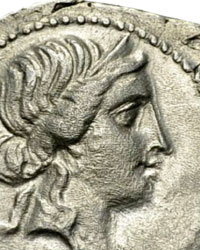
Byzantine Empire Lot van 4 Æ Münzen (No reserve price)


02
days
03
hours
02
minutes
31
seconds

 | €24 | |
|---|---|---|
| €15 | |
| €10 | |
Catawiki Buyer Protection
Your payment’s safe with us until you receive your object.View details
Trustpilot 4.4 | 144940 reviews
Rated Excellent on Trustpilot.
This lot contains four Byzantine Æ coins, including folles of Justinian I (551/552), Basil I (867–886) and an anonymous Class C follis associated with Michael IV (1034–1041).
AI-assisted summary
Description from the seller
1. Follis of Emperor Justinian I. (The Elder)
• Period: minted about 551/552 AD (mid-6th century).
• Historical context: Justinian I. ("the Great") is one of the most significant rulers of Late Antiquity. He rebuilt the Hagia Sophia and reconquered large parts of the old Western Roman Empire (including Italy and North Africa).
• Special feature: On the reverse is the large “M” (Greek numeral for 40) indicating the value of 40 nummi. To its right the Roman numeral XXV reveals that the coin was struck in the 25th regnal year of the emperor.
• Mint: CON (Constantinople / today’s Istanbul).
2. Follis of Emperor Basil I. (The Era of Renewal)
• Period: minted about 867–886 AD (9th century).
• Historical context: Basil I founded the Macedonian Dynasty, under which the Byzantine Empire experienced a political and cultural flourishing (the “Macedonian Renaissance”).
• Special feature: Unlike the older coins, the reverse no longer shows a large value sign, but a pure inscription in four lines: BASIL / IOS EN ΘEO / BASILEVS / ROMEON (Basil, by the grace of God, Emperor of the Romans). This underscored the absolutist and religious claim to rule.
• Mint: Constantinople.
3. Anonymous Follis of Class C / Michael IV. (The Religious Coin)
• Period: minted about 1034–1041 AD (11th century).
• Historical context: This coin falls into the era of the so-called “anonymous folles.” From the late 10th century, the emperors for around 150 years dispensed with depicting their own faces on everyday bronze coins. Instead, Jesus Christ was placed in the foreground.
• Special feature: The obverse shows the portrait of Christ with the Evangelist Book. On the reverse there is a cross with the letters IC – XC / NI – KA. This is the Greek abbreviation for: “Jesus Christ conquers.”
• Mint: Constantinople.
Details
Era
Before 1400
Culture/region
Byzantine Empire
Denomination
Lot van 4 Æ Münzen
Metal
Æ
Condition
Ungraded
Number of objects
4
Theme
History
Sold by