Roman Empire (Provincial). Trajan (AD 98-117). Æ 98 - 117 Attuda Mint - Asia, Caria (No reserve price)


01
day
14
hours
41
minutes
37
seconds

 | €2 | |
|---|---|---|
 | €1 |
Catawiki Buyer Protection
Your payment’s safe with us until you receive your object.View details
Trustpilot 4.4 | 145414 reviews
Rated Excellent on Trustpilot.
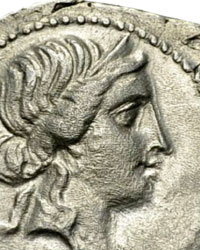
Semi-autonomous bronze coin of Attuda in Caria, struck under Trajan (98–117), depicting Demos on the obverse and Sabazios on horseback with a labrys on the reverse; weight 6.24 g.
AI-assisted summary
Description from the seller
Caria (Asia Minor), city of Attuda
Semi-autonomous bronze coin from the reign of Emperor Trajan (98–117 AD).
Obverse: Portrait of Demos facing right, surrounded by the inscription: ΔHMOC ATTOYΔEΩN
Reverse: Sabazios on horseback facing right, carrying a labrys (bipennis) over his shoulder, his cloak billowing behind him, with the inscription ΔIA MENIΠΠOY in front of and below him.
In ancient Greece, the word Demos meant “the people” or “the citizens” (from which the word democracy derives), or a local administrative district. The portrait on the obverse therefore personifies “the people” and emphasized the autonomy of the city of Attuda and its population. This coin was therefore not issued in the emperor’s name, although the region was under Roman rule.
Sabazios is a nomadic storm, sky, and father god from Phrygian and Thracian mythology. He is traditionally depicted as a horseman carrying a staff or labrys, and in antiquity became synonymous with both Zeus and Dionysus.
A labrys or bipennis is a double-headed axe with two symmetrical cutting edges. It is one of the oldest symbols of Greek civilization and has acquired various meanings throughout history:
• Minoan culture (Crete): In antiquity, the labrys was primarily a sacred, ceremonial symbol of the Minoan religion (associated with the Palace of Knossos). It was linked to the Mother Goddess and female priestesses.
• The Labyrinth: The term labyrinth is thought to derive directly from labrys, which originally meant “the house of the double axe.”
• Mythology: In myths, the symbol is often carried by the legendary female warriors, the Amazons.
• Modern symbol: Since the 1970s, the labrys has been used worldwide as a feminist and lesbian symbol representing female strength, independence, and solidarity.
Explanation of the inscription on the reverse:
This refers to the authority/magistrate Menippos in the city of Attuda, who was responsible for this coin issue.
The Greek phrase ΔIA MENIΠΠOY literally means “by” or “through” Menippos.
References: BMC 6; SNG von Aulock 2495; Sachsen-Coburg 47 in RN 1892; Mionnet IV 287; SNG Cop. 161; Kurth Demos 798.
The images form part of the description.
The coin will be well packaged and shipped insured.
Details
Era
Before 1400
Culture/region
Roman Empire (Provincial)
Year/period and variation
98 - 117 Attuda Mint - Asia, Caria
Ruler
Trajan (AD 98-117)
Denomination
Æ
Metal
Æ
Condition
Ungraded
Weight
6.24 g
Number of objects
1
Sold by