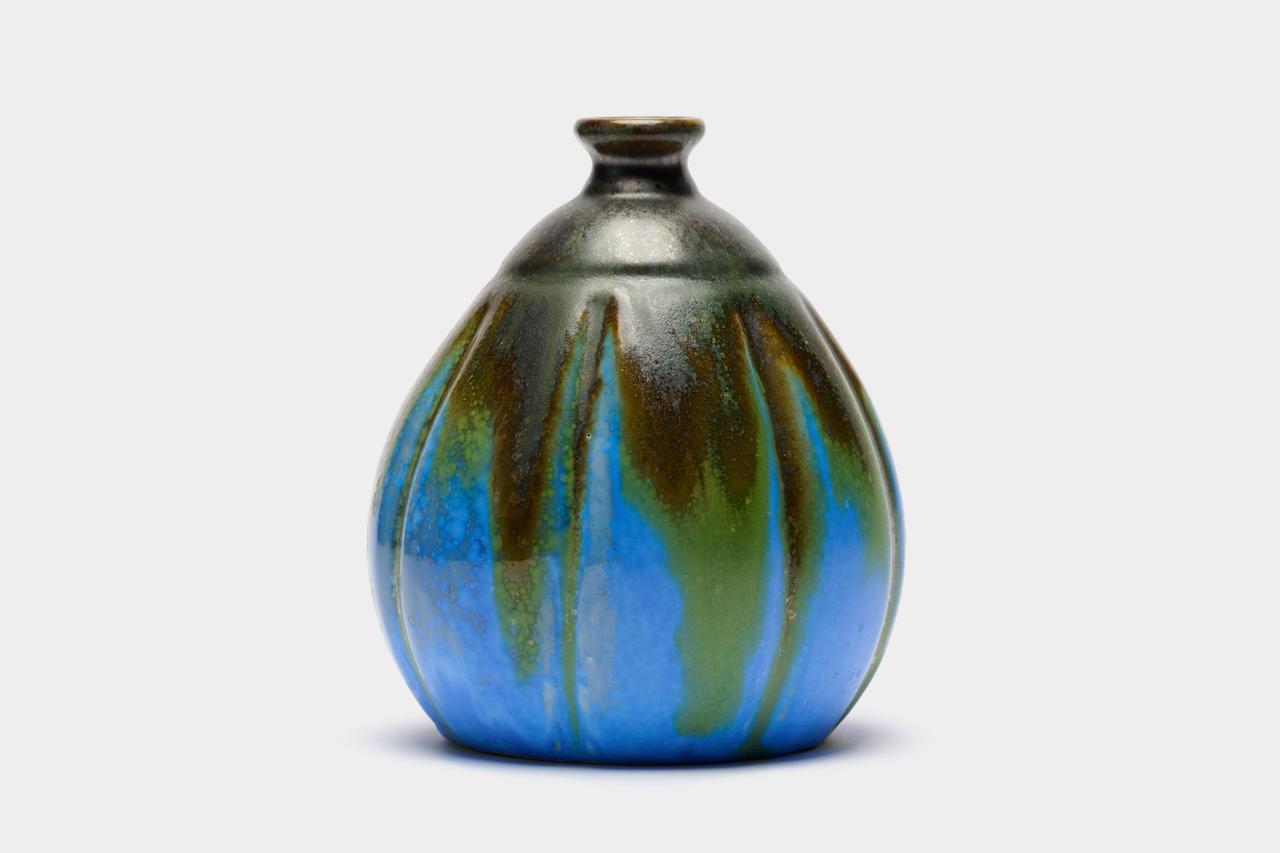
Goldscheider - Figurine - Spaniel sitzend - Faience


01
day
12
hours
51
minutes
39
seconds
Current bid
€ 2
No reserve price

Expert
Selected by John Laurance
Thirty years' experience in decorative objects and two decades as shop owner.
Estimate € 200 - € 250
 | €2 | |
|---|---|---|
 | €1 |
Catawiki Buyer Protection
Your payment’s safe with us until you receive your object.View details
Trustpilot 4.4 | 144679 reviews
Rated Excellent on Trustpilot.
Description from the seller
Like-new Art Deco Friedrich Goldscheider Vienna ceramic figure - sitting Spaniel (Karin Jarl).
Very good condition - light signs of wear - slight craquelure (see photos)
Stamped with the Goldscheider Wien logo MADE IN GERMANY (this addition was used during World War II) - impressed with the number 7578/137 68
Information on the porcelain figure (according to literature - Goldscheider company history and the monograph by Robert E. Dechant and Filipp Goldscheider):
Height approx. 24 cm Width approx. 21 cm Depth approx. 13 cm Weight approx. 1.2 kg
Model No.: 7578/137 68
Title: Sittting Spaniel
Designer: Karin Jarl
Time period: 1930s to 1940s
Private sale - pickup or shipping
About the manufacturer:
Friedrich Goldscheider (born November 6, 1845 in Slabětz in Bohemia; died January 19, 1897 in Nice) was an Austrian entrepreneur, terra-cotta and bronze manufacturer.
Figures from the Vienna manufactory Friedrich Goldscheider were internationally sought after at the end of the 19th century and especially in the 1920s, capturing the taste of a broad audience. Goldscheider is among the most successful companies in European ceramic history.
From the outset, the “Porcelain-Manufacture and Majolica Factory” focused on serially produced, high-quality ware designed by young artists. A product range—from figures, busts, animals, masks, vessels, lamps—met different customer demands. In 70 years, more than 10,000 models from earthenware and terracotta as well as bronze and alabaster went into production. Figures and vessels of the highest artistic and technical standards emerged in the era’s styles of Historicism, Art Nouveau, and Art Deco. In 1938, the Goldscheider company was Aryanized and led during the war years by Josef Schuster. He ensured that new models aligned with the prevailing NS aesthetics. Rural figures in rough forms broadened the offerings, and the nude figures with refined faces and modest hairstyles from this period remained in fashion into the 1950s.
Goldscheider objects were created, among others, in collaboration with the artists Walter Bosse, Alexandre-Louis-Marie Charpentier, Demétre Chiparus, Stephan Dakon, Claire Weiss-Herczeg, Benno Geiger, Kurt Goebel, Rudolf Knörlein, Dina Kuhn, Josef Lorenzl, Ida Meisinger, Michael Powolny, Adolf Prischl, Hans Stephan Stoltenberg Lerche, Arthur Strasser, Wilhelm Thomasch, Vally Wieselthier. Artists who worked for Goldscheider also contributed to the Vienna workshops Augarten, Keramos, or the German brands Rosenthal and Meissen porcelain.
Details
Era
1900-2000
Manufacturer/brand
Goldscheider
Weight
1.2 kg
Ceramics type
Faience
Number of objects
1
Style
Art Deco
Title
Spaniel sitzend
Country of origin
Austria
Designer/artist/maker
Karin Jarl
Material
Ceramic
Colour
Multicolour
Condition
Good condition - used with small signs of aging & blemishes
Height
24 cm
Width
21 cm
Depth
13 cm
Depiction/theme
Animals
Estimated period
1930-1940
Sold by