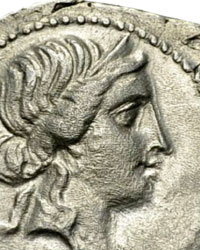
Macedonia, kings of. Philip III, Arrhidaios (323-317 BC). Unit Head of Herakles / Rider Raising Hand, Caduceus (No reserve price)


00
days
15
hours
09
minutes
37
seconds

 | €15 | |
|---|---|---|
 | €10 | |
| €7 | |
Catawiki Buyer Protection
Your payment’s safe with us until you receive your object.View details
Trustpilot 4.4 | 146014 reviews
Rated Excellent on Trustpilot.
Bronze unit of Philip III Arrhidaios of Macedonia (323–317 BC), weighing 6 g, with the head of Herakles on the obverse and a rider raising his hand, with a caduceus below, on the reverse.
AI-assisted summary
Description from the seller
Important: Due to customs regulations, we ship exclusively within the European Union. Please ensure you have a valid EU delivery address before bidding.
Description:
Kingdom of Macedonia. Philip III Arrhidaeus (323–317 BC). AE Unit. Macedonian Mint.
Obverse: Head of Herakles right, wearing lionskin headdress.
Reverse: ΦI above, B-A below. Rider, raising right hand, on horse galloping right; caduceus below.
Diameter: 19 mm
Weight: 6,00 gr
Condition: See photos for condition, zoom in if needed.
Reference: Price P02v
Historical Context:
Philip III Arrhidaeus came to power in 323 BC following the sudden death of his half-brother, Alexander the Great. As a half-brother of Alexander who suffered from cognitive impairments, Philip III served primarily as a nominal monarch, sharing the joint kingship with Alexander's infant son, Alexander IV, while the powerful generals—the Diadochi—fought for administrative dominance over the vast Macedonian Empire.
This bronze unit was issued by the primary Macedonian mint to support local trade during this turbulent regency period. The obverse maintains the traditional iconography established by his predecessors, depicting Herakles in the Nemean lionskin. The reverse displays a galloping horseman with his right hand raised in a royal greeting or military gesture, framed by the Greek letters ΦI and B-A (representing Basileus Philip). The caduceus symbol beneath the horse serves as a mint control mark, indicating the specific production sequence or magisterial authority governing the workshop.
Prospective bidders are strongly encouraged to examine all photographs in conjunction with the used lighting and the stated dimensions, as high-resolution imagery may affect the perception of scale, and surface characteristics.
Details
Era
Before 1400
Weight
6 g
Culture/region
Macedonia, kings of
Year/period and variation
Head of Herakles / Rider Raising Hand, Caduceus
Ruler
Philip III, Arrhidaios (323-317 BC)
Denomination
Unit
Metal
Æ
Condition
Ungraded