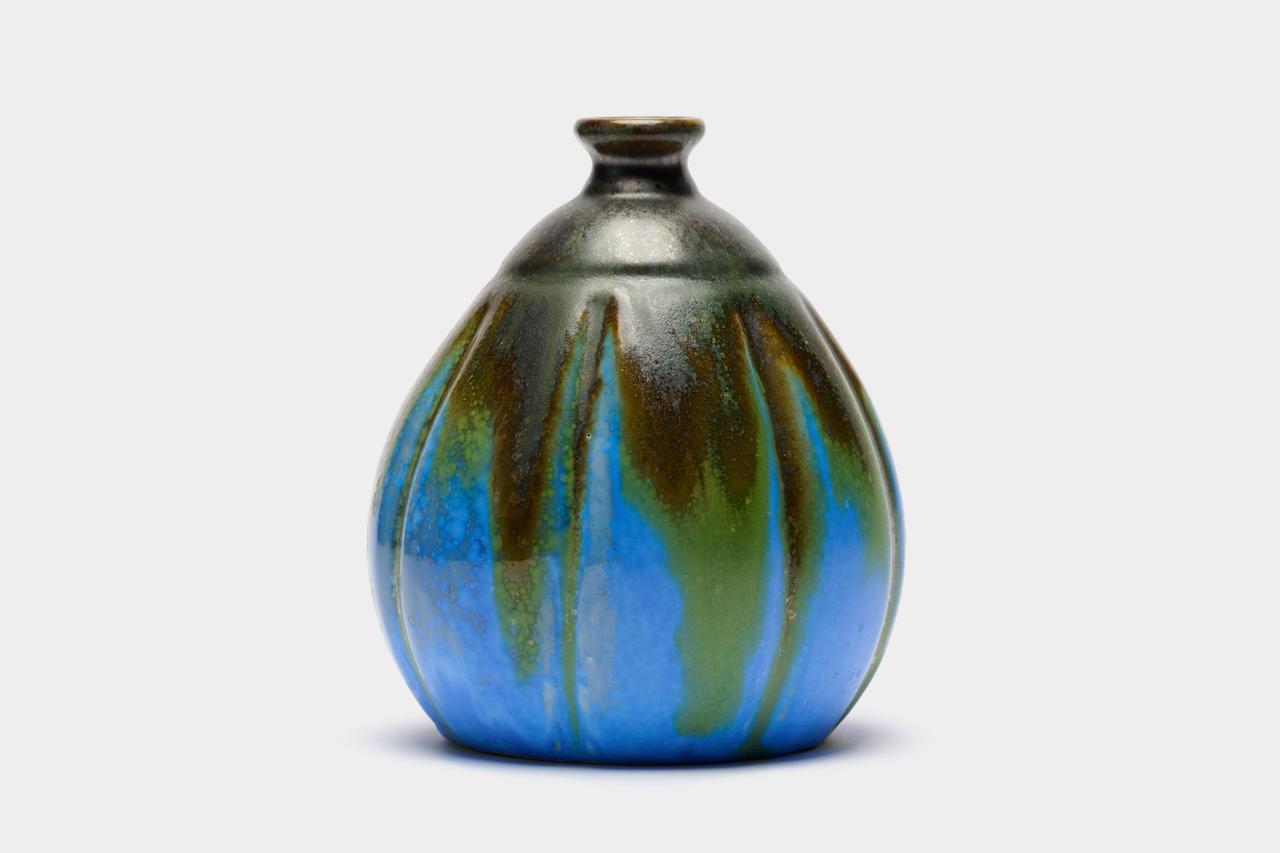
Dish - Ceramic - Schwaz – Heraldic plate


Starting bid
€ 1
Add to your favourites to get an alert when the auction starts.

Catawiki Buyer Protection
Your payment’s safe with us until you receive your object.View details
Trustpilot 4.4 | 145776 reviews
Rated Excellent on Trustpilot.
Description from the seller
Plate in earthenware decorated in polychromy with gilded edges.
In the center is depicted the red crowned eagle with wings spread, the heraldic emblem of Tyrol, surrounded by an ornamental band in red and cobalt blue with stylized floral motifs.
The broad rim presents a decoration of red corollas within green tendrils, alternating with blue cartouches and further floral elements, in a symmetrical pattern. The gilded outlines emphasize the contours of the ornamental motifs.
On the back bears the manufactory mark impressed in the paste, accompanied by the number 46.
The plate is in perfect preserved condition, with no chips, hairline cracks or restorations, with the polychrome decoration and gilding wholly preserved.
An example of a similar decorative composition is documented in a sale of 29 May 2021, lot 455, attributed to the same manufactory.
Made by the Schwazer Majolika- und Steingutfabrik of Schwaz, in Austrian Tyrol, circa 1890–1900.
Details
Era
1400-1900
Specific region of origin
Tirolo
Title additional information
Schwaz – Heraldic plate
Number of objects
1
Country of origin
Italy
Material
Ceramic
Condition
As new - unused
Height
4.5 cm
Width
36 cm
Diameter
36 cm
Depth
36 cm
Estimated period
1850-1900
Sold by