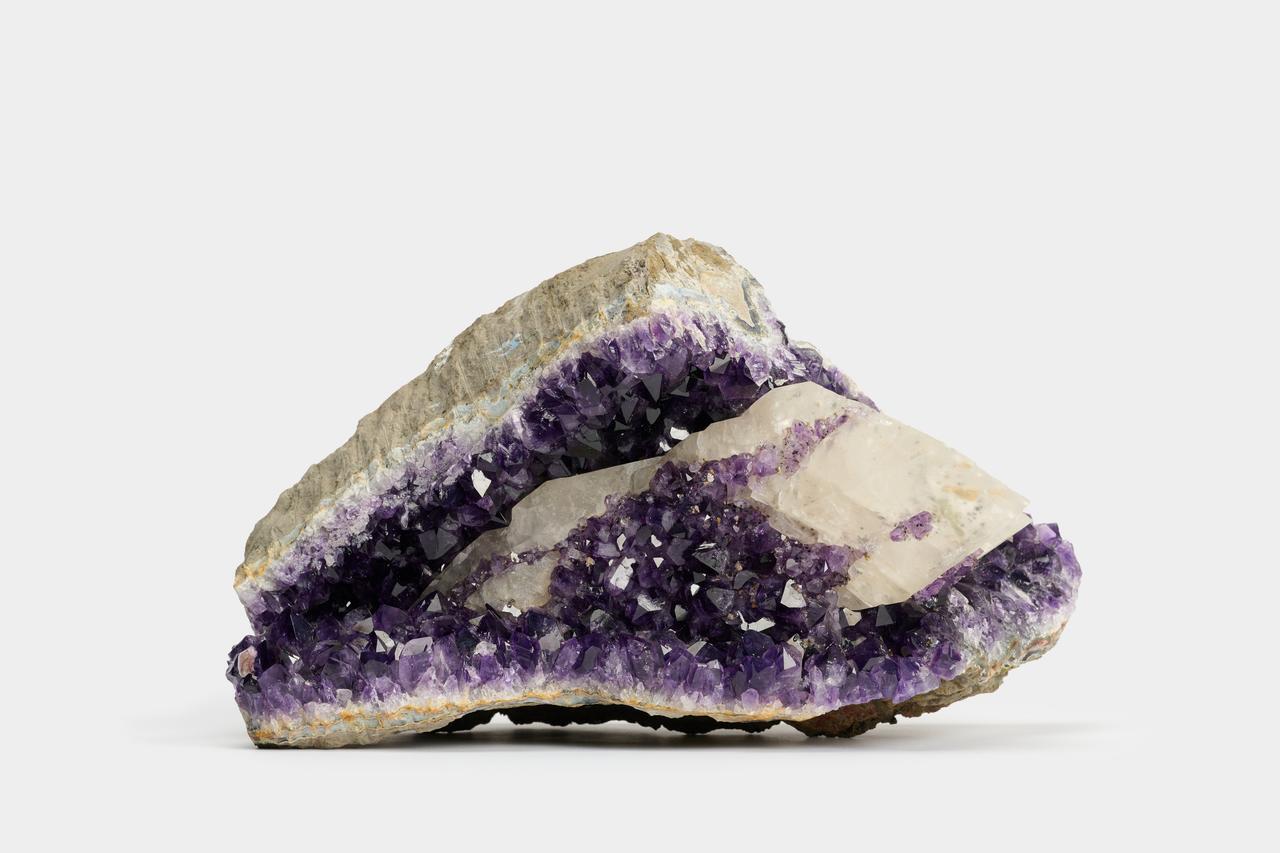
Rare Azurite Geode - Ural Mountains - Certified Italian Silver Jewel - Height: 27.5 mm - Width: 21 mm- 9 g


00
days
13
hours
15
minutes
27
seconds
Current bid
€ 45
Reserve price not met

Expert
Selected by Georgia Foteinou
Holds BSc in geology and post-graduate qualifications in geochemistry.
Estimate € 380 - € 430
 | €45 | |
|---|---|---|
 | €42 | |
| €39 |
Catawiki Buyer Protection
Your payment’s safe with us until you receive your object.View details
Trustpilot 4.4 | 145414 reviews
Rated Excellent on Trustpilot.
This 9 g certified Italian silver jewel in 925 silver features a rare blue azurite geode from the Ural Mountains, Russia.
AI-assisted summary
Description from the seller
Deep blue color, beautiful and rare; we are talking about this natural azurite geode. Azurite geodes form as a result of natural geological processes that involve exposure of copper-bearing minerals to air and water. For this geode to form, a complex set of geological conditions was required:
The presence of copper minerals, such as malachite, is gradually exposed to water that flows through the rocks. At the same time, a copper oxidation process leads to the formation of azurite. Water containing minerals such as calcium bicarbonate and calcium sulfate seeps through the cracks and cavities of the rock, slowly depositing azurite crystals inside these cavities.
Over time, the water evaporates, leaving behind azurite geodes. The shape and size of azurite geodes can vary considerably depending on the type of rock hosting the deposit and the particular conditions of the surrounding environment.
Seller's Story
The Mineral Art Gallery offers minerals, fossils, shells and natural elements.
Born in Italy in 2017, today she collaborates with international galleries and collectors, she is a direct importer of large minerals and naturalistic collectible elements; deals with the processing to insert them inside the living space. A section of the gallery was dedicated to the Wunderkammer, "chamber of wonders or cabinet of curiosities" in which Mirabilia elements are presented: naturalia and italiania, a union between "the present is the past".
All lots are shipped via DHL Express and Fercam couriers, with insured parcel and tracking.
Translated by Google TranslateDeep blue color, beautiful and rare; we are talking about this natural azurite geode. Azurite geodes form as a result of natural geological processes that involve exposure of copper-bearing minerals to air and water. For this geode to form, a complex set of geological conditions was required:
The presence of copper minerals, such as malachite, is gradually exposed to water that flows through the rocks. At the same time, a copper oxidation process leads to the formation of azurite. Water containing minerals such as calcium bicarbonate and calcium sulfate seeps through the cracks and cavities of the rock, slowly depositing azurite crystals inside these cavities.
Over time, the water evaporates, leaving behind azurite geodes. The shape and size of azurite geodes can vary considerably depending on the type of rock hosting the deposit and the particular conditions of the surrounding environment.
Seller's Story
The Mineral Art Gallery offers minerals, fossils, shells and natural elements.
Born in Italy in 2017, today she collaborates with international galleries and collectors, she is a direct importer of large minerals and naturalistic collectible elements; deals with the processing to insert them inside the living space. A section of the gallery was dedicated to the Wunderkammer, "chamber of wonders or cabinet of curiosities" in which Mirabilia elements are presented: naturalia and italiania, a union between "the present is the past".
All lots are shipped via DHL Express and Fercam couriers, with insured parcel and tracking.
Translated by Google TranslateDetails
Main mineral
Rare Azurite Geode - Ural Mountains -
Mineral form
Certified Italian Silver Jewel
Supplement
Sterling Silver 925
Weight
9 g
Country of origin
Ural Mountains - Russia
Height
27.5 mm
Width
21 mm
Depth
15 mm
Sold by