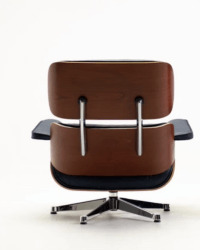
Dean Marino - Dean Marino - Side table - Satori - Cedar of Lebanon


00
days
12
hours
02
minutes
14
seconds
Current bid
€ 76
Reserve price not met

Expert
Selected by Eleonore Floret
Has six years of experience as a co-director at an auction house and as a design expert.
Estimate € 250 - € 300
 | €76 | |
|---|---|---|
 | €70 | |
| €67 | |
Catawiki Buyer Protection
Your payment’s safe with us until you receive your object.View details
Trustpilot 4.4 | 144940 reviews
Rated Excellent on Trustpilot.
Description from the seller
Title: " Satori "
Designer Artist: Dean Marino
Year: 2025
Conditions: excellent
Hand-signed
Certificate of authenticity included.
Made in Italy.
Dimensions 40x25x25 cm
Technique: Yakisugi
Philosophy: Wabi-sabi
Materials: Cedar of Lebanon
Finish: Linseed oil with beeswax.
Marino Piotti, aka Dean Marino, born in 1982, is an Italian sculptor-designer from Valtrompia. Since childhood he has a visceral relationship with the elements of his land. He creates sculptures with natural elements such as wood and iron, giving them a new life, while continually maintaining a strong link to his origins.
His objective is to create an indispensable connection between man and nature.
His mission is the regeneration of matter.
The knots and natural scars are an emanation of the Wabi-sabi philosophy that envelops the sculpture
Exhibitions:
Palazzo Facchi " the dreamers " 2021 (Brescia)
Valley inc. 2021 (Brescia)
" Origins " 2022 (Brescia)
" Contemporaneamente " 2023 (Brescia)
" FuturaExpo 2023 " Brescia
Permanent exhibition: " Alisani Bistrot")
" Art Views" Cominelli1840 2024
" FuturaExpo 2025 "
Used technique:
Yakisugi (焼杉) is a traditional Japanese method of wood preservation.
Yaki means to heat with fire and sugi is cedar. In the West it is referred to as burnt wood cladding and also known as shou sugi ban (焼杉板) which uses the same kanji characters but with an incorrect pronunciation.
The character ban means " board ".
By slightly carbonizing the wood surface without burning the entire piece, the wood becomes waterproof through carbonization and is therefore more resistant.
It also protects against insects, in addition to making the wood fireproof.
Philosophy:
Wabi-sabi (侘寂) constitutes a Japanese worldview, or aesthetics, founded on acceptance of transience and imperfection of things. This vision, sometimes described as "beautiful imperfection, impermanence and incompleteness" derives from the Buddhist doctrine of anitya (impermanence).
Details
Era
After 2000
Country of origin
Italy
Manufacturer/brand
Dean Marino
Model
Satori
Designer/artist/maker
Dean Marino
Material
Cedar of Lebanon
Condition
As new - unused
Height
40 cm
Width
25 cm
Depth
25 cm
Estimated period
2020+
Sold by