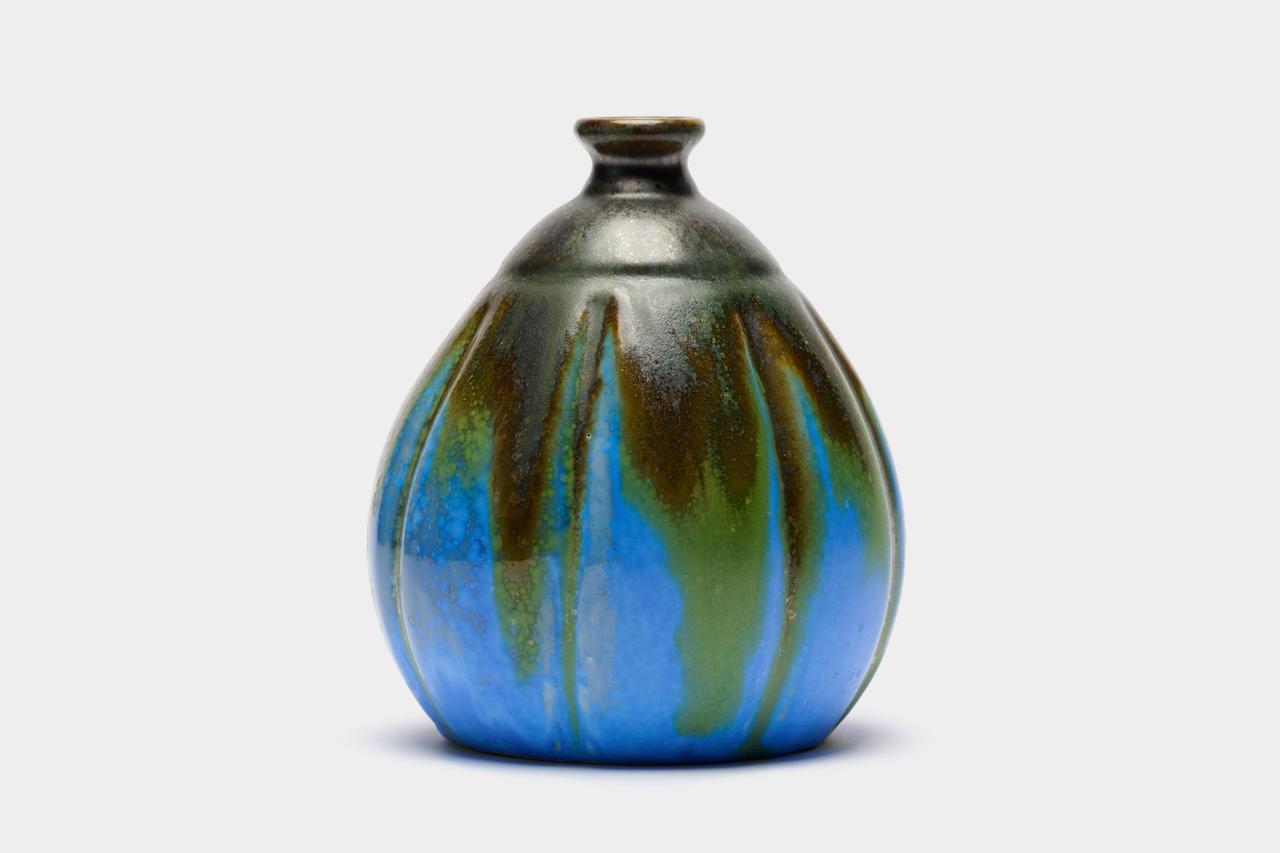
Kralik, Wilhelm Kralik Söhne - Vase - decor 'Rigoree' - Iridescent glass


00
days
03
hours
51
minutes
34
seconds
Current bid
€ 16
Reserve price not met

Expert
Selected by Michel Karis
Art historian with extensive experience working at various auction houses in antiques.
Estimate € 450 - € 500
 | €16 | |
|---|---|---|
 | €13 | |
 | €10 | |
Catawiki Buyer Protection
Your payment’s safe with us until you receive your object.View details
Trustpilot 4.4 | 145304 reviews
Rated Excellent on Trustpilot.
This Art Nouveau vase by Wilhelm Kralik Söhne, made in Bohemia around 1903, features iridescent glass in the ‘Rigoree’ décor, with a white martelé ground, green cabochons and a green applied rim, and measures 12.5 cm high by 11.5 cm wide and deep.
AI-assisted summary
Description from the seller
Wilhelm Kralik Söhne, Eleonorenheim, Czechia – Art Nouveau vase with ‘Rigoree’ décor, the Kralik version of Loetz’s ‘Nautilus’ décor – 1903
The Kralik ‘Rigaree’ is made on a ground of white iridescent martelé glass with green cabochons. The rim of the vase was also finished with a green band applied while hot. Loetz’s Nautilius décor was usually finished with yellow/beige embellishments and a ground pontil.
The vase is in excellent condition, with only minor signs of age.
The vase is 12.5 cm high, and its widest diameter is approximately 11.5 cm.
The photographs form part of the description. It will be carefully packed, insured, and shipped to your home with a tracking code. We do not ship outside the EU or to countries (or islands) with a special customs status.
Kralik glass is the collective name for the renowned Bohemian art glass produced from the 19th century until the Second World War by the Wilhelm Kralik Söhne glassworks (originally founded in 1815 as Adolfshütte). Located in what was then Bohemia (today’s Czech Republic), the glassworks grew in the early 20th century to become one of the largest producers of high-quality glassware from the Art Nouveau (Jugendstil) and Art Deco periods.
The factory’s roots lie with Josef Meyr, who established the glassworks. After his death, his nephews, including Wilhelm Kralik, took over under the name J. Meyr's Neffen. After Wilhelm’s death in 1877, the company was divided, and his sons continued under the name Wilhelm Kralik Söhne (later also known as Wilhelm Kralik Sohn). The factory experienced its golden age around 1900, exporting beautifully shaped, organic glassware around the world. After the Second World War, the company was nationalized
Seller's Story
Art dealer and collector from Belgium specializing in Art Nouveau and Art Deco glass and ceramics. With a carefully selected offering, 'the smart collector' combines aesthetic pleasure, cultural authenticity, and financial potential.
Translated by Google TranslateWilhelm Kralik Söhne, Eleonorenheim, Czechia – Art Nouveau vase with ‘Rigoree’ décor, the Kralik version of Loetz’s ‘Nautilus’ décor – 1903
The Kralik ‘Rigaree’ is made on a ground of white iridescent martelé glass with green cabochons. The rim of the vase was also finished with a green band applied while hot. Loetz’s Nautilius décor was usually finished with yellow/beige embellishments and a ground pontil.
The vase is in excellent condition, with only minor signs of age.
The vase is 12.5 cm high, and its widest diameter is approximately 11.5 cm.
The photographs form part of the description. It will be carefully packed, insured, and shipped to your home with a tracking code. We do not ship outside the EU or to countries (or islands) with a special customs status.
Kralik glass is the collective name for the renowned Bohemian art glass produced from the 19th century until the Second World War by the Wilhelm Kralik Söhne glassworks (originally founded in 1815 as Adolfshütte). Located in what was then Bohemia (today’s Czech Republic), the glassworks grew in the early 20th century to become one of the largest producers of high-quality glassware from the Art Nouveau (Jugendstil) and Art Deco periods.
The factory’s roots lie with Josef Meyr, who established the glassworks. After his death, his nephews, including Wilhelm Kralik, took over under the name J. Meyr's Neffen. After Wilhelm’s death in 1877, the company was divided, and his sons continued under the name Wilhelm Kralik Söhne (later also known as Wilhelm Kralik Sohn). The factory experienced its golden age around 1900, exporting beautifully shaped, organic glassware around the world. After the Second World War, the company was nationalized
Seller's Story
Art dealer and collector from Belgium specializing in Art Nouveau and Art Deco glass and ceramics. With a carefully selected offering, 'the smart collector' combines aesthetic pleasure, cultural authenticity, and financial potential.
Translated by Google TranslateDetails
Era
1900-2000
Glass type
Iridescent glass
Specific region of origin
Bohemen
Country of origin
Czechia
Model
decor 'Rigoree'
Material
Glass
Style
Art Nouveau
Manufacturer/brand
Wilhelm Kralik Söhne, Kralik
Condition
Excellent condition: barely used with minimal signs of wear
Height
12.5 cm
Width
11.5 cm
Depth
11.5 cm
Estimated period
1900-1910
Sold by