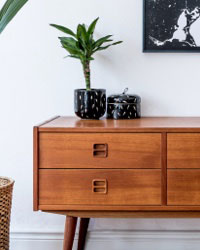
Design Vessel (3) - Majolica, Earthenware - 1950-1960


Starting bid
€ 1
Add to your favourites to get an alert when the auction starts.

Catawiki Buyer Protection
Your payment’s safe with us until you receive your object.View details
Trustpilot 4.4 | 146292 reviews
Rated Excellent on Trustpilot.
Description from the seller
Aldo Londi. Ceramics between Art and Design
Born in Montelupo Fiorentino in 1911, Aldo Londi discovers the world of ceramics at a very young age, joining a local factory as an apprentice. It is the beginning of a path destined to leave a deep mark on the history of Italian artisanal manufacturing.
After working at Ceramiche Artistiche F.lli Fanciullacci, in 1935 he moves to Bitossi, with whom he will forge the most important professional relationship of his life.
World War II temporarily interrupts his activity. Taken prisoner and moved to South Africa, Londi does not abandon his vocation: even far from Italy, he sets up a rudimentary furnace and continues to experiment, demonstrating how making ceramics has become an essential part of his identity.
Back home, he resumes work for Bitossi and, in 1946, assumes the role of artistic director. From this moment he decisively contributes to the renewal of production, combining creativity, formal research, and attention to the needs of serial production. Thus were born furnishing objects capable of combining artisanal quality, originality, and a modern language, anticipating that happy convergence between art and design that will characterize the best Made in Italy.
His creations progressively reach an international dimension, taking part in major exhibition events: from fairs in Prague and Düsseldorf to the Milan Triennial, from the Faenza International Ceramic Competition to the Sesto Fiorentino Ceramic Art Biennale.
In 1976 he leaves the artistic direction, while continuing to frequent the manufactory even after retirement. The international diffusion of his works, marketed in numerous countries also through Studio Rosenthal, testifies to the value and expressive force of his research.
Aldo Londi dies in Montelupo Fiorentino in 2003, leaving an legacy that goes beyond individual creations: a new idea of ceramics, in which manufacturing tradition meets the freedom of invention and design becomes part of everyday life.
Details
Era
1900-2000
Ceramics type
Earthenware, Majolica
Specific region of origin
Toscana
Number of objects
3
Material
Ceramic
Country of origin
Italy
Designer/artist/maker
Aldo Londi
Height
15 cm
Width
20 cm
Depth
20 cm
Condition
Excellent condition: barely used with minimal signs of wear
Style
Design
Estimated period
1950-1960
Sold by