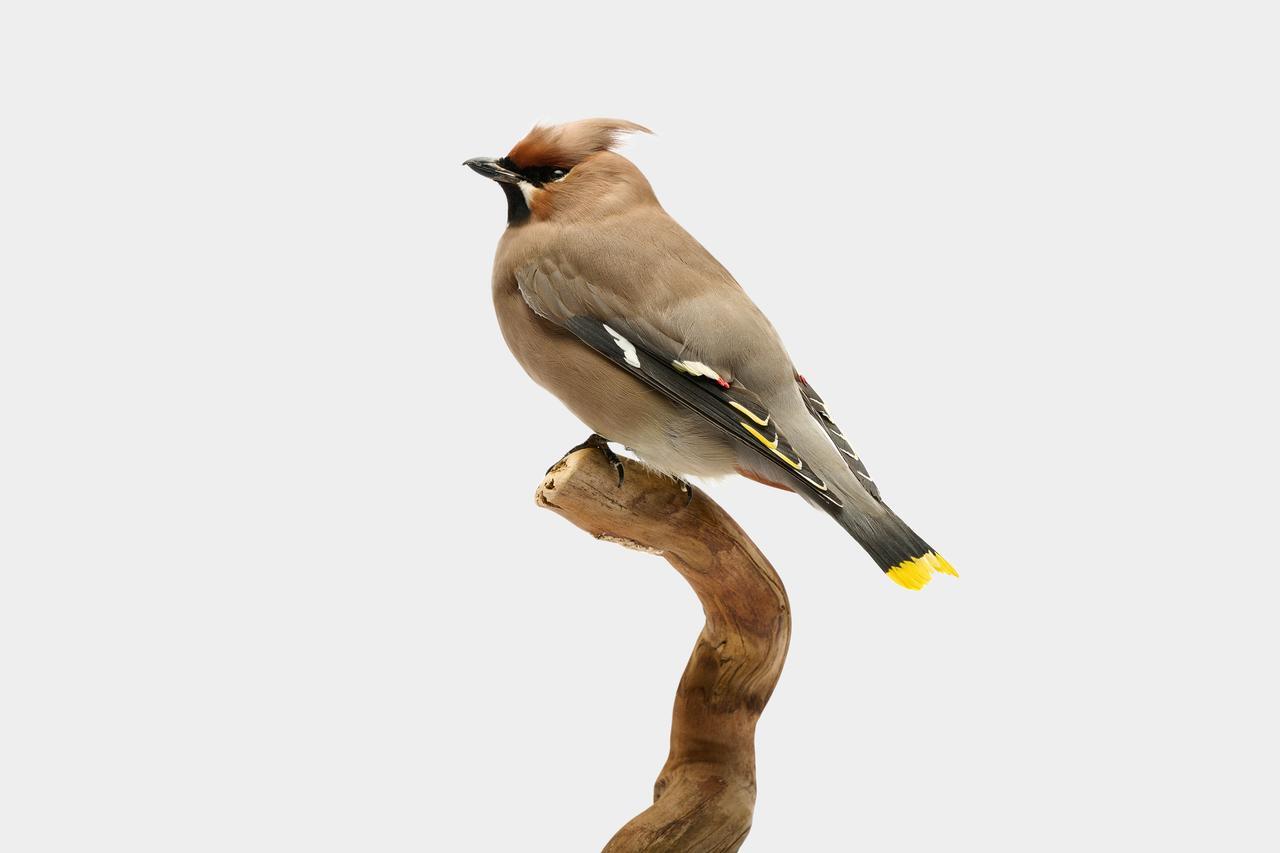
enormous Australian trumpet Taxidermy full body mount - Syrinx aruanus - 21 cm - 57 cm - 24 cm - 1


01
day
03
hours
30
minutes
08
seconds
Current bid
€ 34
Reserve price not met

Expert
Selected by Jonas Rathaj
Has worked with taxidermy since childhood and gained retailer experience.
Estimate € 450 - € 550
 | €34 | |
|---|---|---|
| €31 | |
| €28 | |
Catawiki Buyer Protection
Your payment’s safe with us until you receive your object.View details
Trustpilot 4.4 | 145304 reviews
Rated Excellent on Trustpilot.
One Australian trumpet specimen (Syrinx aruanus) from Papua New Guinea, measuring 57 × 21 × 24 cm and weighing 4.5 kg, with the periostracum removed.
AI-assisted summary
Description from the seller
La Syrinx aruanus is commonly known as the "Australian Trumpet" because in the past it was emptied and used by Indigenous populations as a wind instrument (trumpet).
It is the world's largest living gastropod (sea snail).
The largest specimens can reach up to 90 cm in length and a weight of about 20 kg.
The inside of the "mouth" is described as shiny and smooth, with tones ranging from apricot to cream-pink. It lives on sandy bottoms of subtidal zones (between 5 and 30 meters depth) in the western Indo-Pacific, particularly around northern Australia, Papua New Guinea, and Indonesia. Despite its substantial size, it is an expert predator. It feeds mainly on large polychaete worms.
The lot features a syrinx that has undergone a cleaning process of the periostracum, the "hair" or fibrous membrane of brown-black or grayish color that protects the calcium carbonate shell from erosion and from parasitic organisms. It is usually removed to expose the underlying shell, which ranges in tone from pale cream to pale orange.
Very important dimensions: XXL, a full 57 cm in length, a particularly robust tail and particularly sinuous lines.
Stand not included, made with recovered material and used for photographic purposes only.
Happy bidding.
Seller's Story
We deal with naturalistic objects in
Prevalence coming from the fascinating
marine world, but by enthusiasts and
Lovers of enchanting facets.
Of life, we also propose minerals and.
metaphysical stones, taxidermies, fossils, and
decorative objects
A continuous journey through time and...
Space for the search for testimonies.
Precious.
Passion is the fire that fuels.
Our choices: collaborations with the
Major importers from exotic countries.
but also travels to discover sought-after destinations
objects
Ongoing research of new developments and
Our increasingly refined aesthetic.
main objectives
Just observe like a collector.
He manages the objects in his display case.
As soon as he/she/they take(s) one in hand, the
His or her inspired gaze seems to pierce through.
The object is to lose oneself in its distances.
Here lies the magical side of the collector.
Walter Benjamin
Translated by Google TranslateLa Syrinx aruanus is commonly known as the "Australian Trumpet" because in the past it was emptied and used by Indigenous populations as a wind instrument (trumpet).
It is the world's largest living gastropod (sea snail).
The largest specimens can reach up to 90 cm in length and a weight of about 20 kg.
The inside of the "mouth" is described as shiny and smooth, with tones ranging from apricot to cream-pink. It lives on sandy bottoms of subtidal zones (between 5 and 30 meters depth) in the western Indo-Pacific, particularly around northern Australia, Papua New Guinea, and Indonesia. Despite its substantial size, it is an expert predator. It feeds mainly on large polychaete worms.
The lot features a syrinx that has undergone a cleaning process of the periostracum, the "hair" or fibrous membrane of brown-black or grayish color that protects the calcium carbonate shell from erosion and from parasitic organisms. It is usually removed to expose the underlying shell, which ranges in tone from pale cream to pale orange.
Very important dimensions: XXL, a full 57 cm in length, a particularly robust tail and particularly sinuous lines.
Stand not included, made with recovered material and used for photographic purposes only.
Happy bidding.
Seller's Story
We deal with naturalistic objects in
Prevalence coming from the fascinating
marine world, but by enthusiasts and
Lovers of enchanting facets.
Of life, we also propose minerals and.
metaphysical stones, taxidermies, fossils, and
decorative objects
A continuous journey through time and...
Space for the search for testimonies.
Precious.
Passion is the fire that fuels.
Our choices: collaborations with the
Major importers from exotic countries.
but also travels to discover sought-after destinations
objects
Ongoing research of new developments and
Our increasingly refined aesthetic.
main objectives
Just observe like a collector.
He manages the objects in his display case.
As soon as he/she/they take(s) one in hand, the
His or her inspired gaze seems to pierce through.
The object is to lose oneself in its distances.
Here lies the magical side of the collector.
Walter Benjamin
Translated by Google TranslateDetails
Era
After 2000
Specimen
enormous Australian trumpet
Scientific name
Syrinx aruanus
Number of objects
1
Country of origin
Papua New Guinea
Condition
Good condition
Year
2024
Weight
4.5 kg
Height
21 cm
Width
57 cm
Depth
24 cm