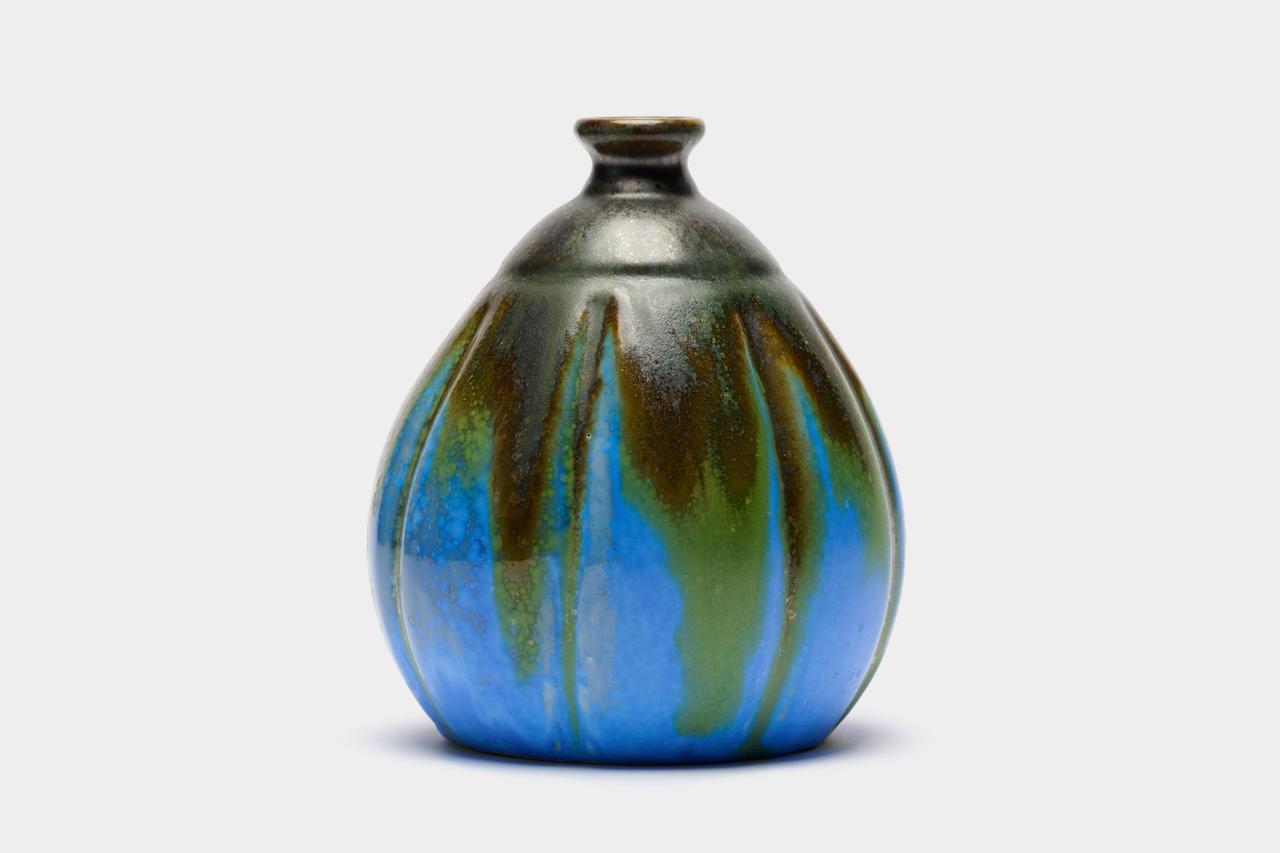
Daum Frères - Baluster vase - Glass - Art Nouveau - France


07
days
18
hours
20
minutes
33
seconds
Current bid
€ 35
Reserve price not met

Expert
Selected by Michel Karis
Art historian with extensive experience working at various auction houses in antiques.
Estimate € 1,100 - € 1,300
 | €35 | |
|---|---|---|
 | €32 | |
| €29 | |
Catawiki Buyer Protection
Your payment’s safe with us until you receive your object.View details
Trustpilot 4.4 | 145414 reviews
Rated Excellent on Trustpilot.
This French Art Nouveau Daum Nancy glass vase, made around 1900–1910, has a signed acid-etched lake landscape on a yellow, orange and red marbled ground and measures 24.5 cm high.
AI-assisted summary
Description from the seller
DAUM Nancy. Cornet vase on a footed base in stratified glass with a panoramic scene, acid-etched to reveal a lakeside landscape on an orange marble-like background. Signed in the decoration. Early 20th century. Height 24.5 cm.
This vase is a very beautiful illustration of the artistic production of the Daum factory in Nancy during the Art Nouveau period. It presents several particularly interesting characteristics: a lakeside sunset landscape, acid-etched multi-layer glass, and an ancient signature.
With its 24.5 cm height, its slender form on a footed base, and its panoramic decoration, it belongs to a category of decorative glassware sought after by collectors of the École de Nancy.
-Dimensions:
24.5 cm Height
Opening at the neck: 12 cm
Base diameter: 11 cm
-Weight: 2054 g
-Circa 1900-1910
-Style: Art Nouveau, École de Nancy
-Form: cornette vase on a footed base, with a pressed-in body
-Decoration: lakeside landscape with sailboats and silhouetted trees
-Signature: Daum Nancy with Lorraine cross
A particularly successful panoramic decoration:
Large trees with broad foliage, probably parasol pines, rendered as dark silhouettes.
Several sailboats sailing on a calm body of water.
Reflections on the water and horizontal lines evoking ripples.
A background in yellow-gold, orange, and reddish tones reminiscent of a setting sun.
The color palette is superb; the contrast between the dark brown–black silhouettes and the yellow-orange marble background is especially well executed. The composition relies on the contrast between the dark silhouettes in the foreground and the landscape’s luminosity. This pursuit of atmospheric effects is characteristic of certain Daum productions at the turn of the 20th century.
The decor evokes a Mediterranean landscape.
-Production technique:
The design of this vase incorporates several techniques characteristic of Daum:
The multi-layer glass: several layers of glass in different colors create the contrast between the luminous background and the dark decor.
The marmoréen glass: colored powders incorporated hot produce the yellows, oranges, and reds of the sky.
Acid engraving in cameo: it frees the trees, sailboats, and landscape elements in relief.
The engraved finishes: details of branches, boats, and ripples may have been hand-finished.
The dark circular flared foot provides solid visual stability to this cornette form.
-Signature:
The marking clearly reads DAUM NANCY, with the Lorraine cross, set in an irregular cartouche shape like a shield.
This signature is integrated into the decoration, presumably reserved during acid engraving. It is consistent with signatures used on early 20th-century Daum artistic glass (Circa 1900-1910).
Condition:
The vase is in excellent condition, noting two manufacturing flaws:
- One cracked bubble reported in the photos
This is a glass-making defect that occurred during production or cooling: an air bubble formed in the glass mass and its opening (crack) left a small surface cavity.
As the defect is original, it does not constitute a restoration or accident and does not affect the vase’s solidity.
Indeed, Daum artisanal glassware from this period sometimes features bubbles, inclusions, and irregularities. These are compatible with the manufacturing processes of the early 20th century.
- One instance of hot glass folding (also called “material fold” or “hot-forming fold”) reported in the photos.
On Daum multi-layer vases of the Art Nouveau period, generally made of several layers of glass fused together hot, this phenomenon can occur during material work (when widening or shaping the neck, a very fine portion of glass may move or fold onto itself. This fold gradually sets during cooling and leaves a slightly raised line.)
The result can look exactly like a crack when it is simply a superficial irregularity created hot that leaves a small raised line.
Therefore the vase has no cracks, fractures, impacts, or chips, but just two manufacturing flaws that testify to the complexity and difficulty at the time, even for the world’s finest glassmakers, in conceiving such vases.
I also included photos with lighting (LED spot) behind the vase! A nice way to highlight and showcase this magnificent Daum vase aged a century.
Shipped with extra careful protective packaging!
Details
Era
1900-2000
Weight
2054 g
Specific region of origin
Nancy
Title additional information
Art Nouveau - France
Number of objects
1
Country of origin
France
Material
Glass
Style
Art Nouveau
Manufacturer/brand
Daum Frères
Colour
Orange, Red, Yellow
Condition
Good condition - used with small signs of aging & blemishes
Height
24.5 cm
Width
14.5 cm
Depth
14.5 cm
Estimated period
1900-1910