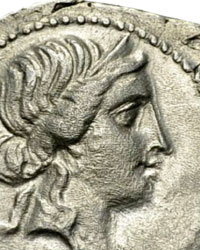
Mysia, Pergamon Cistophoric Tetradrachm Ca. 166-67 BC (No reserve price)


01
day
12
hours
11
minutes
10
seconds
Current bid
€ 21
No reserve price

Expert
Selected by Carmen Vera Gutiérrez
Experienced antique appraiser specialising in Spanish coins with deep knowledge of ancient currency.
Estimate € 250 - € 330
 | €21 | |
|---|---|---|
 | €18 | |
| €6 | |
Catawiki Buyer Protection
Your payment’s safe with us until you receive your object.View details
Trustpilot 4.4 | 145414 reviews
Rated Excellent on Trustpilot.
This silver cistophoric tetradrachm from Pergamon in Mysia, dated circa 166–67 BC, depicts a mystic cista with a serpent on the obverse and two serpents around a bow case on the reverse.
AI-assisted summary
Description from the seller
Mysia, Pergamon.
Ca. 166-67 BC.
Cistophoric Tetradrachm (Silver, 26 mm, 11.58 g).
Obv: Cista mystica with half-open lid, from which a serpent issues to left. All within an ivy wreath with leaves and berries.
Rev: Two serpents coiled around a bow case, their heads rising above it. ΠΕΡΓ monogram of Pergamon to left. Magistrates' initials or monograms above and a symbol to right.
Reference: Kleiner, Hoard Evidence and the Late Cistophori of Pergamum, ANSMN 23 (1978).
The cistophoros was created at Pergamon as the silver coinage of the Attalid kingdom. Tariffed at four drachms but weighing only about three Attic drachms, it circulated within a closed monetary system across Attalid territory. Its types joined the cista mystica of Dionysos with the bow case of Herakles, the two gods from whom the Attalids claimed descent. After the kingdom was bequeathed to Rome, the Romans kept striking cistophori, later with new types, until Septimius Severus.
DISCOVER OUR CURRENT SELECTION
Visit and follow our seller profile to explore all items offered by Logos Numismatics & Antiquities across current auctions and stay informed of new listings.
IMPORTANT INFORMATION
I. All items are authentic and lawfully acquired through established European auction houses; provenance is documented in our records.
II. Every order includes one consolidated, signed certificate of authenticity and lawful provenance, recording each item's full attribution.
III. Combined shipping is available only for items won in the same auction and settled as one Catawiki order.
IV. For shipments outside the European Union, import licences, taxes, and related fees are the buyer’s responsibility. Customs delays are beyond our control.
Seller's Story
Drawing on more than 15 years of collecting experience, we offer ancient and medieval coins and artefacts that tell the stories of the lands and peoples of the eastern Mediterranean and the Near East.
Details
Era
Before 1400
Culture/region
Mysia, Pergamon
Year/period and variation
Ca. 166-67 BC
Denomination
Cistophoric Tetradrachm
Metal
AR
Condition
Ungraded
Weight
11.58 g