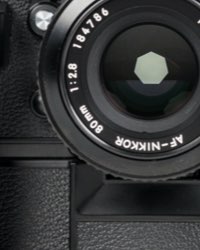
Harrison C. Ryker M-10 STEREOSCOPE Stereo viewer


04
days
23
hours
43
minutes
26
seconds
Current bid
€ 8
No reserve price

Expert
Selected by Rob ter Ellen
Over 35 years' experience specialising in cameras and optical equipment.
Estimate € 180 - € 220
 | €8 | |
|---|---|---|
 | €7 | |
| €1 |
Catawiki Buyer Protection
Your payment’s safe with us until you receive your object.View details
Trustpilot 4.4 | 145662 reviews
Rated Excellent on Trustpilot.
The Harrison C. Ryker M-10 Stereoscope is a tested and working American instrument for viewing aerial stereoscopic images and assessing terrain height.
AI-assisted summary
Description from the seller
Stereoscope for mapping landscape elevations from aerial photographs.
American-made, intended for military use.
Built by Harrison C. Ryker in Oakland, California.
The distance difference between successive photographs taken with a camera pointing straight down creates a hyperstereoscopic image pair of the landscape flown over. This allowed the military to make strategic decisions based on the exaggerated 3D height of objects in the landscape.
Later, this type of viewer was also used by organizations for mapping, including in the Netherlands. Some example images from the Surveying Service of Rijkswaterstaat, dating from 1972, are included.
Because of the large photographic prints, the image paths are widened using two mirrors per eye.
The viewer's materials are somewhat weathered, but it is still in good working order.
The photographs—the left and right images of the stereoscopic pair—are positioned side by side beneath the viewer.
The wooden board beneath the viewer was added later so that, at exhibitions about stereoscopic vision, visitors could experience the effect of shifting the images.
Dimensions: 27 x 27 x 30 cm. Weight of viewer: 4 kg.
Serial number: 109
Details
Era
1900-2000
Brand
Harrison C. Ryker
Model/type nr
M-10 STEREOSCOPE
Physical condition
Fair
Functional condition
Tested and working
Designer/artist/maker
Harrison C. Ryker, Inc.
Estimated period
1940-1950
Sold by