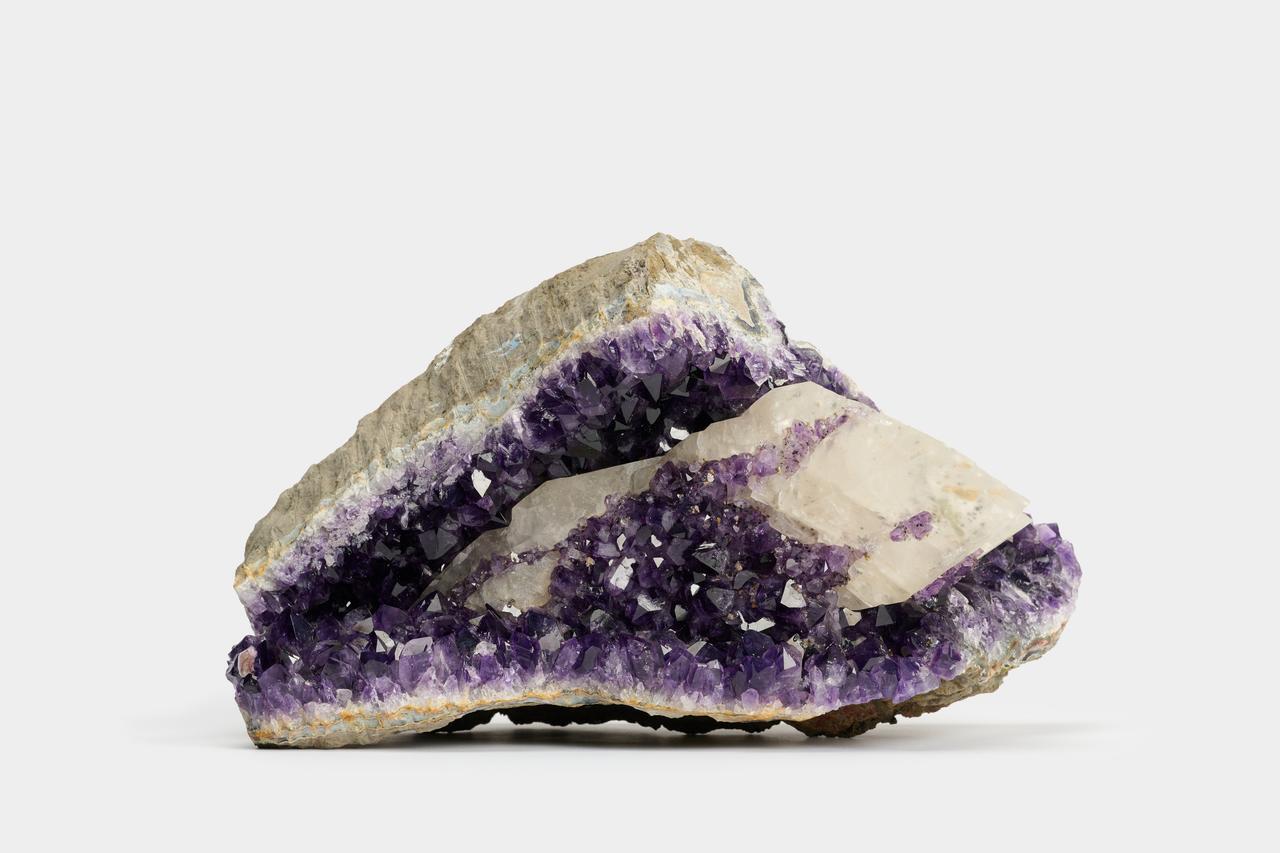
jasper bumblebee bumblebee jasper - Height: 17 cm - Width: 11 cm- 460 g


03
days
06
hours
31
minutes
29
seconds

 | €1 |
|---|
Catawiki Buyer Protection
Your payment’s safe with us until you receive your object.View details
Trustpilot 4.4 | 145472 reviews
Rated Excellent on Trustpilot.
Bumblebee jasper, weighing 460 g and measuring 17 × 11 cm, features yellow, orange, black and grey bands and comes from near Mount Papandayan in West Java, Indonesia.
AI-assisted summary
Description from the seller
Bumblebee Jasper is a striking, colorful stone known for its vivid yellow, orange, black, and gray stripes, which give it the appearance of a bumblebee.
Despite its commercial name, it is not a true jasper. Geologically, it is a complex rock composed mainly of calcite, aragonite, and volcanic material. It is a rare stone found exclusively near the active Mount Papandayan volcano in West Java, Indonesia.
Below are the main characteristics and details of this unique stone:
Composition and Appearance
The stone is made up of various layers deposited by hydrothermal vents (volcanic openings):
• Yellow and orange: These bright colors are caused by the presence of sulfur and orpiment (an arsenic-containing mineral).
• Black and gray: These dark bands are formed by pyrite (fractured or finely disseminated) and volcanic ash.
• White and cream: These are the base layers of calcite and aragonite.
Details
Main mineral
jasper bumblebee
Mineral form
bumblebee jasper
Weight
460 g
Country of origin
Indonesia
Height
17 cm
Width
11 cm
Sold by