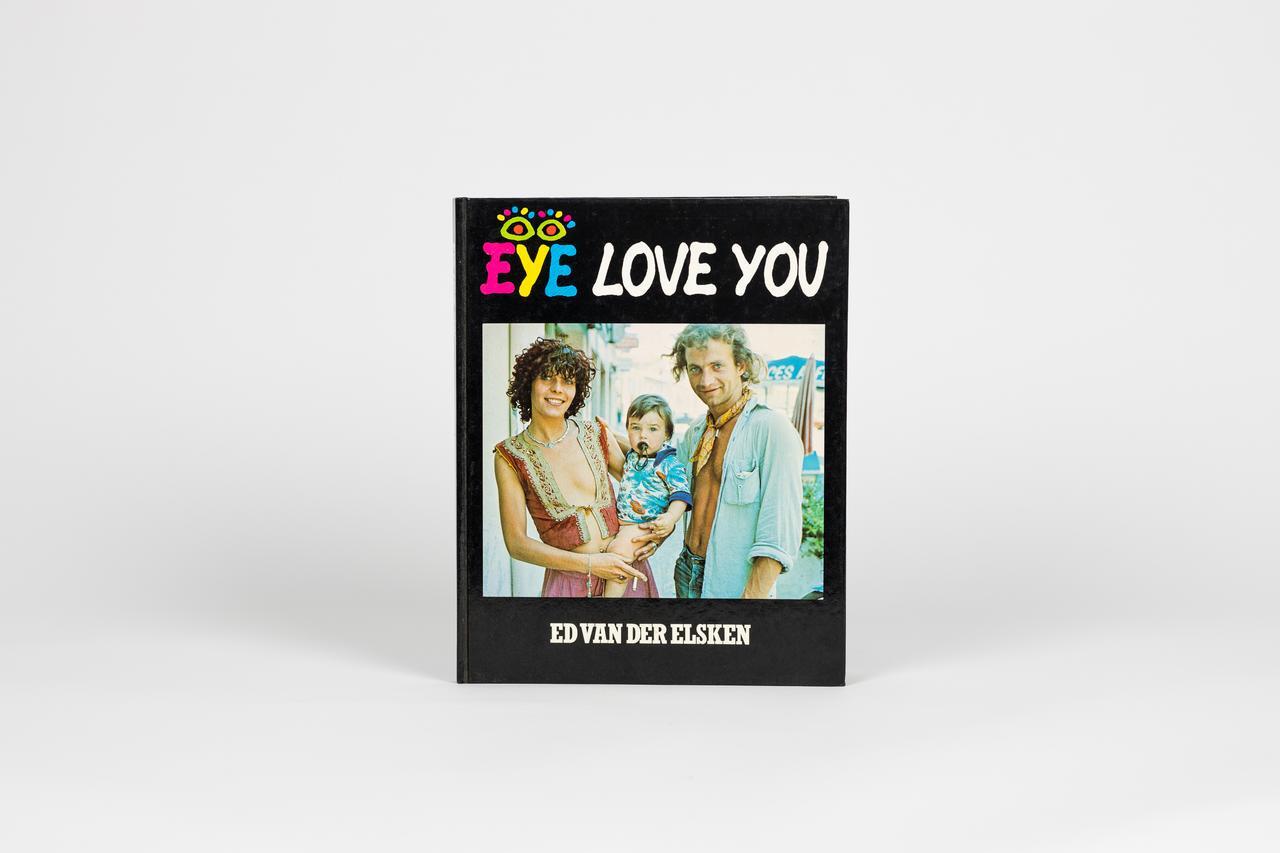
Miyako Ishiuchi - From Yokosuka - 2016


15
days
03
hours
19
minutes
45
seconds

No bids placed
Catawiki Buyer Protection
Your payment’s safe with us until you receive your object.View details
Trustpilot 4.4 | 145879 reviews
Rated Excellent on Trustpilot.
Miyako Ishiuchi’s *From Yokosuka* is a 42-page softback photography book, published by Super Labo in 2016 as a first edition thus, with text in English and Japanese.
AI-assisted summary
Description from the seller
“I spent my entire adolescence, from the age of 6 to 19, in Yokosuka, the place where both my body and mind grew up. Yet I do not consider Yokosuka my hometown, and I have few sweet or happy memories of those years. In a way, this was only natural: Yokosuka, a city marked by the presence of the American military base, was not a comfortable place for a young girl who had just moved there at the beginning of elementary school. My father worked in Yokosuka, far from our family home in the countryside, and the move was an enormous culture shock for me, both positively and negatively.
I began my career as a photographer by photographing Yokosuka. The city's striking contrasts of light and shadow somehow created particularly photogenic landscapes, while its history seemed to leave invisible scars every day. YOKOSUKA STORY, the autobiographical series with which I began my career, is precisely a photographic story about myself and how I grew up under the influence of that atmosphere.
From YOKOSUKA constitutes the final chapter of my series about Yokosuka. For this project, I photographed extensively around Dobuita Street and the EM Club, places I had not photographed in my earlier series. Looking back, I remember that at first I had to force myself to enter these spaces, as they were places parents forbade young girls to visit. The first time, I could not even bring myself to take a photograph and simply ran back home.
By the 1980s, Dobuita Street was no longer as lively as it had once been, and most of the cabarets catering to American soldiers had closed. To organise an exhibition of my work, I rented one of those abandoned cabarets for six months, a space measuring approximately 330 square metres, and painted its interior walls red with the help of local artists and performers. At night, I completely sealed off the premises to temporarily transform it into a darkroom. I brought in my enlarger, built a boat-shaped wooden developing tray myself, cut rolls of photographic paper, and enlarged both the images from YOKOSUKA STORY and the new photographs taken for From YOKOSUKA. The From YOKOSUKA exhibition featured 200 photographs, including two prints measuring 180 × 120 cm and ten measuring 120 × 80 cm.
The cabaret was called 2nd New YOKOSUKA. It had two stages, a horseshoe-shaped table, seating for approximately fifty people, a mirrored disco ball hanging from the ceiling, and a large neon sign outside that was still operational. During the exhibition, switching on that enormous sign every evening, with its hundreds of light bulbs spelling out the name 2nd New YOKOSUKA, became part of my daily routine.
Although it was located outside the American military base, Dobuita Street was a kind of ‘Little America’. Both sides of the street were lined with bars and cabarets displaying the A-sign, ‘Approved for US Forces’, where transactions were conducted in dollars. The area had once been a thriving entertainment and prostitution district that had expanded alongside successive wars. It was on this very street that I photographed, developed, printed, and ultimately exhibited my images. Through the From YOKOSUKA series, I was able to bring numerous memories and thoughts from the past to the surface, as though printing them onto photographic paper.
Although it no longer exists, the 2nd New YOKOSUKA cabaret lives on in my photographs. The From YOKOSUKA exhibition emerged from my confrontation with Yokosuka, a place towards which I had long felt rejection and hatred. I no longer have any regrets concerning Yokosuka. Even Yokosuka, as a proper name, has grown distant from me. The place that had been my starting point finally fulfilled its purpose and became part of the past. I will probably never visit Yokosuka again in reality.
Something has come to an end. Goodbye, Yokosuka. And thank you, Yokosuka.”
Seller's Story
Dartbooks is a specialized photography bookshop based in Barcelona, dedicated to photobooks, rare and out-of-print editions, and historically significant publications. With a strong focus on Japanese photography, Dartbooks was founded to provide continuity to a field that requires depth, expertise, and careful curation.
The bookshop was established after the closure of Kowasa, a landmark reference for photography books in Spain. Its disappearance left a clear gap for photographers, collectors, and institutions in need of a space with a serious and knowledgeable approach to the photobook. Dartbooks emerged in response to that need, not as a replacement, but as part of the natural evolution of a cultural ecosystem.
Dartbooks operates with a curatorial mindset, shaped by long-term engagement with photography and book collecting. The project functions as a book hunting platform for collectors, professionals, and libraries worldwide, and also provides advisory support to other bookshops seeking to develop coherent and specialized photography collections.
The catalogue includes new publications, rare and out-of-print titles, monographs, retrospectives, self-published works, signed copies, and editions produced directly by photographers through their own imprints. The selection reflects a sustained commitment to photography as a form of visual narration, where images construct meaning beyond text.
Although rooted in the Gràcia neighbourhood of Barcelona, Dartbooks serves an international audience. Its community includes collectors, professionals, and institutions from France, the United Kingdom, Japan, and beyond, both through the physical space and the online platform.
Dartbooks understands the photobook not merely as an object of consumption, but as a cultural artifact that documents artistic practices, historical contexts, and personal visions. The bookshop functions simultaneously as a place of discovery, an archive in constant growth, and a point of connection between photographers, publishers, and readers.
Details
Number of books
1
Subject
Photography
Book title
From Yokosuka
Author/ Illustrator
Miyako Ishiuchi
Condition
As new
Publication year oldest item
2016
Height
28.6 cm
Edition
1st Edition Thus
Width
21 cm
Language
English, Japanese
Original language
Yes
Publisher
Super Labo
Binding/ Material
Softback
Number of pages
42