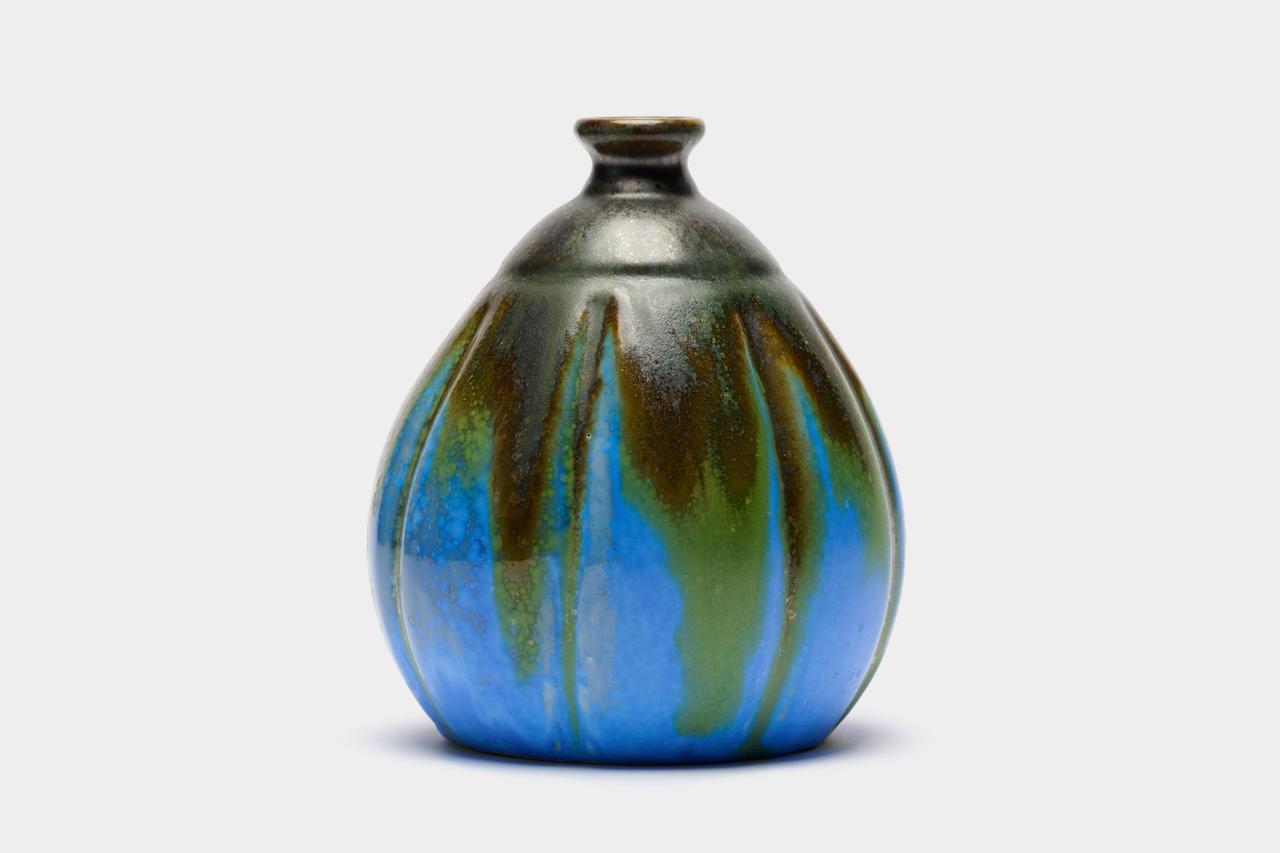
La Céramique Montoise (CM Bergen) - Vase - Shape 479, Decor 156 - Earthenware - ART DECO MATTE FINISH


03
days
15
hours
45
minutes
51
seconds
Current bid
€ 8
No reserve price

Expert
Selected by Michel Karis
Art historian with extensive experience working at various auction houses in antiques.
Estimate € 150 - € 200
 | €8 | |
|---|---|---|
 | €7 | |
Catawiki Buyer Protection
Your payment’s safe with us until you receive your object.View details
Trustpilot 4.4 | 145414 reviews
Rated Excellent on Trustpilot.
This unused Belgian faience vase by La Céramique Montoise (CM Bergen), model Forme 479 with Décor 156, dates from 1930–1940 and features a multicoloured Art Deco design with a matt finish; it measures 21 cm high and 20 cm wide.
AI-assisted summary
Description from the seller
This vase with a striking presence is a creation of La Céramique Montoise, a Belgian pottery manufacturer based in Mons, also known as CM Bergen. It bears form number 479 and features the décor referenced 156, executed with a matte finish.
Its generous silhouette, with rounded shoulders and a short, slightly flared neck, is fully in line with the decorative vocabulary of the interwar period.
The decoration is distinguished by a stylized botanical composition with deliberately irregular outlines, characteristic of the Art Deco ornamental language.
On an ivory-tinged cream background unfold broad floral and foliate motifs in a contrasted palette combining yellow, cobalt blue, turquoise, reddish-brown, green, and black. The motifs are outlined with dark traces that structure the composition and emphasize its graphic character. The upper and lower sections are set off by brown-black reserves, which harmoniously frame the polychrome decoration. The matte finish gives the whole piece a distinctive texture and enhances the depth of the colors.
The piece is in strictly as-new condition, with no chips, cracks, or restorations observed. The surface retains its original matte finish and the colors show a fresh, vivid appearance. The vase stands 21 cm high with a maximum width of 20 cm. Its top opening has a diameter of 8.8 cm and its base a diameter of 12.2 cm. Its weight is 1,500 grams.
La Céramique Montoise is part of the development of Belgian ceramic production in the early 20th century, at a time when regional manufactories were exploring new decorative languages under the influence of Art Nouveau and then Art Deco movements. The house is notably associated with Antoine Dubois, whose name is sometimes mentioned in the history of this Mons-based production. This piece exemplifies particularly well the interwar aesthetic, where the stylization of natural forms, chromatic contrasts, and distinctive finishes contributed to the renewal of Belgian decorative arts.
Details
Specific region of origin
Wallonie
Weight
1500 g
Era
1900-2000
Title additional information
ART DECO MATTE FINISH
Number of objects
1
Country of origin
Belgium
Model
Shape 479, Decor 156
Material
Earthenware
Style
Art Deco
Manufacturer/brand
La Céramique Montoise (CM Bergen)
Colour
Multicolour
Condition
As new - unused
Height
21 cm
Width
20 cm
Depth
21 cm
Diameter
20 cm
Estimated period
1930-1940
Sold by